I have a weird obsession with folding screen dividers – they feel like tiny room makeovers you can fold away. I remember the first one I bought in college to hide a messy closet and suddenly my dorm looked like an apartment, so I’m slightly sentimental about them.
I put this list together because dividers are such an easy, affordable trick to change how a room functions without committing to renovation – and I’ve experimented with a lot of styles. Over the years I’ve used linen panels to block harsh afternoon sun, and wicker screens to add texture when I wanted a more boho vibe.
Below you’ll find 15 real, pretty, and practical folding screen divider ideas with honest notes from someone who’s tried a few – you’ll get styling tips and little stories so you know what to expect.
These 15 Folding Screen Divider Ideas Will Make Your Space Feel Fresh
Wood & Canvas Warmth
This wood-and-canvas screen gives such a cozy, handcrafted feel – I love the mix of structure and soft fabric. I once used a similar canvas divider to hide an overflowing sport bag pile, and guests actually complimented it instead of noticing the mess. If you want something that feels homey but not fussy, this is a lovely direction to try.
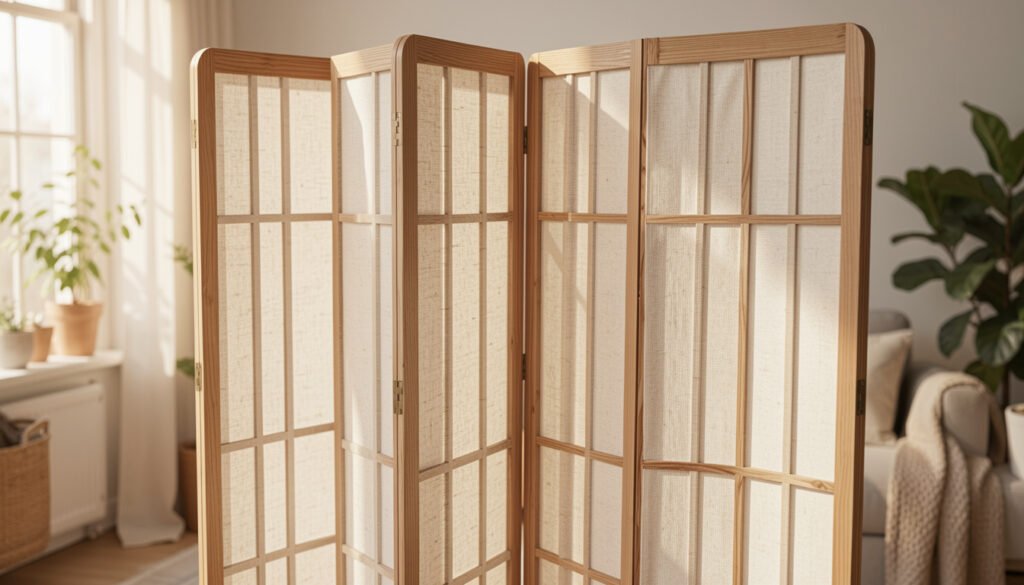
Simple Wood Fabric Divider
This is classic and versatile – wood frame with fabric panels keeps it light but grounded. I put one like this behind my sofa to create a pseudo-entryway and it instantly made the living room cozier. You can swap fabrics seasonally if you’re like me and enjoy tiny decorating projects.
Floral Painted Charm
Painted florals on a folding screen turn it into art – honestly, this makes me want to pick up a paintbrush. One summer I painted a cheap screen with wildflowers to match my thrifted vase collection; it looked homemade in the best way. Perfect if you want a statement piece that feels personalized.
Glass Panel Elegance
Glass panels bring an airy, modern edge while still dividing space visually – such a chic choice for lofts. I remember visiting a friend who used a glass folding screen to separate her home office from the living room and it let light flow while hiding cords, which was genius. This feels polished without being cold.
Wicker Bookcase Panels
This one doubles as storage and divider – the wicker inserts add texture and the open-bookcase vibe keeps things airy. I used a similar setup to display plant babies and a few cookbooks, and it became my go-to spot for little treasures. If you like function with your style, this combo is so smart.
Stairway Split Screen
Positioning a divider near stairs creates a distinct entry or landing area without building walls. I once propped a slim screen at the base of our stairs during a move to hide boxes – felt oddly grown-up. It’s a great trick when you want separate zones in awkward layouts.
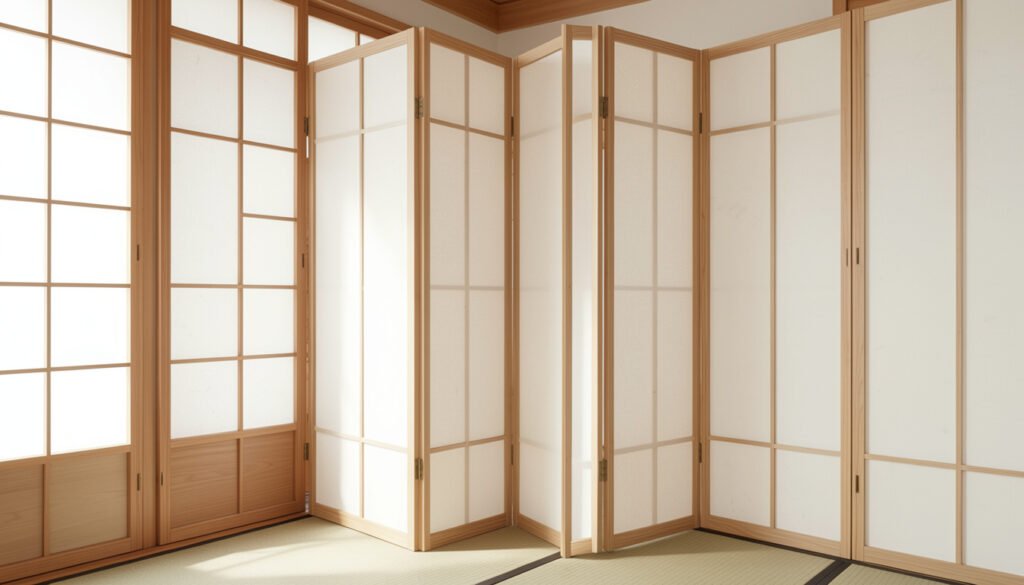
Clean White Classic
All-white folding screens are basically the blank-slate MVP of decor – minimal and calming. I bought a white screen for my tiny studio because I was tired of bold patterns, and it made the whole room feel calmer overnight. You can keep it simple or adorn it with a string of lights for night vibes.
Blue Carpet Doors
This quirky combo of doors and blue carpet details feels delightfully unexpected – kind of playful. A friend had a makeshift screen with upholstery remnants once, and it looked so creative I asked her where she bought it – turn out she made it. If you like little design surprises, experiment with fabric scraps or repurposed doors.
Glass Wall Seating
A folding screen near a glass wall creates a private nook without blocking the view – dreamy. I once read for hours in a chair tucked behind a screen by my balcony and felt like I had my own tiny library. It’s a lovely way to define a reading or coffee corner without closing it off.
Slatted Bedroom Screen
Wooden slats feel modern and slightly Scandinavian – they give privacy but still let light peek through. I used slatted panels to create a dressing zone and it was honestly the best small-bedroom hack I’ve done. If you want a balance between separation and openness, this is the vibe.
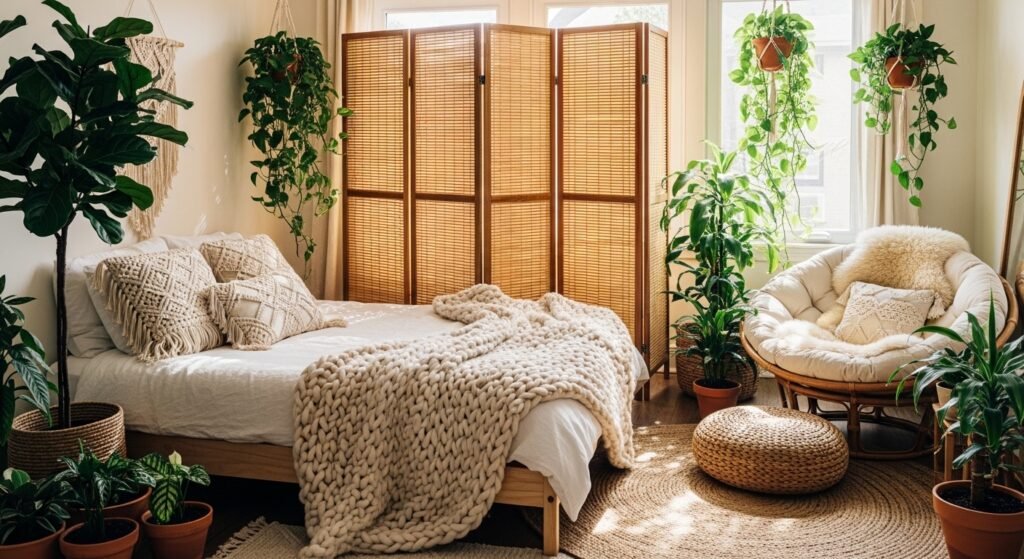
Natural Wicker Panels
Wicker brings instant coastal warmth and texture – perfect for boho or beachy rooms. I can’t resist wicker in summer; one year I covered a cheap folding frame with woven panels and it felt like a little vacation corner. It’s a relaxed look that also hides things nicely when guests pop over.
Tall Black Cabinet Screen
This tall, black cabinet-style piece reads like furniture but works as a divider too – sleek and dramatic. My cousin used a similar piece to split her studio and it instantly added a sense of grown-up order, which was inspiring. For small spaces that need structure, this is a bold, practical pick.
Minimal Wood Divider
A simple wooden folding screen is quietly gorgeous and adapts to every style from modern to rustic. I kept one like this in my entryway to hide shoes and the utility bill pile – not glamorous, but it worked. Minimal pieces are great because you can dress them up with textiles or keep them spare.
Three-Panel Tall Partition
Three tall wooden partitions feel stately without being heavy – they create real separation in open rooms. Once during a long-term house sit, I used three panels to make a temporary nursery corner and it was surprisingly effective. This layout works when you need vertical presence but don’t want a full wall.
Rattan Two-Panel Beauty
Rattan and wood in a two-panel screen is the definition of laid-back chic – airy and must-have for natural interiors. I remember buying a rattan panel on impulse and it became my favorite backdrop for video calls, oddly enough. If you’re into texture and warmth, this is the one to try.
How to Actually Make This Work For You
Think about why you want a folding screen divider first – privacy, style, or hiding clutter – because that purpose shapes the material and height you choose. Measure the area, then imagine the screen both open and closed, and don’t be afraid to layer a screen with plants or a rug to anchor it visually; I’ve done that more times than I can count and it always helps. If you’re renting, use freestanding options or light screens that won’t damage walls, and remember you can always paint or re-cover panels if you tire of the look – small swaps go a long way.
Can a folding screen actually provide privacy?
Yes, it can provide a good level of visual privacy, especially if you pick opaque materials or taller panels. It won’t soundproof a space, but it separates sight lines and makes zones feel private enough for dressing or an office nook.
What materials work best for small rooms?
Light materials like linen, thin wood slats, or rattan keep the room feeling open while still defining areas. Try semi-transparent options if you want privacy without blocking natural light.
Are folding screens stable on hardwood floors?
Mostly yes, but lighter screens can shift if bumped, so consider small non-slip pads or a low-weight base if you need extra stability. Heavy wooden or metal frames are sturdier, but they might scratch if not padded.
How do I style a screen so it doesn’t look like an afterthought?
Anchor it with decor – a nearby plant, a rug, or a lamp helps the screen feel intentional. You can also layer textiles like a throw over one panel or hang a small art piece to integrate it with the room’s aesthetic.