I have been obsessing over living room divider ideas lately – they feel like the easiest way to make a space scream “adulting” without a full renovation. I love the idea of carving out zones in an open layout while keeping things airy and stylish.
I put this list together after rearranging my apartment three times this year because apparently I enjoy chaos. I tested a few simple room dividers myself and learned what actually works versus what looks cute on Pinterest but falls over in real life.
Read on and you’ll get 15 practical, beautiful divider ideas with honest notes, tiny hacks, and the stuff I wish I knew before buying anything.
15 Living Room Divider Ideas You’ll Actually Use
TV Shelf Split
This is a classic – put the TV on a low shelving unit to separate lounging from the rest of the room. I did this when I first moved into my studio and it instantly made my space feel like two rooms, which felt oddly grown-up. You can style the shelves with baskets or books so it never looks like a sad IKEA dump, promise.
Minimal Wooden Slats
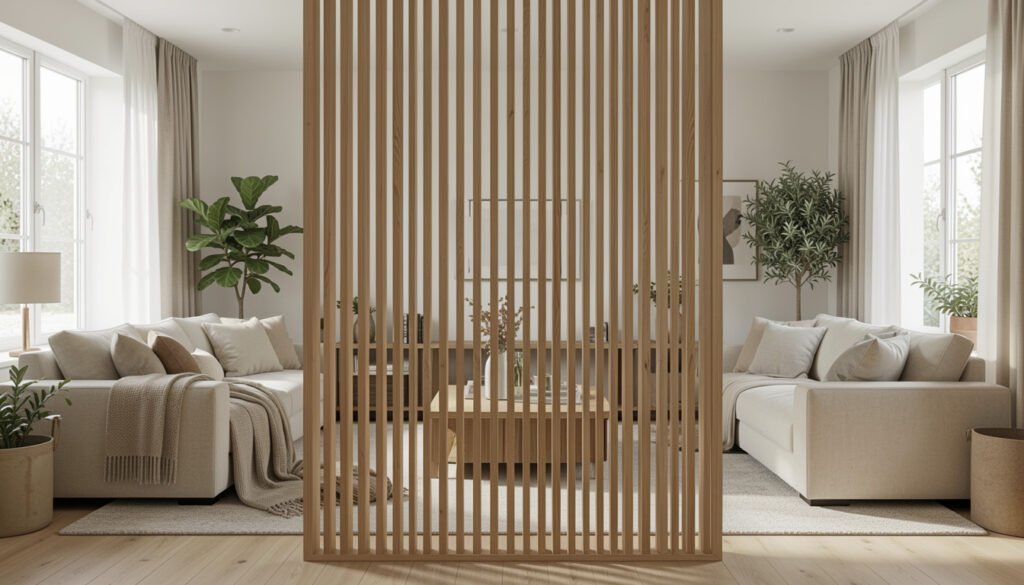
Wooden slat dividers are so sculptural and they keep sight lines open – perfect if you want separation but not a wall. I once attempted DIY slats and learned that getting the spacing right is everything; my first try looked a bit like a picket fence, lol. If you buy one pre-made it feels instantly luxe and not Pinterest-crafty.
Open Shelving Unit
Open shelves double as storage and a divider, and they let you style both sides so the room reads cohesive. I used plants and mismatched ceramics to hide clutter – works like a charm. Also, no judgment if you use the shelves to hide the pile of receipts you swore you’d sort last month.
Low Planter Wall
Planted planters are my favorite – greenery softens the room and adds life between zones. I had a low trough once and it made my couch area feel like a tiny oasis; the only downside was keeping my philodendron from taking over. If you like biophilic vibes, this is a simple upgrade that smells like success.
Sliding Door Divider
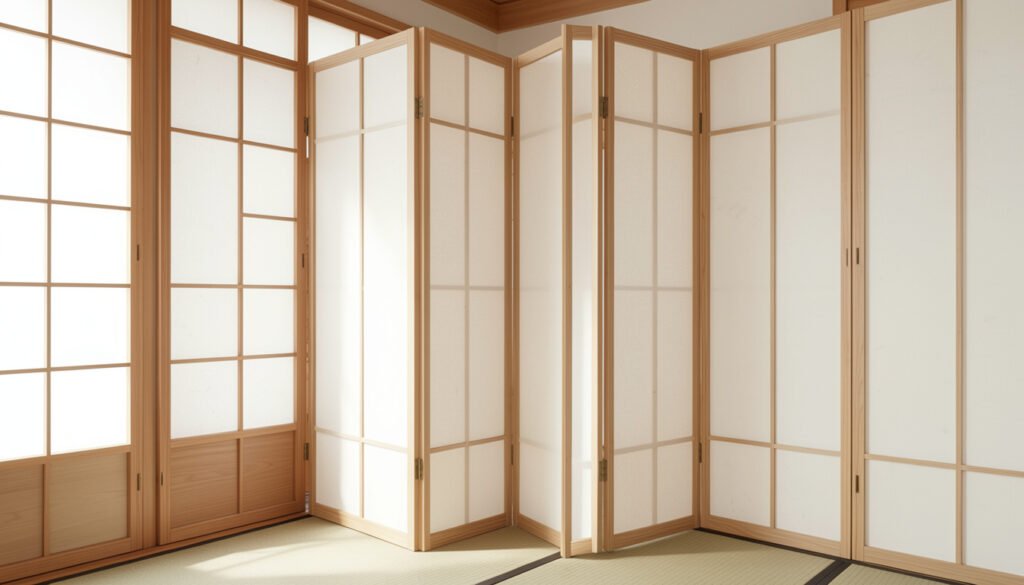
Sliding doors give actual privacy when you need it and can be fully open the rest of the time. I installed panels in an awkward doorway and suddenly my dining table felt formal enough for guests – who knew? They take a bit more commitment but pay off when you want to hide mess or noisy cooking.
Tall Bookshelf Barrier
A tall bookshelf is a natural divider and instantly makes the room feel curated. I have a friend who built one floor-to-ceiling and it became her favorite part of the apartment – honestly, I was jealous. You can backlight shelves or leave gaps for light to travel through so it never feels claustrophobic.
Curtain Room Divider
Curtains are the cheapest mood-changer and ridiculously versatile – sheer for softness, blackout for a closed-off bedroom feel. I used curtains once when friends crashed on my couch and they made the living area feel private without any construction. Bonus: you can change the fabric with seasons and you won’t feel guilty about it.
Built-in Bookshelves + Windows
When you pair shelving with a window, light still floods both sides and the divider looks intentional and permanent. I visited a tiny apartment with this setup and immediately thought, “Okay, this person has their life together.” It’s a bit pricier but the warmth it adds is worth it if you plan to stay put.
Double Door Entryway
Using doors as dividers is old-school glam and surprisingly practical for noise control. I once borrowed a pair of vintage doors and leaned them as a divider – people thought they were custom installed. If you love a moody, dramatic vibe, doors make the space feel curated and finished.
Art-Focused Partition
A wall of art doubles as a visual stop between areas and feels very gallery-chic. I had a tiny gallery wall that made my living area feel like it had boundaries, even without physical barriers. Swap frames seasonally and watch your room evolve – it’s harmless, low-cost decorating that delivers personality.
Rattan Screen Divider
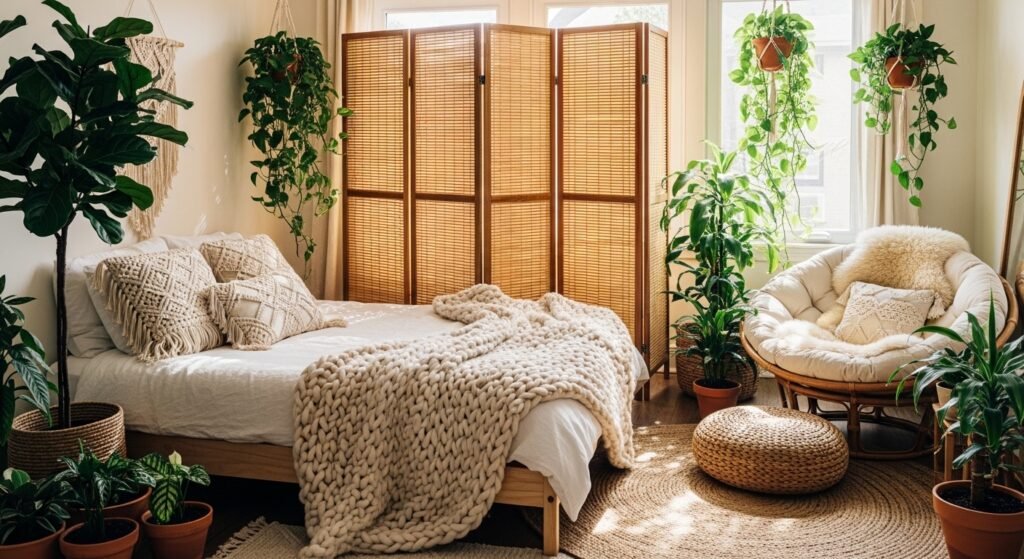
Rattan or woven screens are perfect for boho or coastal aesthetics and add texture instantly. I once found a beat-up screen at a flea market, sprayed it white, and it looked like I’d spent way more than I did. They’re lightweight, easy to move, and honestly a little charmingly imperfect.
Stacked Shelves With Plants
Layered white shelves with a mix of books and plants feel fresh and bright and keep clutter hidden in baskets. I used stacked shelving in a rental once and it added so much life without drilling holes. The plants really bring the divider to life – try a trailing vine to soften edges.
Bamboo Blind Divider
Bamboo blinds give a warm, natural barrier that’s lightweight and casual – great for a summer-y look. I installed one between my living area and a tiny kitchenette and it felt like a spa, weirdly. They’re budget-friendly and fold up when you don’t need them, so low commitment.
Decorative Column Partition
Tall decorative columns or narrow shelving columns break up space without blocking all the light. My sister used columns to frame her reading spot and it ended up being the coziest nook in the house. You can style each column differently so it reads curated instead of cluttered.
Simple Sofa Placement
Sometimes the simplest divider is furniture placement – float the sofa to create a natural boundary. I did this during a last-minute reorg and it made my space feel way more intentional even though nothing else changed. It’s zero cost and surprisingly effective if you arrange rugs and lamps to define each zone.
How to Actually Make This Work For You
Start by thinking about what you need from the divider – privacy, storage, style, or sound control – and then pick an idea from the list that matches that need so you don’t end up with something pretty but useless. Measure your space and visualize the sight lines during different times of day; I once bought a divider that blocked the morning light and I regretted it until I moved it. Finally, choose materials that fit your routine – pets and kids need durable finishes and plants need light, so plan accordingly.
Can a divider make a small living room feel bigger?
Yes, when you choose open or translucent dividers like slatted screens or open shelving you can define zones without closing off the room. Light and sight lines are key, so avoid solid heavy walls if your space is tiny.
Is it OK to use curtains as a long-term divider?
Absolutely – curtains are affordable and flexible, and they work well long-term if you pick quality track hardware and durable fabric. They’re especially great if you want the option to open the space up frequently.
Do room dividers need to be permanent?
Nope, most dividers are meant to be flexible – think freestanding shelves, screens, or furniture placement that you can change as your needs evolve. Invest in a few key pieces rather than committing to structural changes unless you plan to stay put.
What’s the easiest divider to DIY?
Open shelving and curtain tracks are the most DIY-friendly – both are doable with basic tools and don’t require permits or major construction. If you’re new to DIY, try a temporary project first so you can tweak placement without stress.