I’ve been obsessed with shoji screen divider ideas for as long as I can remember – there is something so calming about that soft, diffused light and wooden frame. When I moved into my first apartment I begged my roommate to let me bring a folding shoji for a little privacy and suddenly the whole space felt intentional and cozy.
This article exists because shoji screens are more versatile than people think, and I wanted to collect a bunch of ways you can actually use them at home. I’ve tried them as room dividers, window coverings, and even headboard alternatives – spoiler, some experiments were better than others, but I learned a ton.
Below you’ll find 15 shoji screen divider ideas with real-life notes, tiny mistakes I made, and practical tips so you can pick one that fits your vibe and your space.
These 15 Shoji Screen Divider Ideas You’ll Totally Want
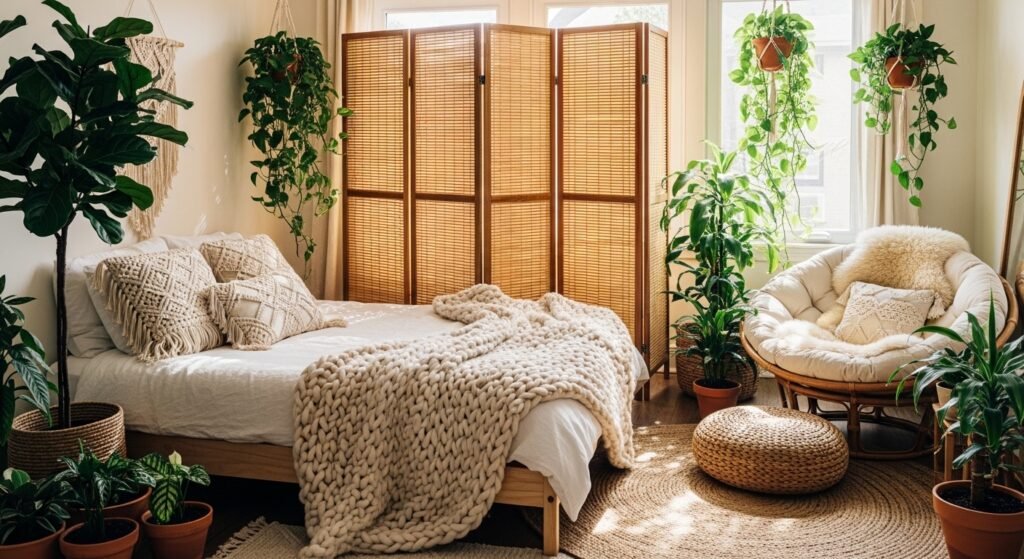
Cozy Living Room Divider
This living room setup feels lived-in and warm, and a shoji-style bamboo wall would slide right into that aesthetic. I once tried a very similar divider to carve out a tiny reading corner – it made a small space feel like a whole new room. If you’re like me and crave separation without losing light, this is perfect.
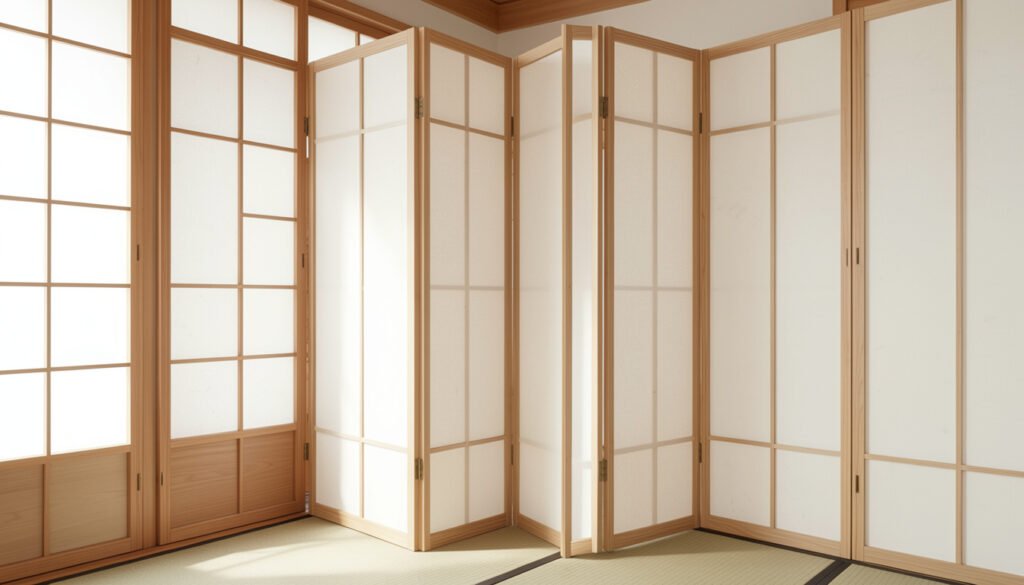
Sliding Door Inspiration
Sliding shoji panels are elegant and practical, especially in open-plan rooms that lead to the outdoors. I’ve daydreamed about swapping our heavy curtains for wooden slats that glide – dreamy and less dusting. You could also use this look for closet doors if you want a softer vibe.
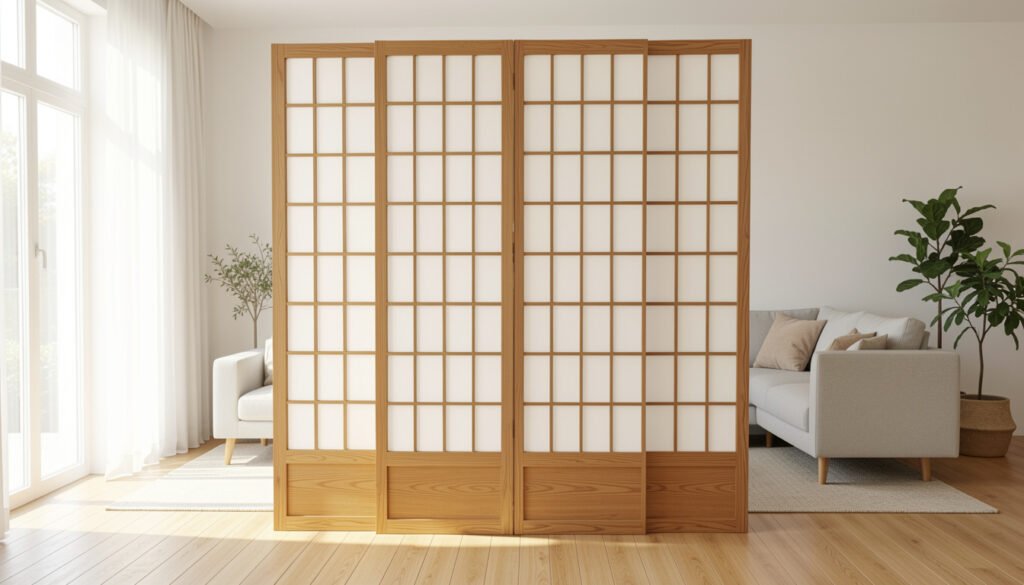
Minimal Empty Room Look
Here the shoji feels almost architectural – simple wood, lots of light, calm floors. I remember painting the trim in my first apartment to match a screen and it made everything feel intentionally curated. If you prefer minimalism, this is a clean route without being cold.
Bamboo Blind Window
Bamboo blinds give a shoji-adjacent vibe but are more casual and budget-friendly. I bought cheap bamboo shades for a spare window once and ended up loving their texture – the light peeks through so nicely. Quick side note: they can be finicky to measure, so double-check those dimensions.
Artful Studio Space
A framed shoji panel works as art when leaned against a wall, especially with a statement painting nearby. I tried leaning one behind a plant and it instantly upgraded the corner – yes, even the tiny plant felt fancier. If you want subtle separation, this approach is easy and renter-friendly.
Wood and Glass Combo
Pairing wood with glass in a divider gives a modern twist to the shoji look – very chic. I love how glass keeps the room feeling open while wood adds warmth. This style is great if you want durability plus that Japanese-inspired grid pattern.
Industrial Slat Divider
Wooden slats with metal rods lean into loft vibes and feel more rugged than classic shoji. My friend had something like this and it looked amazing with a leather chair – very magazine-y. If you like an industrial-meets-Japan look, try mixing textures like this.
Accent Wall Texture
Sometimes you don’t need a full divider – a shoji-style panel as an accent on a wall can be surprising and artsy. I painted subtle lines on a white wall once to mimic the grid – messy but fun, and it did the trick. It’s low commitment and looks intentional if you keep colors soft.
Bright Tiled Room Addition
White tiles with a framed shoji panel can feel spa-like, and the contrast is so calming. I used a small paper screen in a bathroom once and it instantly made showers feel like a staycation. Consider translucent panels in wet areas for privacy without closing things off.
Entryway Door Panels
Shōji-inspired doors at an entry are welcoming and stylish – they set the tone for the whole home. I once swapped a plain interior door for a wooden screen door you can peek through, and guests kept asking where it was from. It’s a small swap with big personality.
Mood Lighting Divider
Backlit shoji screens in the evening create the coziest glow – instant hygge. I tried this for a movie night and we ended up not turning on any other lights – total mood. If you love ambient lighting, this is an easy way to get soft, flattering light.
Floor-to-Ceiling Panels
Floor-to-ceiling shoji panels feel dramatic and really define a space without closing it off. I admire this look but worry about dust on tall frames – true confession. Still, when done well, it gives a room that curated, serene hotel vibe.
Flower-Backed Window Screen
Combining florals and shoji panels softens a minimalist look and adds personality. I once popped a vase of fresh blooms in front of a screen and the whole morning felt nicer – tiny rituals matter. Try seasonal flowers to keep the corner feeling fresh.
Modern Wood-Glass Divider
Wood and glass dividers bring a modern, airy feel while nodding to shoji design with clean lines. I installed a slim framed divider between my desk and living area and productivity somehow improved – weird but true. It’s a great option if you need separation while still working from home.
Frosted Sliding Door
Frosted glass with a wood frame reads like shoji and gives privacy with lots of light. I switched a closet door to frosted panels and suddenly mornings felt less chaotic – who knew? This is perfect when you want privacy but not darkness.
How to Actually Make This Work For You
Think about how you use light and movement in your space – if you love sunlight, pick translucent panels or bamboo that filter rather than block. Measure carefully, because a gorgeous shoji that’s the wrong size will drive you nuts – I learned that the hard way by ordering a tiny divider once. Consider materials based on use: paper panels are lovely and soft but need gentle care, while glass or laminated options stand up better to pets and kids. Lastly, don’t be afraid to mix styles – a modern metal frame with shoji panels can look fresh and unexpected, and you can always paint or swap panels later if your taste changes.
Are shoji screens practical for small apartments?
Yes – they are one of the best ways to create zones without heavy construction. Lightweight folding models are easy to move and store, and they keep light flowing so tiny spaces feel bigger.
What materials are best for durability?
Wood frames with laminated or frosted glass are the most durable while still keeping the shoji look. If you want the traditional paper feel, use reinforced or washable paper options to avoid tears.
Can I DIY a shoji screen?
Absolutely – many people build simple frames and insert paper or thin panels for a custom size. You’ll need basic woodworking skills and patience for clean joints, but it’s a rewarding weekend project if you’re handy.
How much privacy do shoji dividers provide?
They offer moderate visual privacy – good for separating spaces but not for full soundproofing or complete secrecy. If you need full privacy, choose frosted glass or pair the screen with curtains or a second layer.