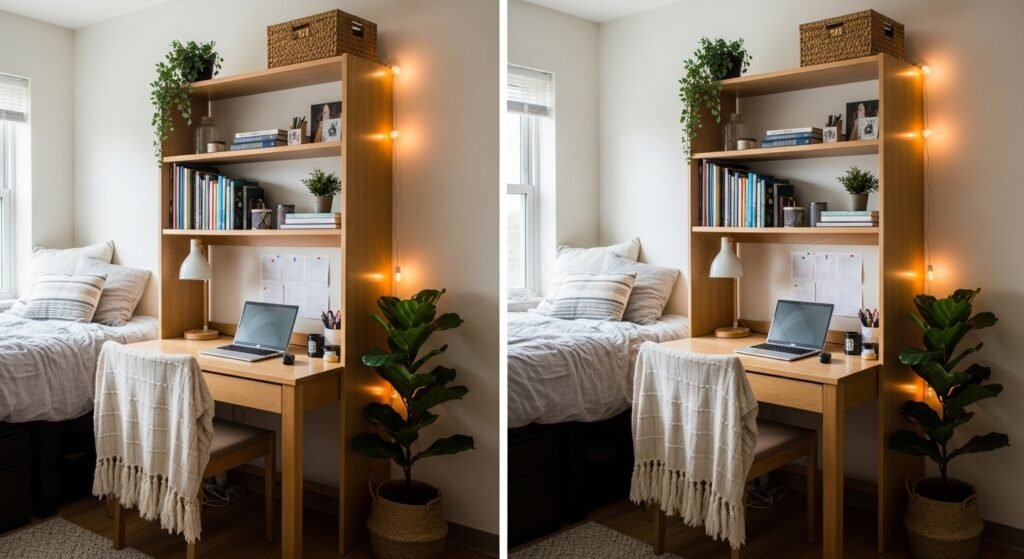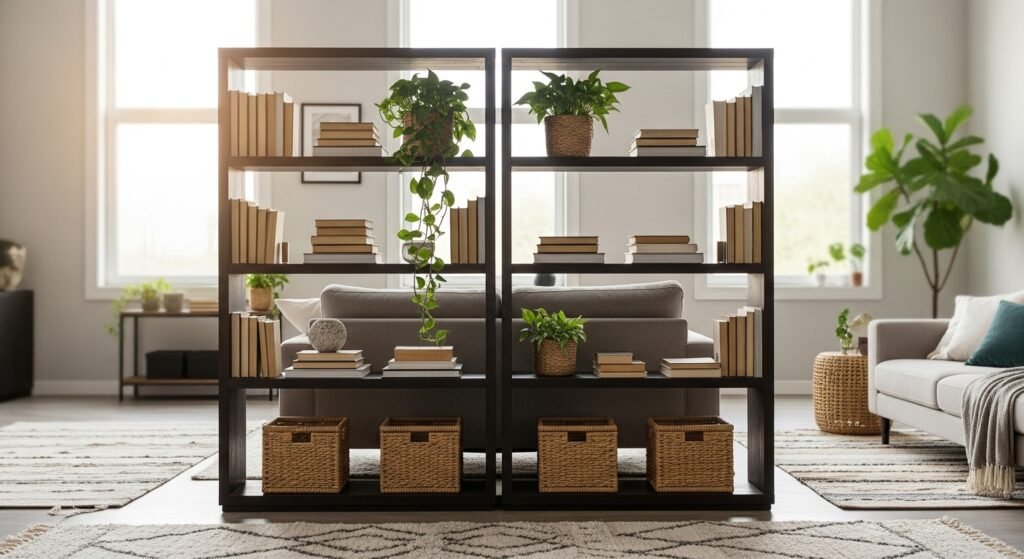
I kept tripping over the couch edge until I put in a two-sided bookcase room divider. It created a clear walkway, hid TV cables, and made two distinct zones without blocking light. That small change made my open living room feel intentional and cozier—without building a wall.
Quick context
This roundup leans modern, Scandinavian, and relaxed boho vibes. Most looks can be done for $50–$300; a couple are splurges. These two-sided bookcase room divider ideas work best for open living rooms, studio apartments, and shared living/dining areas. Expect 2025 trends like multifunctional furniture and biophilic styling (think lots of plants).
What You'll Need to Get This Look
Textiles & Soft Goods:
- Chunky knit throw blanket in cream (~$35-55)
- Linen blend curtains, 96-inch (~$40-70 per panel)
- Velvet pillow covers, set of 4 (~$30-50)
Shelving & Furniture:
- Two-sided bookcase room divider, open shelving (~$120-400)
- Industrial black bookcase with adjustable shelves (~$150-300)
- Cube storage 6-cube unit, oak (~$60-120)
Lighting:
- LED strip lights for shelves, warm white (~$15-30)
- Wall-mounted brass swing lamp (~$40-80)
Plants & Storage:
- Artificial fiddle leaf fig tree, 6ft (~$60-120)
- Woven storage baskets, set of 3 (~$25-45)
Budget Alternatives (Target/HomeGoods):
- Similar at Target/CB2/HomeGoods for decorative baskets, rugs, and lamps.
Open Shelving Divider for Layered Styling
Style/Vibe: Modern Scandinavian
Budget: $$ (under $200)
Best For: Living room, studio
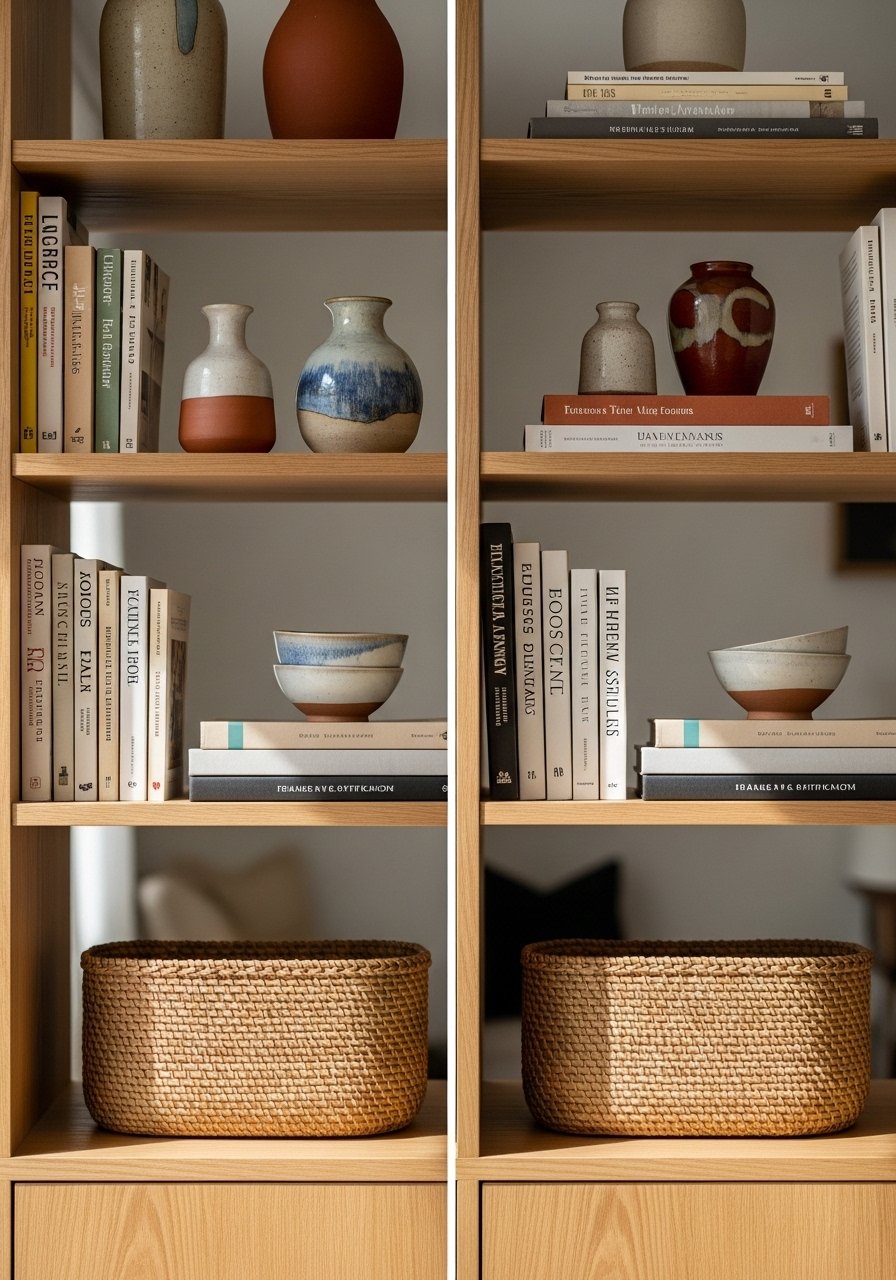
I used a slim two-sided bookcase room divider and styled both faces with a 2:1 mix of books to decor. The key is height variation—stack two books, add a small plant, then a tall candlestick. It reads cohesive from either side. A common mistake: overfilling shelves. Leave breathing room so the divider reads as architecture, not clutter. Swap in white oak pieces (West Elm-style) for a warmer feel.
Cozy Reading Nook Behind Bookcase Divider
Style/Vibe: Cozy Transitional
Budget: $ (under $150)
Best For: Living room corner
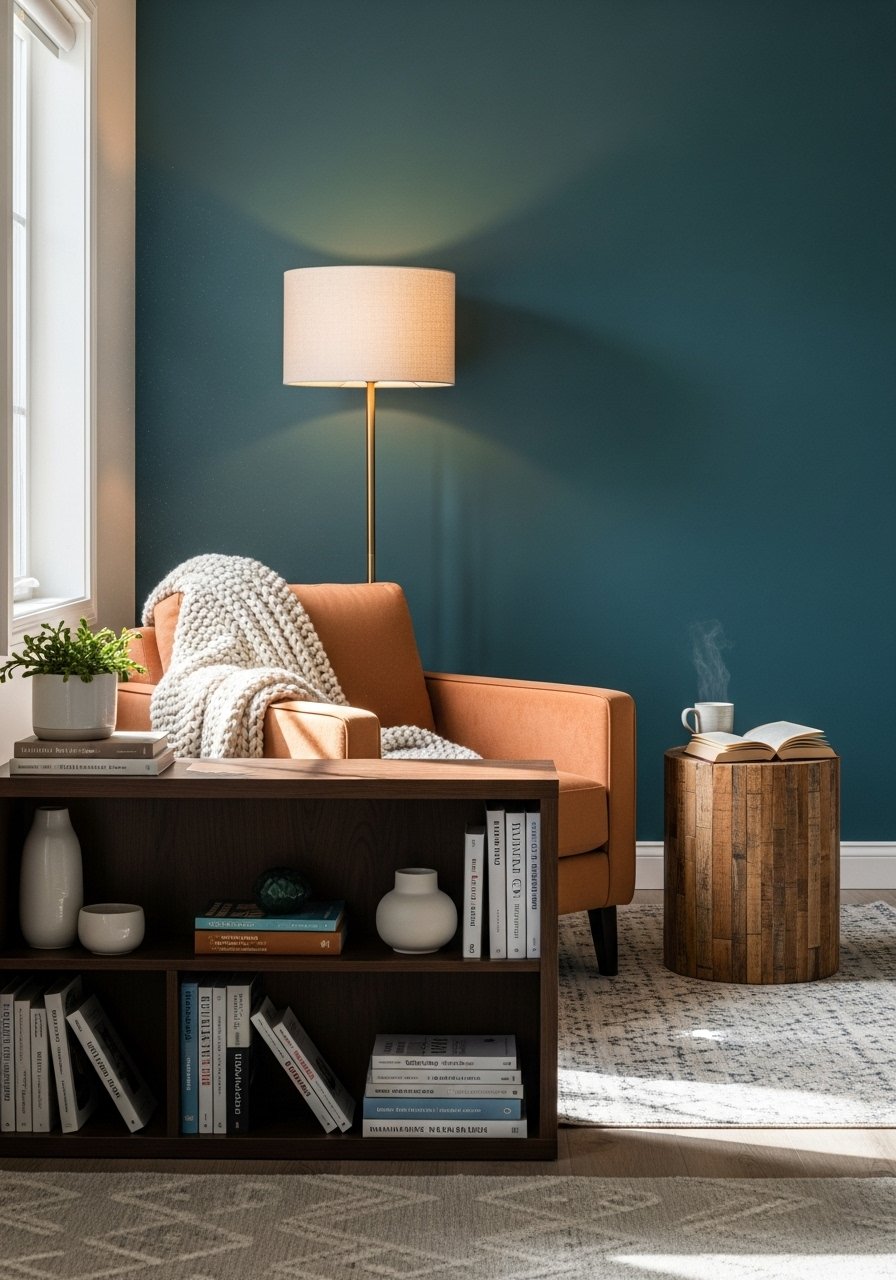
I placed a low divider to define a reading nook. On the sitting side I added a chunky knit throw and a 22-inch euro pillow. The divider hides the nook but keeps light flowing. Tip: use a slim task lamp on the divider top rather than a bulky floor lamp. Avoid too-tall units that swallow light—keep sightlines at about eye level.
Double-Sided Media Wall With Hidden Cables
Style/Vibe: Minimalist Modern
Budget: $$$ ($200-400)
Best For: Living/dining split
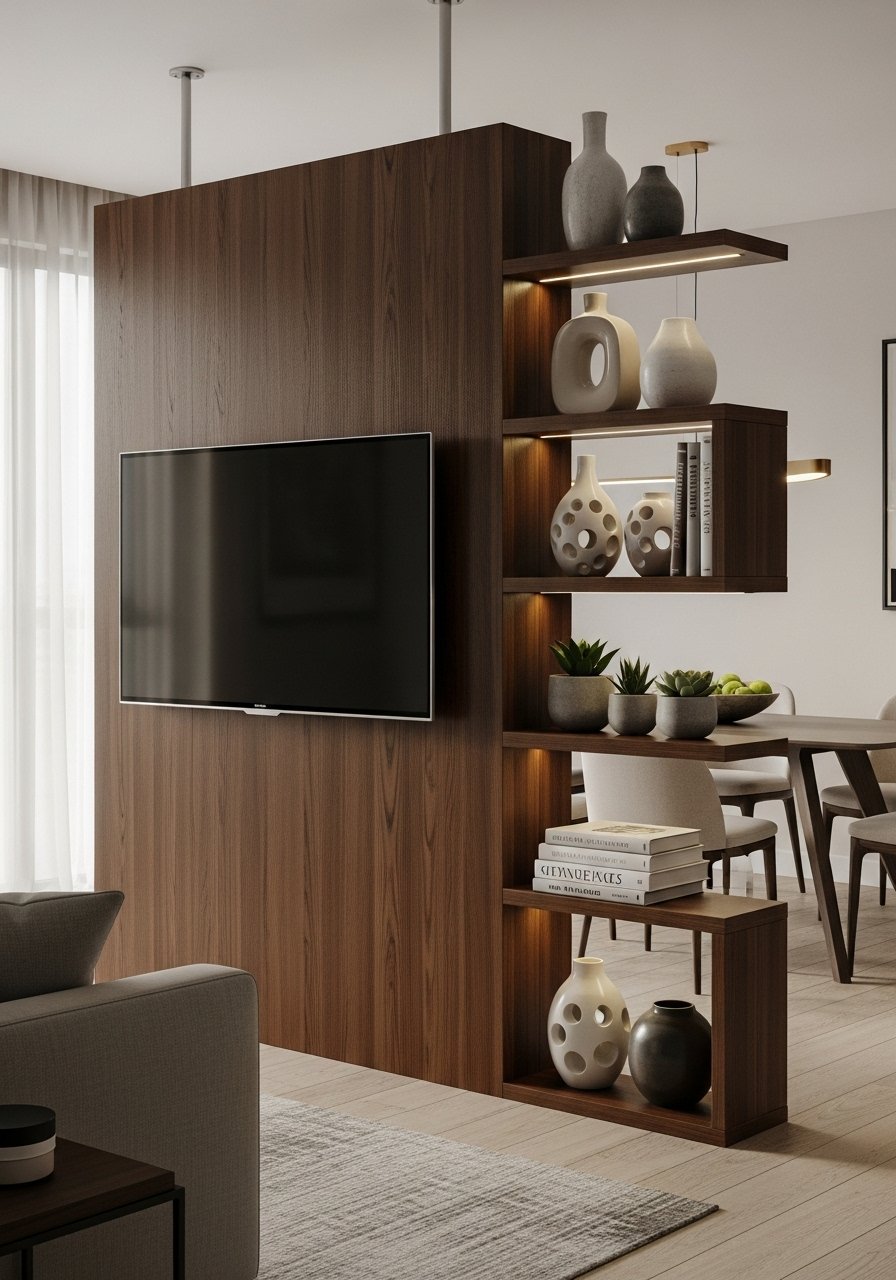
I mounted the TV to one side of a sturdy double-sided unit and used interior cable channels to hide cords. On the opposite face I styled art and plants to make the TV side feel intentional from the dining area. Use adjustable shelving for electronics clearance. Common mistake: poor ventilation—leave gaps for consoles.
Biophilic Plant Wall Divider
Style/Vibe: Boho Biophilic
Budget: $$ (under $200)
Best For: Nature-forward living rooms
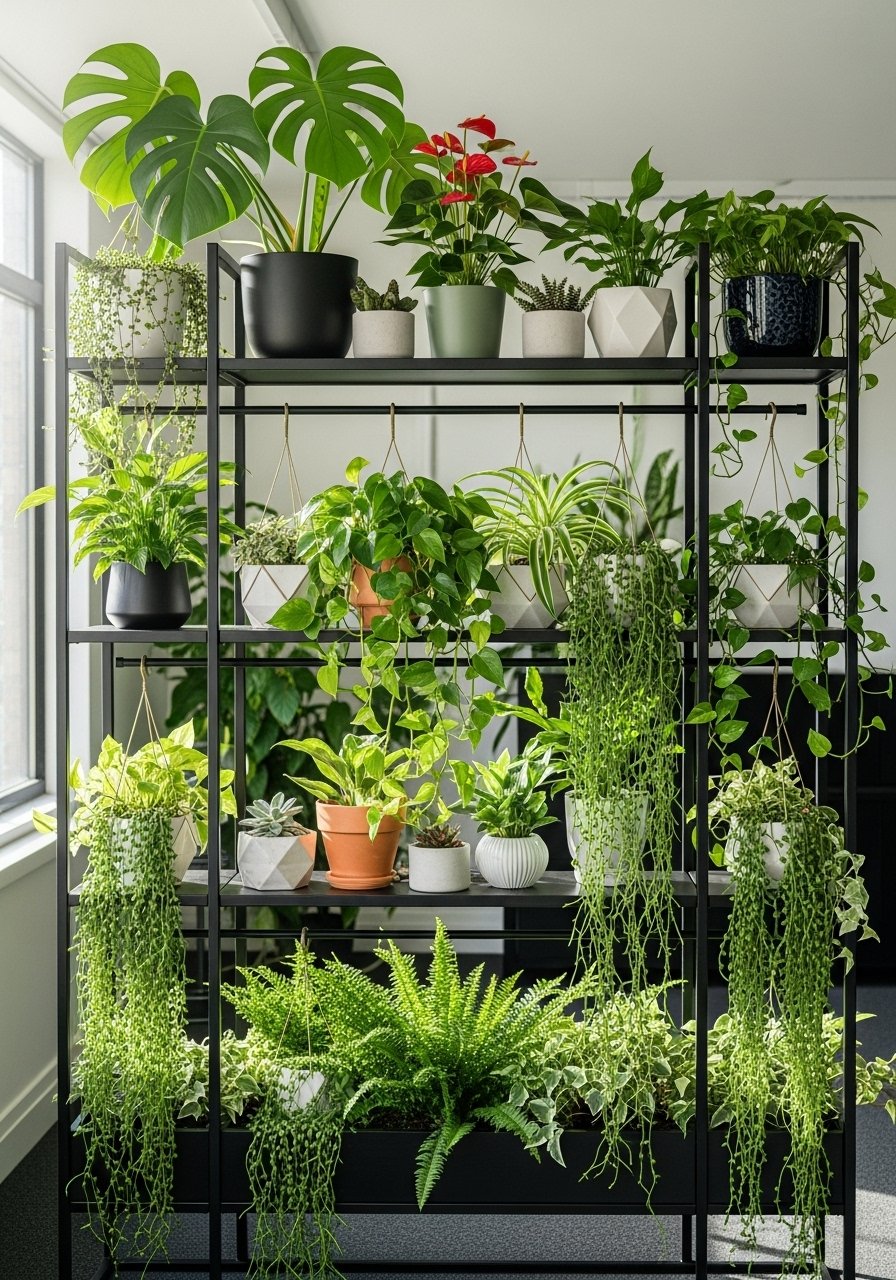
I turned a bookcase divider into a plant display using stacked plant stands and a faux fiddle leaf fig for height. Plants make both sides feel fresh and filter sightlines. (Plants can also improve perceived air quality—see NASA’s plant research: https://www.nasa.gov.) Avoid placing real plants that need direct sun on the shady side; choose faux there.
Office Divider With Built-In Desk
Style/Vibe: Mid-Century Modern
Budget: $$$ ($150-350)
Best For: Work-from-home zones
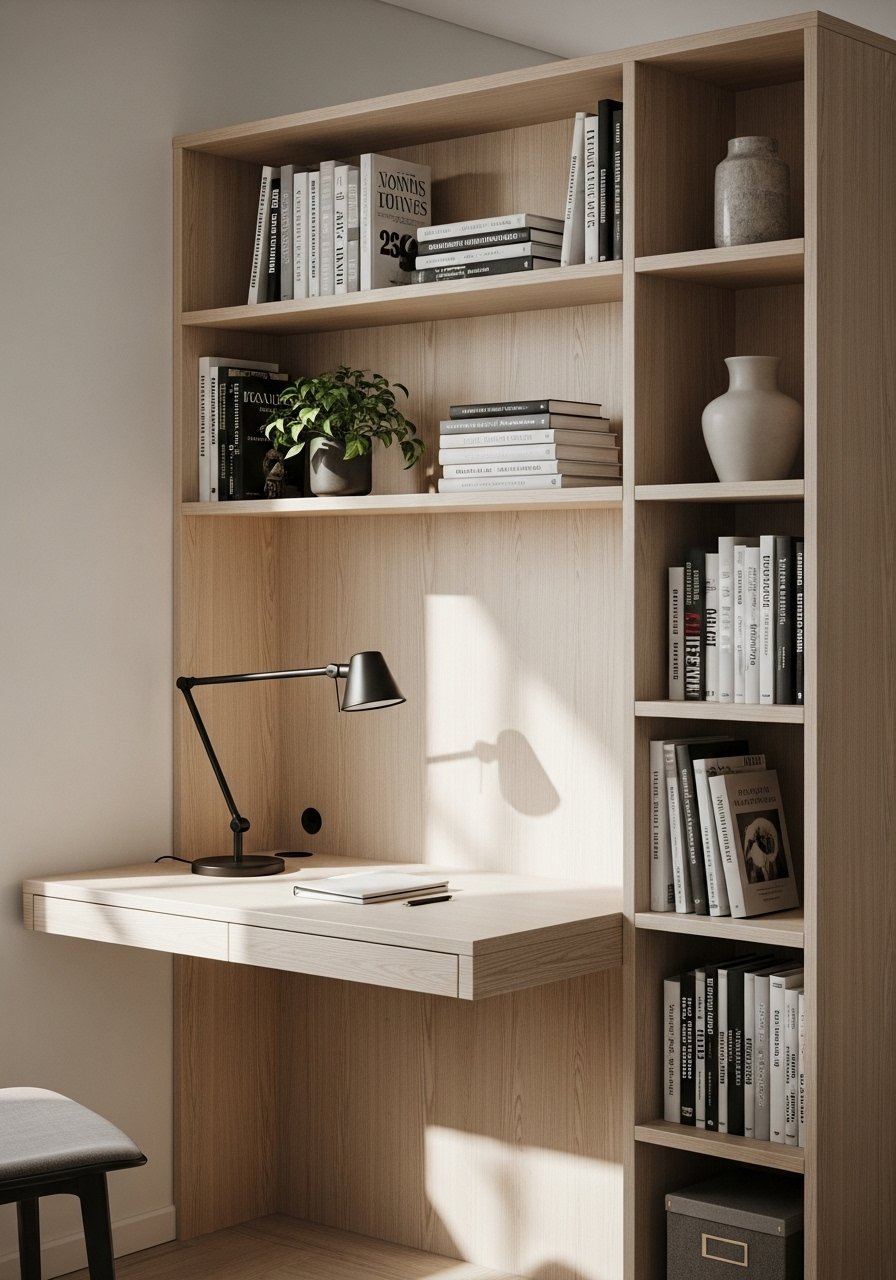
I used a modular bookcase with a recessed shelf for a laptop and created storage on the reverse. The divider gives visual separation for Zoom calls. Use cube storage to stash supplies. Mistake to avoid: putting your desk against a high-traffic zone—noise travels.
Kid-Friendly Toy Storage Divider
Style/Vibe: Casual Family-Friendly
Budget: $ (under $150)
Best For: Playroom + living room
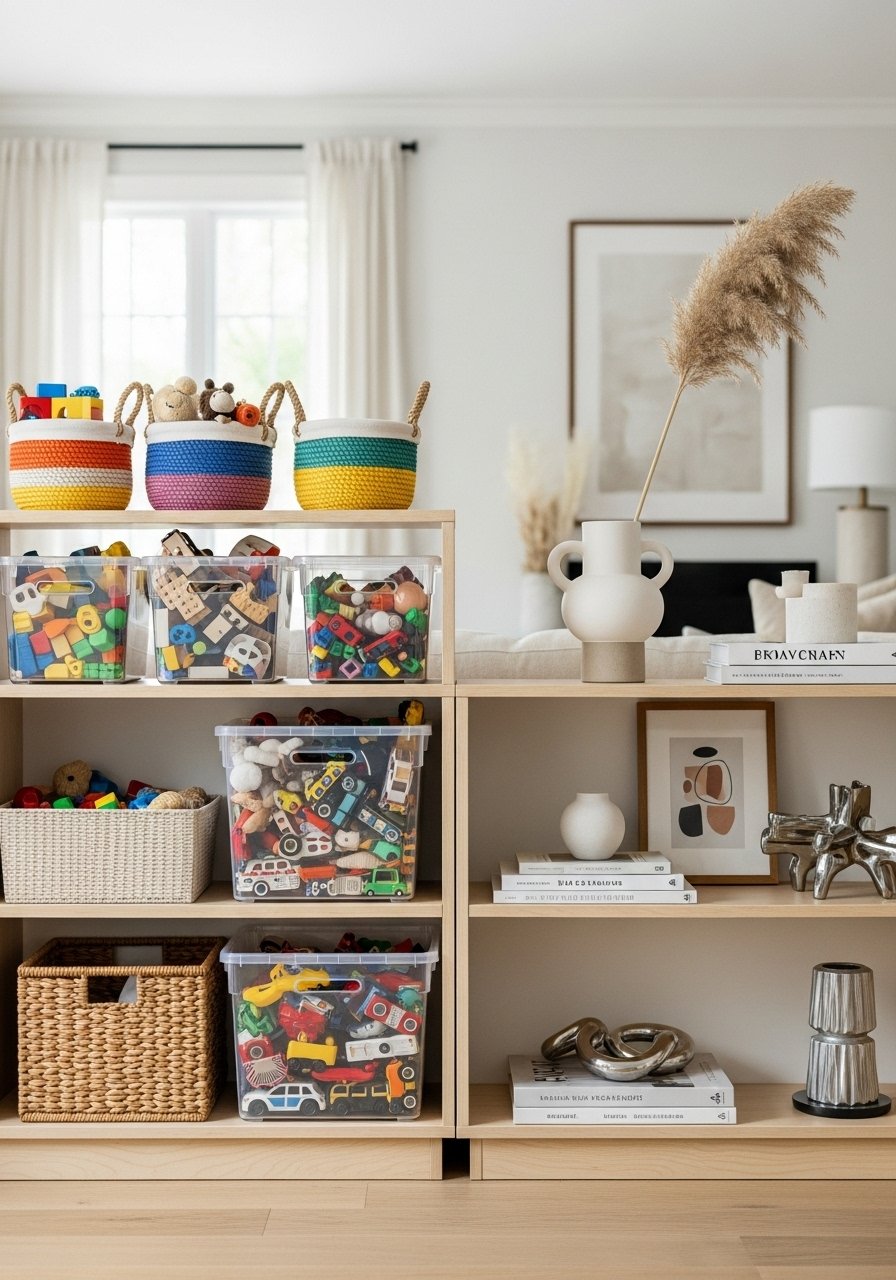
A low two-sided unit with labeled bins keeps toys corralled but still stylish on the living room side. I used woven baskets and removable labels. Avoid open-top bins that kids can unload across the room—use lidded baskets for overflow.
Backlit Display for Mood Lighting
Style/Vibe: Modern Glam
Budget: $$ (under $200)
Best For: Evening ambiance in living rooms
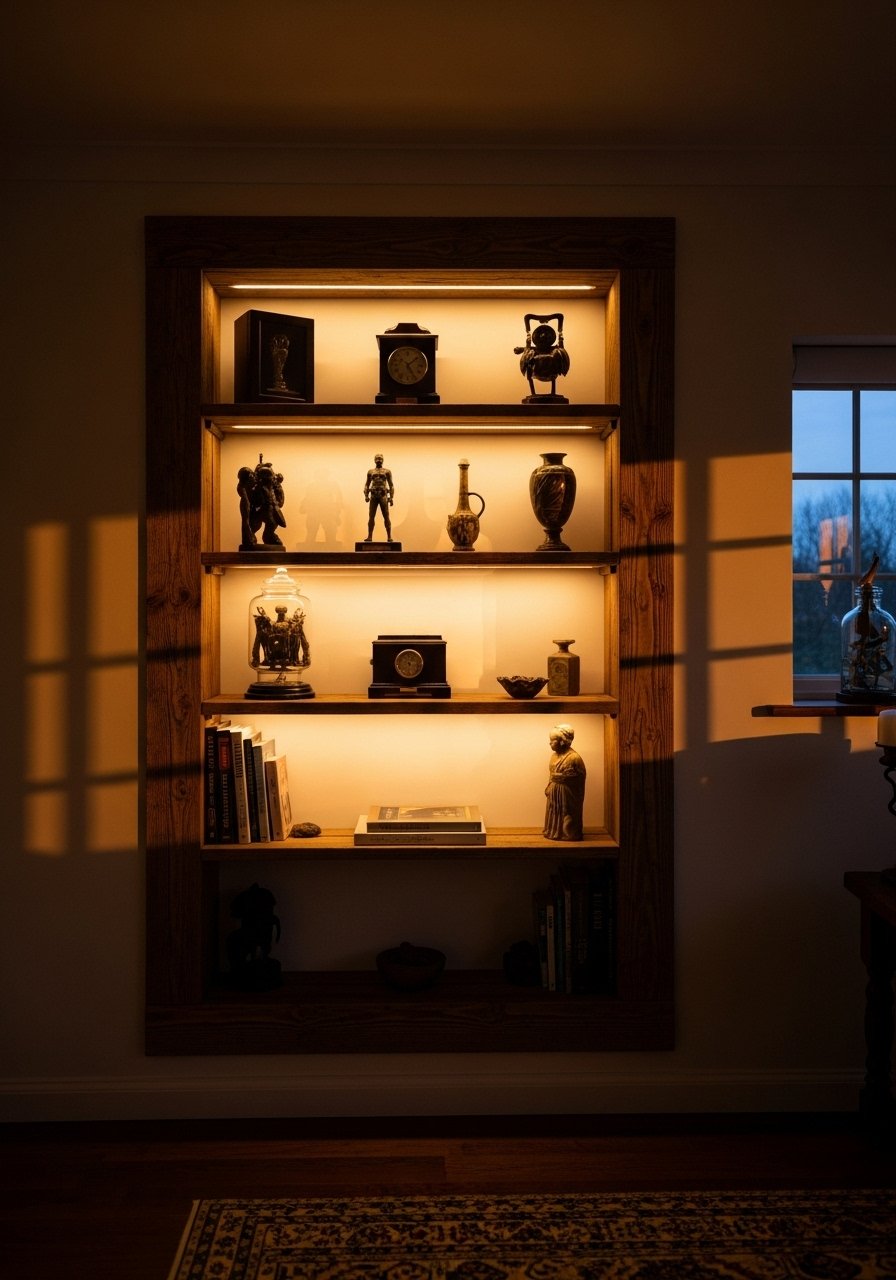
I added LED strip lights to the back edge of shelves for subtle backlighting. It makes the divider glow and reads like an intentional architectural feature. Common misstep: too-cool LEDs—pick warm white (2700K) for comfortable evenings.
Symmetrical Gallery Shelves on Both Sides
Style/Vibe: Classic Transitional
Budget: $$ (under $150)
Best For: Formal living/dining split
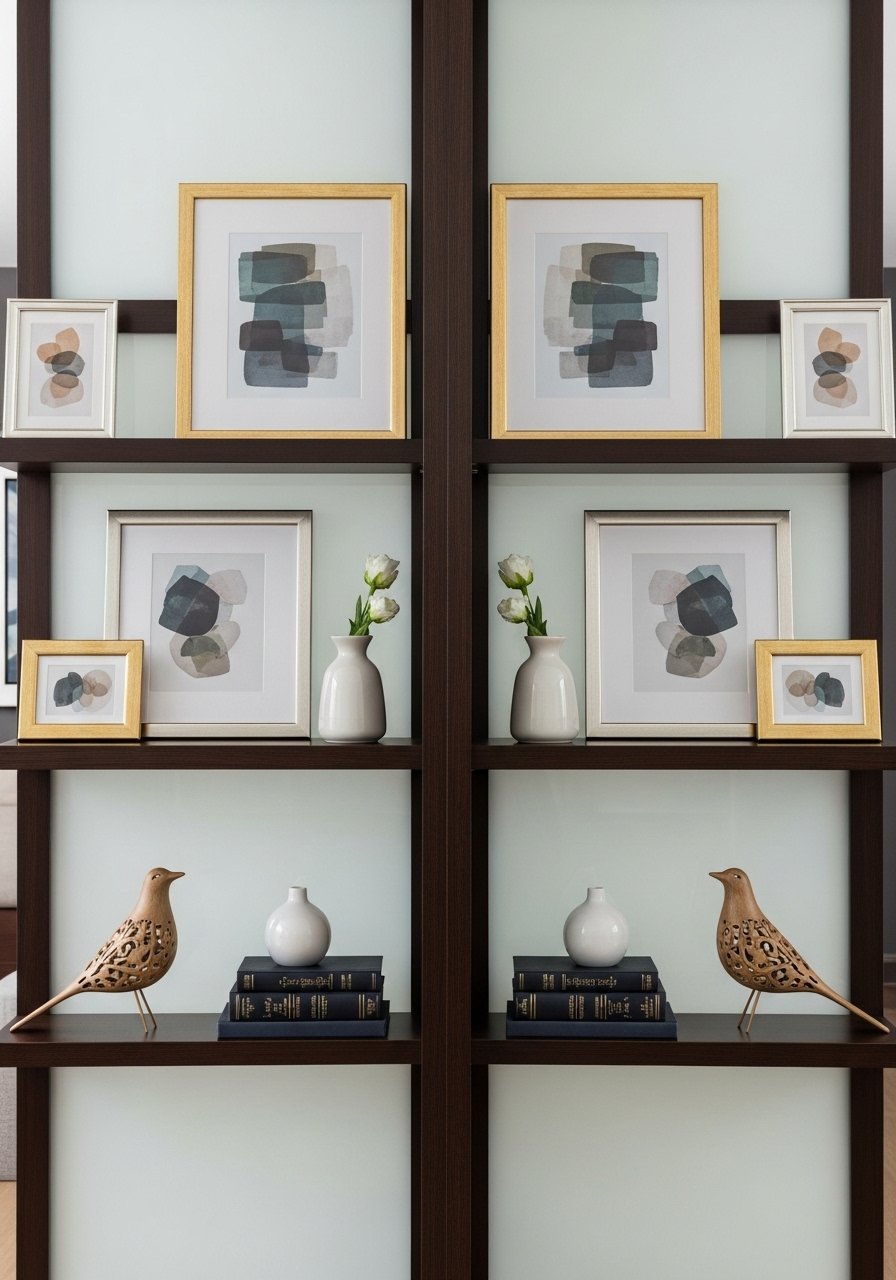
I mirrored a gallery of small brass frames on both faces so the divider looks finished from every angle. Use the rule of three and vary heights. I bought vintage-style brass frames and paired with neutral mats. Don’t mix too many frame styles—keep one dominant metal.
Modular Cubes for Flexible Storage
Style/Vibe: Industrial Casual
Budget: $ (under $150)
Best For: Renters and flexible layouts
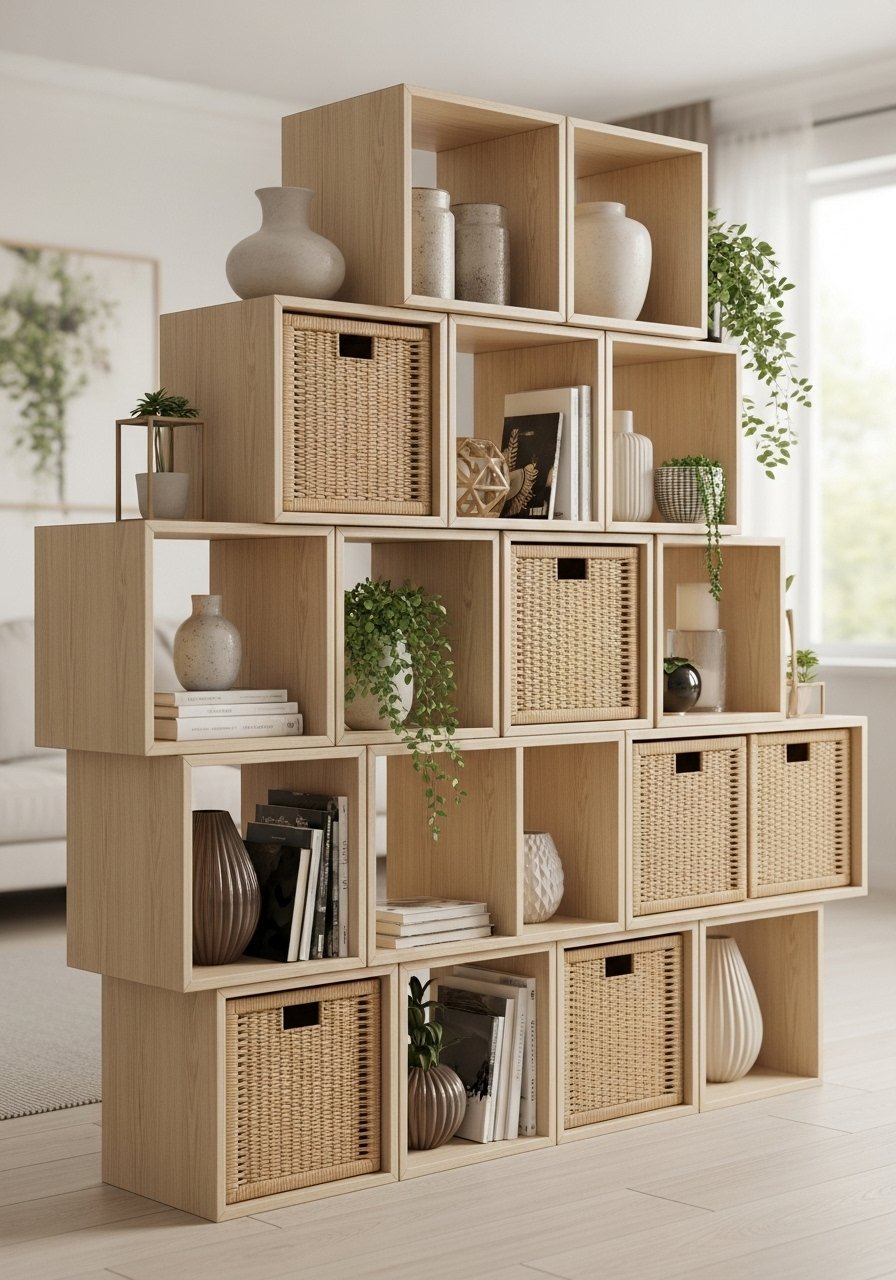
I stacked cube storage units to fit my ceiling height. Cubes let me swap baskets for shelves seasonally. A smart renter move: anchor the unit but don’t hard-mount. Mistake: mismatched cube depths—keep consistent modules for a clean look.
Shopping Tips for These Looks
- Buy throws seasonally: Swap textures each season. Chunky knit throw blanket is a cozy staple.
- Invest in one large plant: 6-foot fiddle leaf fig adds drama.
- Use LED shelf lighting: LED strip lights for mood without wiring.
- Mix open and closed storage: Pair woven baskets with open shelves to hide clutter.
- Shop sturdy basics at CB2/West Elm, accents at Target/HomeGoods.
Frequently Asked Questions
Q: How tall should a two-sided divider be?
A: Aim for chest-height (42–50") if you want openness. For privacy, 60–72". If you’re unsure, try a low unit first like 6-cube storage.
Q: Will a divider make my room feel smaller?
A: Not if it’s open-shelved or slim. Use neutral finishes and let sightlines through. Add a large round mirror, 36-inch to bounce light.
Q: Are faux plants okay?
A: Yes—mix real for a touch of life and faux where light is low. Realistic artificial fiddle leaf figs are low upkeep.
Q: How do I style both sides without doubling work?
A: Create a color story and repeat 3–4 elements (baskets, ceramics, greenery) on both faces for coherence.
Final notes and trends
Open-plan living keeps evolving—2025 nudges toward multifunctional furniture and biophilic accents (Pinterest Predicts 2025). Start with one divider, one plant, and one lighting change. Try these LED shelf lights and tell me which room you’d split first. Which idea will you try?