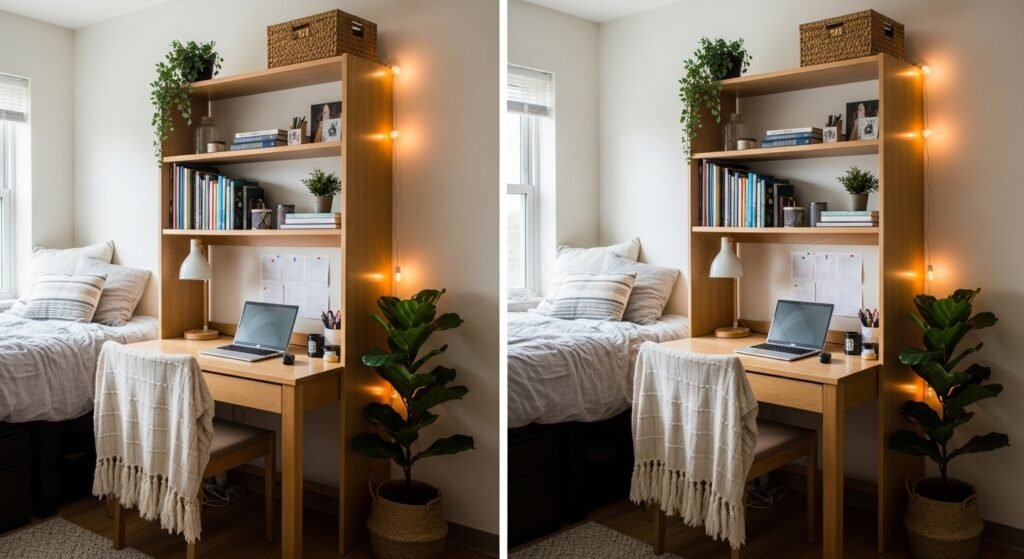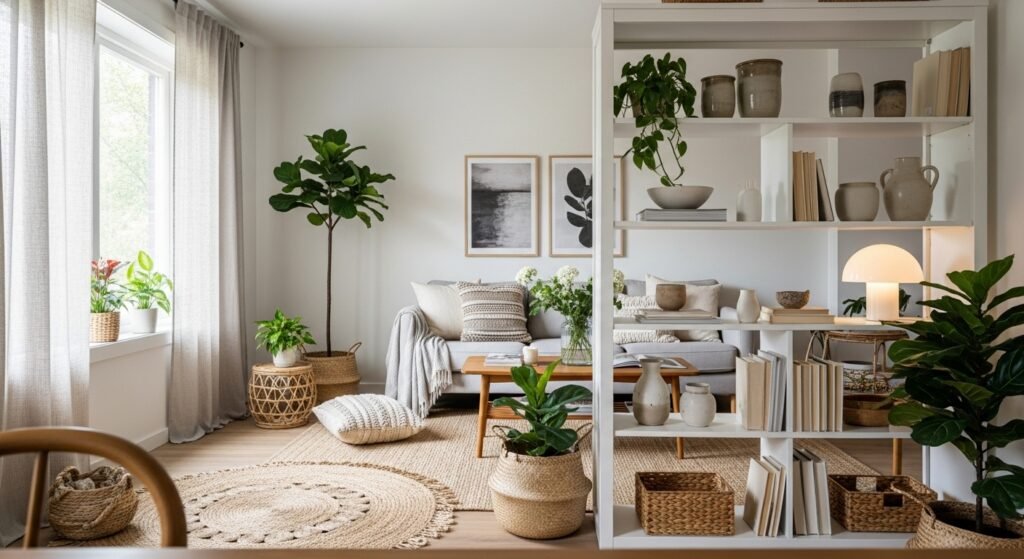
My small living room felt chopped into awkward zones. I wanted separation without closing light or sightlines. I bought a bookcase room divider, shuffled things three times, and spent about $320 total. Now the space reads like two purposeful zones. People ask where I found the shelving.
This guide is for modern casual interiors—think warm neutrals with clean lines. Budget is $250–500 if you’re starting new, or under $200 for a refresh. Works best in living rooms and bedrooms that need a subtle split. Right now, open shelving and sustainable textures are trending.
What You'll Need for This Look
Foundation pieces:
- 5-shelf open bookcase room divider, white, 72-inch (~$120-220)
- 8×10 jute area rug in natural (~$120-180)
- Linen curtains in white, 96-inch length (~$35-50 per panel, need 2-4)
Textiles & layers:
- Chunky cable knit throw in oatmeal, 50×60" (~$40-60)
- Linen duvet cover in sage green, queen (~$70-110)
- Euro pillow inserts, 26×26, set of 2 (~$35-50)
Lighting:
- Rattan pendant light, 15-inch diameter (~$60-90)
- Table lamp with linen shade, 24-inch height (~$45-70)
Finishing touches:
- Artificial olive tree in cement pot, 4-5 ft (~$70-110)
- Woven storage baskets, set of 3 (small/med/large) (~$35-55)
- Adjustable curtain rod, 48-84-inch (~$20-35)
- Graduated candlesticks set, brass finish (~$25-40)
Budget-friendly swaps:
- Replace real linen curtains with linen-look blend curtains to save ~50%.
Start with the foundation: Bookcase placement and orientation
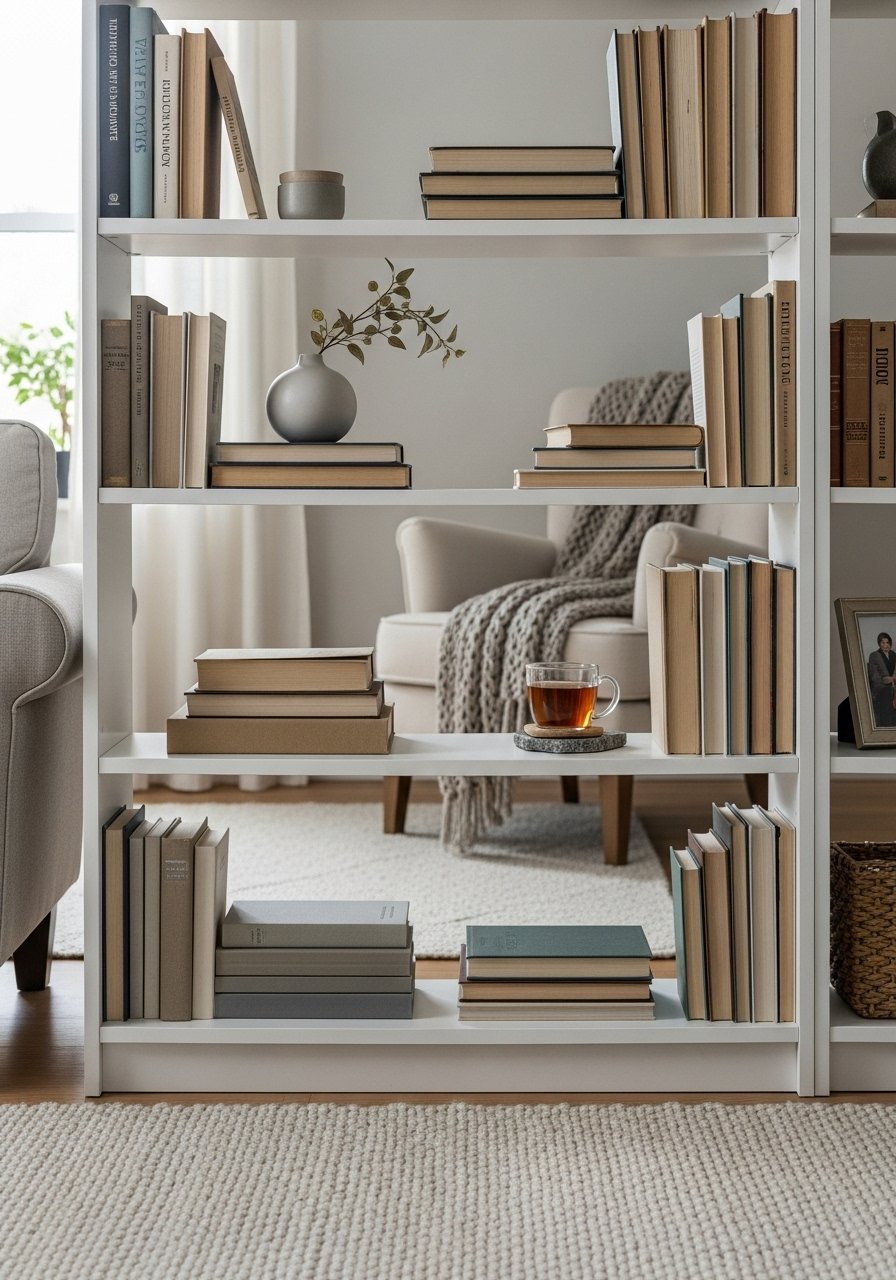
The bookcase room divider is your anchor. I measured traffic lines first. I placed my 72-inch open bookcase so its base sits fully on the rug. That keeps sightlines clean and prevents the unit from feeling like an afterthought. I used this 5-shelf open bookcase in white to keep the space light. Put heavier objects lower. Lighter décor goes higher. The visual rule I follow: 60/30/10 for mass. About 60% empty or open space in the bookcase, 30% books, 10% decorative objects.
A mistake I made: I first painted a solid black divider. It blocked light and made the room feel smaller. Swapping to a white, airy shelf opened the view. Use baskets like these woven storage baskets on lower shelves to hide clutter and add texture.
Layer in softness with textiles and curated shelf styling
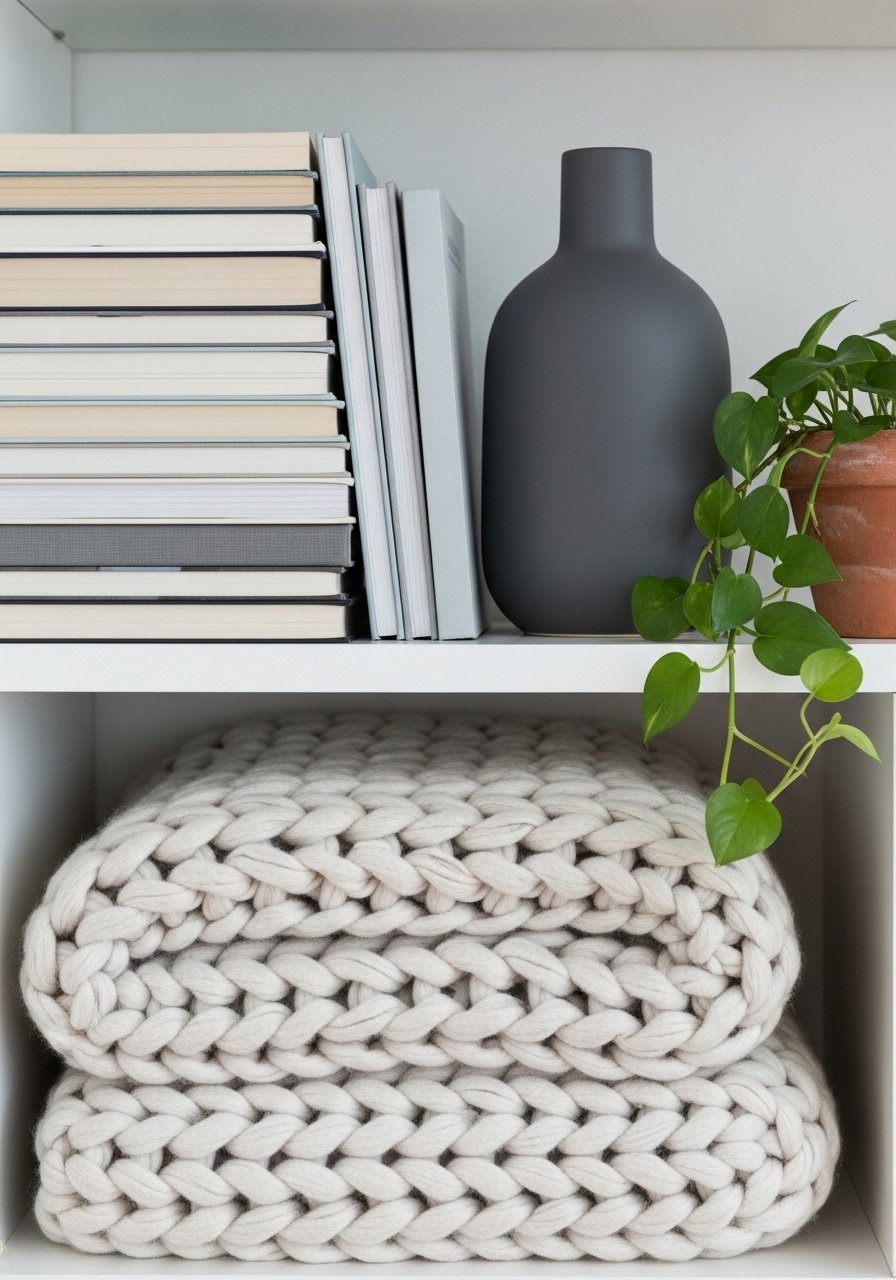
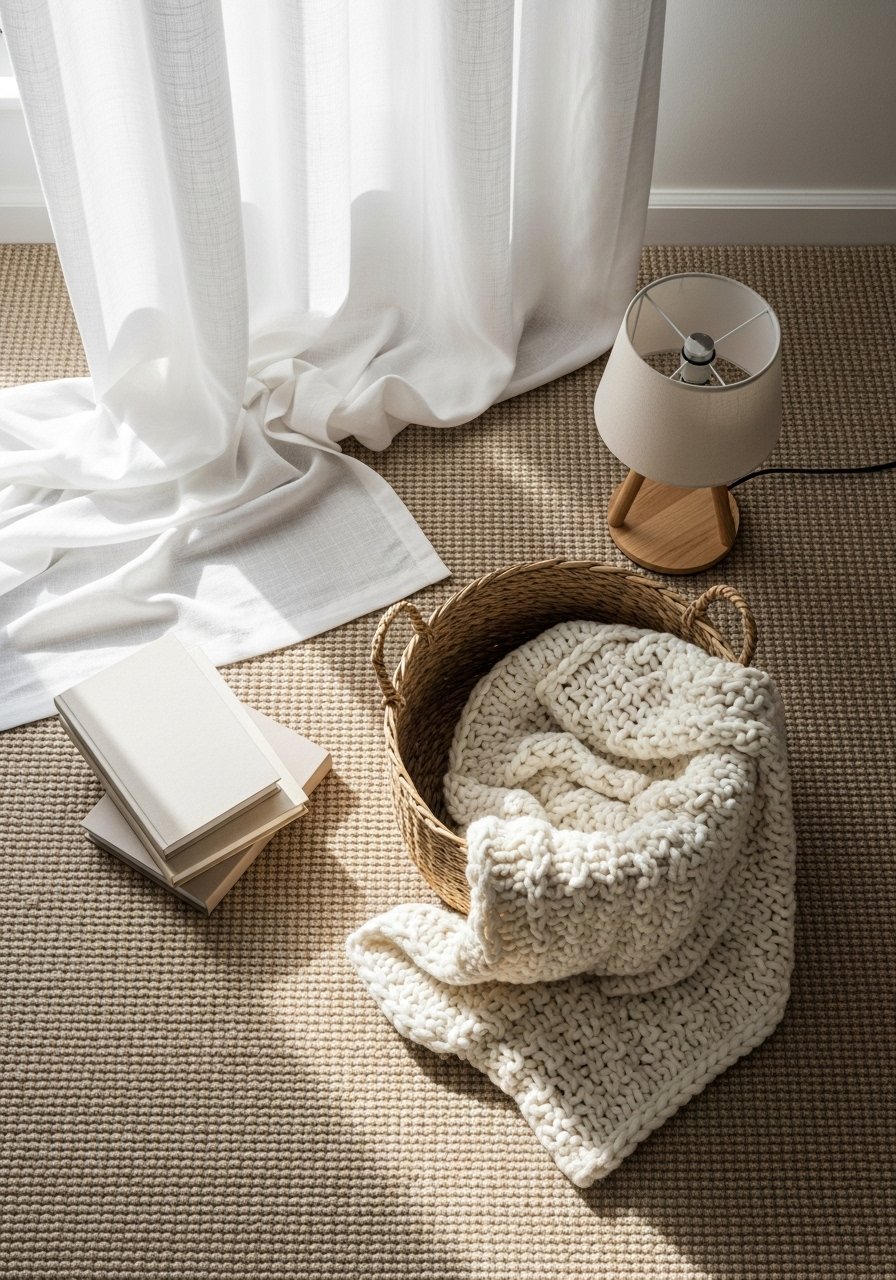
Soft layers soften the visual divide. I layered the seating side with an 8×10 jute rug and added a chunky knit throw on the sofa. On shelves, group books horizontally in stacks of three to five. Top a stack with a small object or candle. Mix materials: ceramic, wood, metal. I used graduated candlesticks and a small ceramic vase to add warm contrast to the natural fibers.
Pillow scale matters. Euro pillows (26×26) anchor larger seats. Place two euros with one lumbar pillow to keep proportions balanced. If a shelf looks busy, remove one item. Negative space is as important as objects. I often swap a decorative piece for a small plant. Try artificial olive tree in a cement pot if light is low.
Create ambiance with warm, diffused lighting and greenery
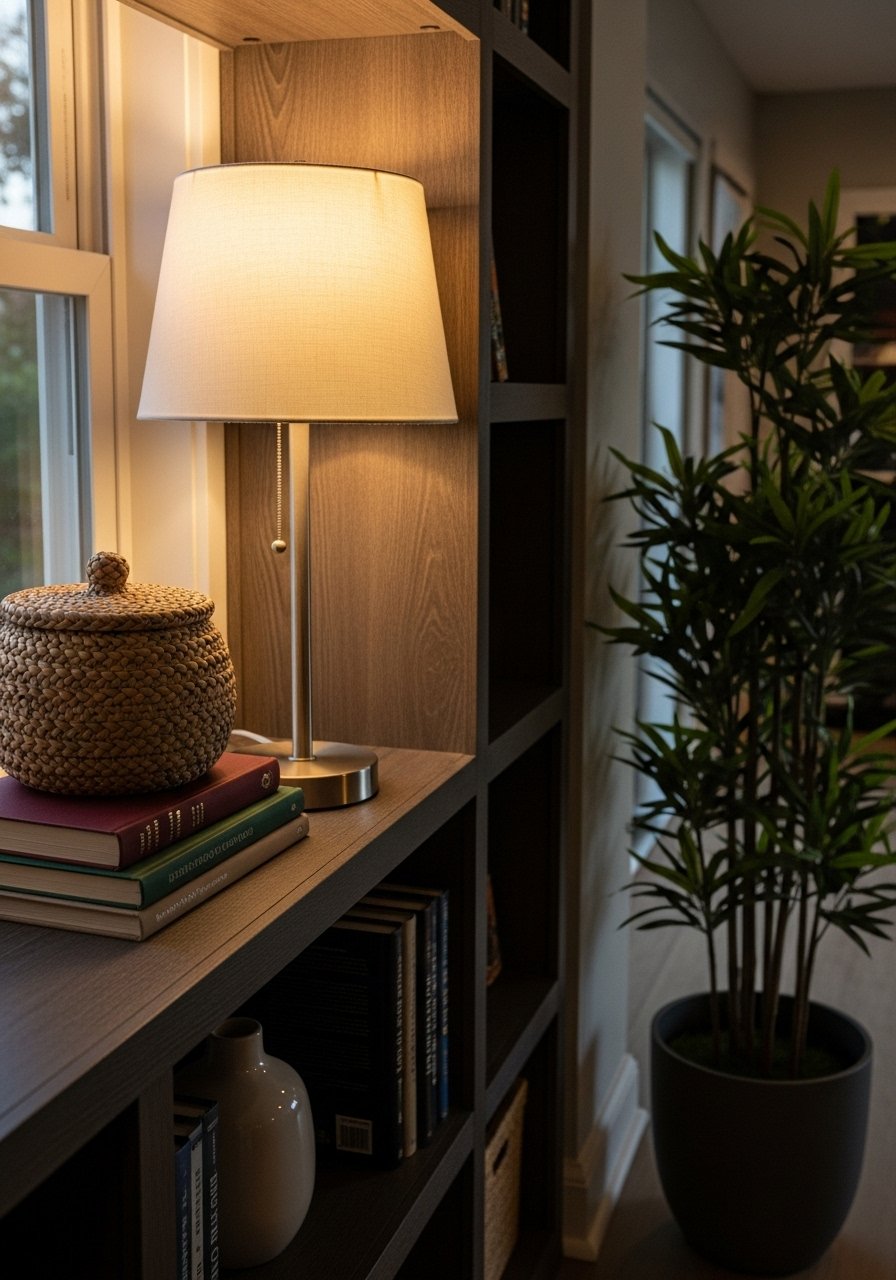
Lighting fixes mood and guides the eye through the divider. I used a table lamp with a linen shade on a middle shelf to give a soft pool of light. That pairs with overhead rattan pendant light in the main seating area. Use warm bulbs (2700K) for comfortable light. I used this table lamp with linen shade and a rattan pendant, 15-inch above the dining nook.
Greenery completes the scene. A 4–5 ft artificial olive tree sits next to the divider and softens edges. If using real plants, place them where they get light; otherwise, realistic faux plants avoid the sad-plant look. Layer bulbs and lamps so no single area is too bright. The goal is balanced pools of light that invite movement between zones.
Common Styling Mistakes to Avoid
Mistake: Using only books to fill the shelves.
Why it doesn't work: It reads flat and dense.
Do this instead: Break up stacks with objects. Add ceramic vases and open space.
Mistake: All decor at the same height.
Why it doesn't work: The eye has nowhere to stop.
Do this instead: Vary heights in odd numbers. Graduated candlesticks set helps.
Mistake: Curtains hung at the window frame.
Why it doesn't work: Ceilings look lower.
Do this instead: Mount near the ceiling with adjustable curtain rods.
Mistake: Choosing a too-small rug.
Why it doesn't work: Furniture floats and zones feel choppy.
Do this instead: Aim for an 8×10 rug so front legs sit on it.
Shopping Guide: Where to Find These Items
- For the divider: Search Amazon for "bookcase room divider 72 inch" for many open-shelf options. 5-shelf open bookcase models balance cost and size.
- Buy the rug first: Invest in an 8×10 jute rug. It sets scale and lasts years.
- Textiles on a budget: Try linen-blend curtains and add a true linen duvet later.
- Faux plants that read real: Look for "realistic artificial fiddle leaf fig" or artificial olive tree for rooms with low light.
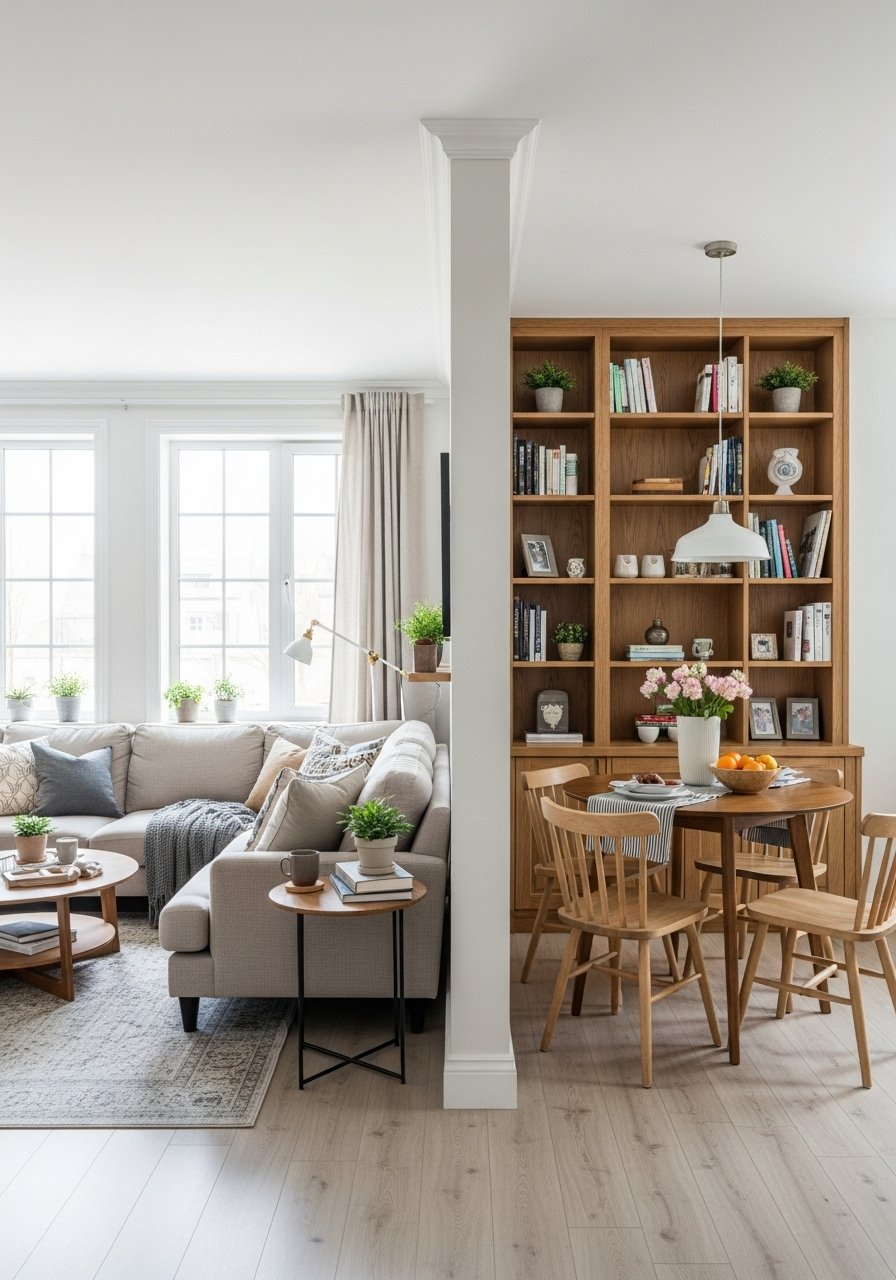
Start with placement and one shelf. Swap one object a week. I added a chunky knit throw three weeks after the shelves and it felt like a new space. Which side of the divider will you style first?