Disclosure: As an Amazon Associate we earn from qualifying purchases. Some links on this page may be affiliate links — if you click through and make a purchase, we may receive a small commission at no extra cost to you.
I am obsessed with moody rooms lately and dark home decor ideas have become my favorite way to make a space feel cozy and dramatic. There is something so comforting about deep colors, textured fabrics, and warm lighting that wraps you up like a blanket.
I wrote this because I kept getting asked by friends how to make dark decor feel inviting instead of cold, and I’ve tried a bunch of these looks in my own tiny apartment. I’ll share what worked, what looked Pinterest-perfect but failed, and the little tweaks that saved each room.
Read on and you’ll get practical, easy-to-try ideas you can actually use at home.
These 15 dark home decor ideas will transform your space
Black Kitchen Warmth

Dark cabinets can feel intimidating, but pairing them with warm wooden countertops softens the look beautifully and gives the kitchen a curated vibe. I painted my lower cabinets near the sink in a similar deep shade and added wooden butcher block for contrast – it instantly felt more lived-in. If you want drama without coldness, mix matte blacks with warm natural wood and brass hardware.
Spooky Chic Wall Display

This wall makes dark decor playful instead of gloomy by mixing spooky Halloween touches with a monochrome gallery. I love how temporary decorations can transform a mood, so I usually swap in seasonal pieces and keep the frames permanent. You could recreate this by using black frames and letting one small display area get festive when you want a twist.
Monochrome Bathroom Calm

A black and white bathroom feels crisp and modern while still moody when you use rich textures like a plush rug and matte fixtures. I swapped my bland bath mat for a patterned rug and suddenly the whole room read as intentional, not tiny. Try dark grout and black accents to anchor the space without making it feel claustrophobic.
Cozy Accent Lamp

A single lamp can set the tone for a whole room, especially against dark walls or furniture, and warm bulbs are my secret weapon for instant atmosphere. I moved a lamp from my bedroom to the living room once and it became the place everyone gravitated to in the evenings. If you want to create nooks, experiment with layered lighting instead of relying on one overhead fixture.
Graphic Tile Statement

Patterned tile gives a bold personality to a dark room and keeps it from feeling flat; a graphic black and white floor is timeless and a little playful. I once installed patterned vinyl tiles in a rental bathroom and it felt like a full renovation for a fraction of the price. Use tile or removable options to create a focal point that draws the eye down instead of letting shadows swallow the room.
Moody Blue Bathroom

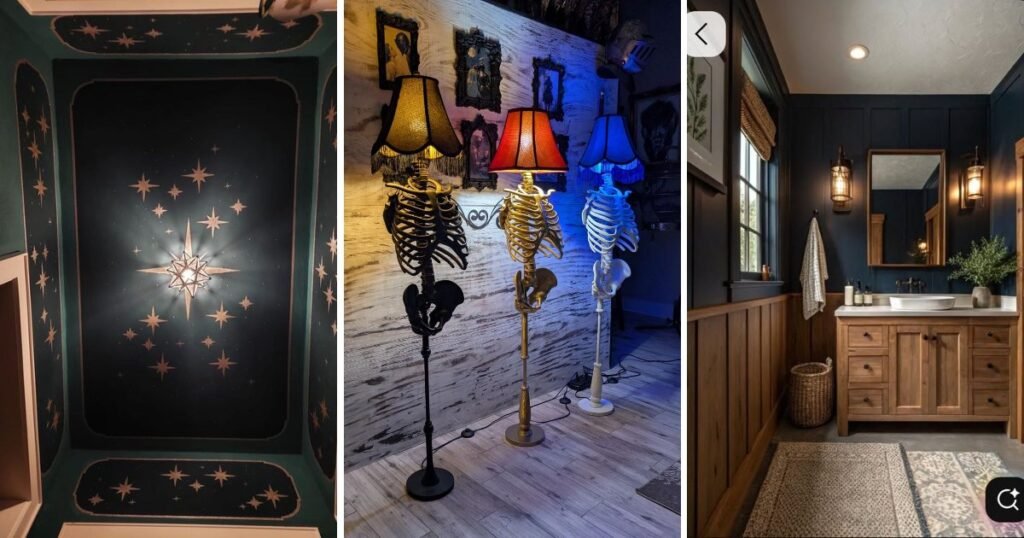
Dark blue walls paired with warm wood create a serene, spa-like vibe that still feels dramatic, and I always add a textured rug for warmth. I remember the first time I painted a tiny powder room navy and my guests kept complimenting it – it felt luxe and surprising. To keep the room bright, add a mirror that reflects light and a few brass accents for warmth.
Minimal Candle Vanity

Candles and a simple wall-mounted faucet turn a dark sink area into a moody ritual spot perfect for slow mornings. I light a candle almost every night while I do my skincare and it makes the routine feel indulgent. For safety, keep candles on a tray and pair with reflective surfaces to bounce the flame glow around the room.
Starry Ceiling Magic

A painted star ceiling feels whimsical and cozy, especially in a dark room where the stars pop and the overall vibe is dreamy. I put glow-in-the-dark stars in my childhood bedroom and to this day I love how calming it felt at night. You can recreate this by painting the ceiling a deep matte and adding small, subtle accents in green or white for contrast.
Victorian Pink Canopy

A canopy bed with saturated pinks and dark walls feels romantic and dramatic rather than juvenile when balanced with rich textures and vintage glass. I once styled a friend’s guest room like this and she worried it would be too much, but guests loved the cozy, boudoir energy. If you want bold romance, mix jewel tones with black accents and keep bedding tactile and layered.
Eclectic Bookish Living Room

Layered bookshelves, mixed furniture, and deep wall colors make a living room feel intentionally collected and cozy, not cavernous. I moved into an apartment with bare white walls and added a dark accent wall plus shelves – suddenly the space felt like a sanctuary. Encourage a slightly cluttered, curated look by mixing pottery, books, and art rather than keeping everything minimal.
Fireplace Reading Corner

A fireplace instantly softens dark decor, and creating a reading corner with plush seating makes the room feel lived-in and warm. I curled up by a friend’s fireplace once during a rainy weekend and declared it the coziest spot on Earth – that memory stuck. To recreate, add layered throws, a small side table for tea, and a soft lamp to keep it intimate.
Grouped Table Lamps

Grouping lamps of different sizes creates a layered glow that complements dark walls and avoids harsh shadows. I experimented with three varied lamps on a console and it made the whole hallway feel like a boutique hotel. Mix lamp styles but keep shade tones warm to maintain cohesion and a cozy vibe.
Classic Rose Accent

Bright flowers like red roses pop against dark backgrounds and introduce life and fragrance to moody rooms without lightening the aesthetic. I brought fresh roses to my dining table for a dinner party and they were the only bright thing in the room – everyone noticed. Use seasonal blooms to add contrast and an organic layer to your dark palette.
Maximalist Cozy Den

A maximalist room with rich textures and many objects feels like a cozy den when dark colors tie everything together. I used to fear clutter, but after embracing curated chaos my favorite evenings were spent wrapped in layers on the couch. Let items you love mingle – the key is curated intent rather than random accumulation.
Wood-Plank Ceiling Warmth

A wood-plank ceiling adds instant warmth and texture to a dark living room and makes the space feel intentionally cozy. I once stayed in a cabin with a similar ceiling and promised myself I’d copy the vibe when I had my own place – it made every room feel grounded. Pair the planks with soft, dimmable lighting and rustic accents for an enveloping, comfortable feel.
How to Actually Make This Work For You
Start small and test one dark element at a time – paint a single accent wall, swap in a statement rug, or change cabinet hardware so you can see how the room shifts before committing fully. Balance is everything, so always add warm textures like wood, brass, layered rugs, and soft lighting to prevent the space from feeling cold, and use mirrors or reflective surfaces to bounce light. Finally, trust your instincts and personalize the space with items you love so it reads as cozy and intentional rather than just styled.
How do I keep a dark room from feeling too small?
Answer – Use contrast and layers like lighter textiles, reflective mirrors, and strategic lighting to open the space while keeping the dramatic color. Adding a few lighter accents and keeping window treatments minimal will help the room breathe.
Will dark walls make my furniture disappear?
Answer – Not if you create contrast with textures, metals, and wood tones; those elements will pop against deep walls and define your furniture silhouettes. Consider adding rugs, throws, or lighter pillows to outline pieces visually.
Are dark kitchens practical for everyday use?
Answer – Yes, with the right finishes and maintenance; matte finishes hide smudges differently than gloss, and warm countertops or brass fixtures reduce the starkness. I recommend focusing on durable surfaces and good task lighting for cooking areas.
How can I test a bold dark color before painting the whole room?
Answer – Paint a large sample on a single wall or on foam boards you can move around the room at different times of day to observe light and undertones. This helps you see how the color shifts with your lighting and furniture before committing fully.