Disclosure: As an Amazon Associate we earn from qualifying purchases. Some links on this page may be affiliate links — if you click through and make a purchase, we may receive a small commission at no extra cost to you.
Okay, listen – if you’ve ever stared at an awkward open space and wished for privacy without a full renovation, these diy room divider ideas are exactly the kind of inspo that saved my last apartment. I get ridiculously excited about simple, creative fixes that actually change how a room feels, and a good divider can do that bigger than you think.
I wrote this because I remember living in a tiny studio where I needed a bedroom but couldn’t afford walls, so I tried everything from curtains to furniture placement and learned a few things the hard way. I’m sharing what worked for me and what looked cute in photos but failed in real life, so you don’t have to do my trial and error.
Read on and you’ll get practical, pretty ideas with real tips so you can pick one and make it happen this weekend.
These 13 DIY Room Divider Ideas Will Transform Your Space
Built-In Bookcase Divider

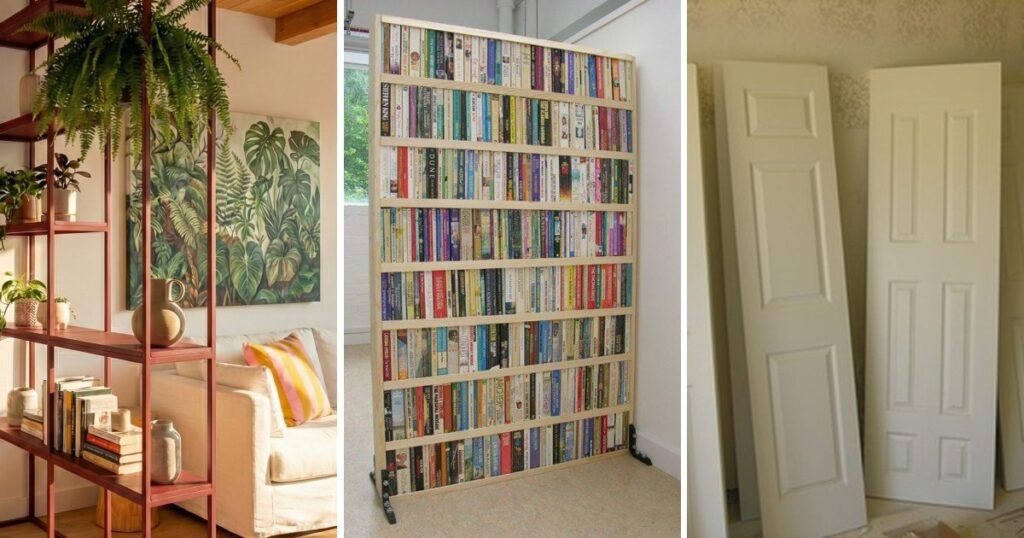
If you want privacy and storage at once, a tall bookcase used as a divider is a total game changer because it creates a solid barrier while giving you shelf space for books and plants. I once built a shallow, anchored unit between my sleeping nook and living area and suddenly my tiny space felt studio-chic instead of bedroom-in-the-living-room. You can stagger open and closed storage to keep it from feeling heavy, and adding baskets to lower shelves hides the clutter so guests only see the pretty parts.
Modern Sliding Panels

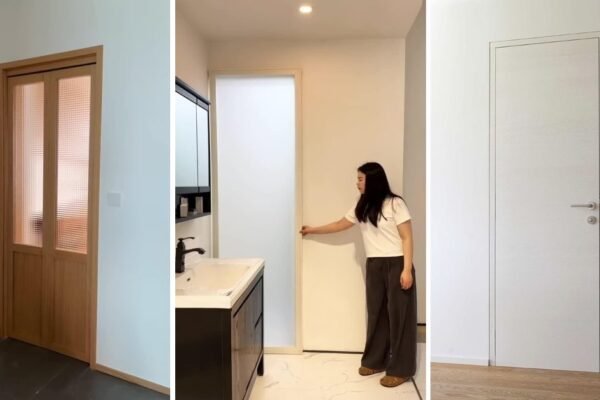
Sliding wood and glass panels feel sleek and let light flow while still separating a space, which is perfect if you hate closing things off completely but still want defined areas. I installed a light-track system once and it gave my workspace a serious upgrade without blocking the sunshine that my plants need. Consider frosted glass or textured panes if you want more privacy without sacrificing the airy look.
Freestanding Fabric Screen

A simple freestanding fabric screen is the quickest way to add softness and instant separation, and it folds away for easy storage when you want an open plan. I set one behind my bed during a move, and friends assumed I’d hired a designer because it looked intentional and cozy. You can choose bold patterns to make a statement or neutral linen for a calm, airy vibe that blends with most decor.
Decorative Shelf Layering

Shelves facing both directions work as a semi-transparent wall that still feels connected, and stylistically you get to play with layers of plants, books, and decor that peek through from either side. When I moved into my first one-bedroom, I split the living area with a double-sided shelf and never looked back because it defined zones without feeling cramped. Try mixing vertical storage with a few open cubes so light can weave through and the room breathes.
Simple Wooden Panel Pairing

Two wooden panels hinged or simply leaned together are rustic, budget-friendly, and surprisingly effective at dividing a studio or large room because they read as a cohesive architectural element. I remember making a DIY pair with reclaimed boards and staining them warm walnut, and the whole place felt more curated overnight. If you want extra privacy, attach lightweight curtains or fabric panels to the inside face so the divider becomes two-tone and more functional.
Low Divider at Bed Foot

A low divider placed at the foot of the bed defines the sleeping area without boxing it in, and it can double as a bench, storage unit, or plant stand depending on your needs. You can personalize this with cushions for seating or baskets tucked underneath to keep linens and extras tidy. I swapped a bulky dresser for a slim custom unit once, and it made my bedroom feel like a completed room rather than a bed stuck in a corner.
Glass Door Photo Moment

Using glass doors or a glass-panel partition is perfect if the view and natural light are non-negotiable because it divides sound and space without sacrificing brightness. I photographed a client’s apartment where the glass divider made the entire space feel open and high-end, and guests kept asking if we’d renovated. Frosted or patterned film can give you privacy while preserving the luminous feel if you need it.
Wide-Frame Sliding Doors

Wide-frame sliding doors give you the flexibility to open up for parties and close for cozy movie nights, and they feel custom without the cost of building permanent walls. I’ve used barn-style tracks in a rental to get the same vibe and the sliding action looks so professional that people assume it’s original to the apartment. If sound control matters, opt for heavier doors or add weatherstripping at the tracks to reduce noise transfer.
Pallet Partition With Personality

Pallets upcycled into a divider are boho and budget-friendly, and they let you add little shelves for succulents or fairy lights that instantly warm the room. I repurposed a couple of pallets once and used a sander and whitewash to make them look intentional rather than leftover materials from a warehouse. If you want cleaner lines, cut the pallet boards evenly and seal them so they last beyond one season.
Layered Sliding Panels

Layered sliding panels combine texture and functionality because you can mix opaque and transparent materials to dial the privacy up or down as needed. I love how versatile this is when hosting overnight guests; you can create a private sleeping area without losing the feel of a shared home. Think of panels as furniture-scale art pieces that also solve real life spatial problems.
Open Concept Divider With Door

Keeping an open concept but adding a single door or partial partition gives you control without changing the flow, and this is a great compromise for couples who want separate work zones. I installed a slim-framed glass door once to carve out a home office, and it kept the open aesthetic while cutting down on echo during calls. Add matching hardware to tie the divider to the rest of the room and the result looks intentional and custom-built.
Repurposed Door Ensemble

Line up old doors as a partition to add vintage character and instant architectural detail, and you can hinge them for a folding setup or lean them for a casual, artsy look. I collected mismatched doors from Craigslist and painted them the same warm white, which made them read as a single, intentional installation that guests always comment on. For safety, anchor tall doors to the floor or wall so they don’t tip if you have kids or pets around.
How to Actually Make This Work For You
Start by measuring your space and thinking about how the divider will be used – do you need full privacy, partial separation, storage, or just a visual cue that zones are different – and choose materials that match function. Next, pick a style that complements your existing decor so the divider feels like an upgrade rather than an afterthought, and if you rent, prioritize non-permanent solutions like freestanding screens or tension rods to avoid security deposits lost to permanent changes. Finally, test placement before committing by using temporary tapes or cardboard cutouts to live with the idea for a few days so you can tweak height and position without wasting time or money.
How do I choose the right height for a divider?
Measure the sightlines in your room and think about whether you want a full visual block or a partial divider that still lets light over the top – typically 5 to 7 feet works for most apartments. Consider furniture heights around the divider and try to keep it balanced with the rest of the room for a cohesive look.
Can I make a room divider in a rental?
Yes – choose freestanding units, tension-rod curtains, or panels that lean and don’t require drilling into the wall, and use removable adhesive strips if you need to fasten anything temporarily. These options give you the flexibility to return the space to its original condition when you move.
What materials are easiest for beginners?
Wooden pallets, lightweight plywood panels, fabric screens, and ready-made shelving are all beginner-friendly because they require minimal tools and can be customized with paint or stain. Start simple and add hardware or finishings as you get more comfortable with DIY projects.
How do I make a divider feel like part of the room design?
Unify the divider with your color palette, repeat a material or finish found elsewhere in the room, and style both sides with similar decor to make it feel intentional – this ties the new element into the room’s overall story. Lighting and plants are quick ways to integrate the divider so it looks like a natural part of your home.