Disclosure: As an Amazon Associate we earn from qualifying purchases. Some links on this page may be affiliate links — if you click through and make a purchase, we may receive a small commission at no extra cost to you.
Okay friend, I have been totally obsessed with fabric wall decor ideas lately and I can already hear your creative side waking up. There is something so cozy about textured fabric art that instantly turns a blank wall into a warm, welcoming space.
I wrote this because I know how overwhelming it can be to pick a direction when every Pinterest board is calling your name – I have spent weekends testing small projects so you don’t have to. I tried a few of these looks myself and learned which ideas feel effortless and which need a little extra finesse.
Read on and you will walk away with twelve real, do-able fabric wall decor ideas, plus practical tips so you can pick the ones that will actually work in your home.
These 12 Fabric Wall Decor Ideas Will Transform Your Space
Button Cluster Magic

I love how playful a button cluster feels – it reads handmade and joyful without trying too hard. You can collect mismatched buttons from thrift stores or save extras from old shirts and sew them onto a simple fabric backing. When I made one, I arranged the colors with no exact plan and it turned out better than my attempts to be perfectly symmetrical. If you like plants, set one of these near a trailing vine and watch the texture party continue on the wall.
Quilt Frame Flair

Framing a small quilt or vintage fabric is such an elegant way to show off pattern and history without committing to wallpaper. This is perfect if you have a family quilt or a thrifted textile with a story – make the frame deep enough so the fabric breathes. I once framed a tiny patchwork my grandmother stitched and it became the favorite conversation starter in my living room. You can also swap fabrics seasonally for an easy refresh.
Gallery Wall With Fabric

Mixing small fabric pieces into a gallery wall softens the whole arrangement and adds texture that frames alone can’t achieve. Try pairing embroidery hoops, small framed swatches, and fabric postcards with prints and photos. When you hang a mix like this, start with the largest piece and work outwards to keep the composition balanced. You will find it much more forgiving than a perfectly symmetrical grid.
Textile Chair Accent

Use fabric wall hangings to define a cozy reading nook around a favorite chair and it will instantly invite someone to sit down. A woven or quilted piece behind the chair creates depth and frames the seating like art. My mom taught me to layer a small throw on the chair and a larger textile on the wall when space feels bare, and it always makes the corner feel intentionally styled. Try keeping the color palette to two or three tones for a calm, curated look.
Patchwork Living Room Piece

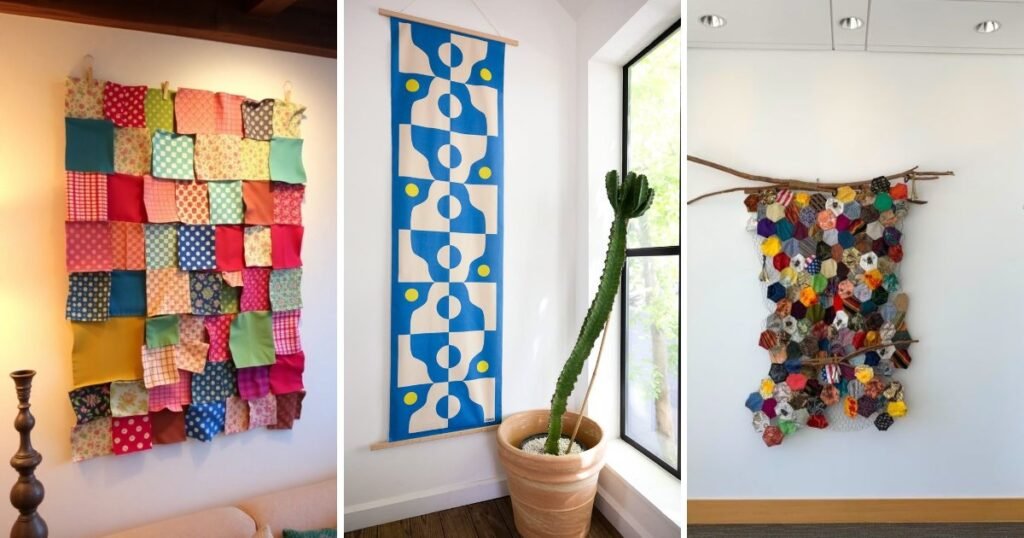
Patchwork pieces are great when you want something bold and full of story – each square can be a memory or just a pattern you loved. Making one does take time, but the reward is a one-of-a-kind focal point that no store can duplicate. I stitched a small version using leftover fabric from a dress I loved and it felt like wearing the memory on my wall. If you don’t sew, consider an appliqué technique or a no-sew glue-and-backboard method for a clean finish.
Bead Fringe Statement

A beaded fringe mounted on a textile strip makes an instant tribal-modern statement and adds movement when a draft blows through. Combine beads with fabric ribbons or narrow strips for extra visual interest and texture contrast. If you like tinkly, tactile decor, this is such a fun piece to touch and rearrange. You can tailor the color story to your room by choosing bead finishes that reflect your lighting – matte for cozy, glossy for glam.
Polka Dot Patch Art

Small fabric squares with playful polka dots can be pinned to a backing board for an artsy, modern quilt-like look without the fuss of quilting. This is a fast way to get a designer vibe and you can experiment with scale by using few large squares or many tiny ones. I swapped in bright dots for a guest room and it made the space feel instantly happier and more personal. Consider framing the finished piece behind glass if you want a sleeker, more protected look.
Bold Abstract Textile

Think of a fabric wall piece like a large canvas – paint, dye, or stitch an abstract design to get a gallery-level focal point without spending a fortune. You can use fabric paints, batik techniques, or layered appliqué to build depth and color. I once painted a freeform design on muslin and the imperfect brushstrokes gave the room a relaxed, collected feel. Keep composition in mind – rule of thirds works wonders on a textile too.
Cactus Corner Contrast

A statement textile next to a sculptural plant like a cactus creates a calm-but-graphic vignette full of personality. The natural tones in fiber and green life play off each other so nicely, keeping the arrangement feeling grounded and modern. Once at a flea market I found a blue and white runner that I hung vertically, and people kept asking where I bought the art. If your plant is dramatic, choose a simpler fabric so both elements have space to breathe.
Runner Turned Art

Table runners and ceremonial linens are often too beautiful to hide – hang one as vertical wall art to celebrate its pattern and fringe. Short rods or decorative clips make the installation feel intentional rather than improvised. I turned a runner into a hallway piece and it made the narrow space feel taller and more curated. This is an easy, reversible way to repurpose textiles you already own.
Curated Lighted Display

Combine fabric pieces with focused lighting for a mini-gallery feel that highlights texture and stitch work in the evening hours. Picture a small textile under a pendant or a picture light – the shadows will bring out weave and embroidery cleanly. I test-hung a textile and then moved the lamp until the shadows felt soft and flattering, which made all the difference. This trick is especially helpful in rooms without much natural light.
Sidewall Textile Portrait

Placing a long, slim textile on a side wall can read like a portrait and bring vertical movement to a low-ceiling room. This approach is wonderful in hallways or the side of a couch where artwork feels squeezed. I once styled a rental living room with a slim hanging and it made the entire space feel intentionally designed without any construction. Try matching the scale of the hanging to furniture height so the eye moves naturally across the room.
How to Actually Make This Work For You
Start by assessing the wall and the room’s natural light, then pick one idea that feels easiest and most true to your style so you can commit to it without stress – small successes build confidence and momentum. Consider scale and placement first instead of pattern so the piece complements your furniture and sightlines, and experiment with temporary hanging methods like removable hooks or clips to avoid commitment mistakes. Finally, balance texture with simpler elements around it so your fabric work shines instead of competing with too many patterns.
How do I choose the right size textile for my wall?
Measure the wall and imagine the sightline from where you usually sit or enter the room – larger spaces can handle wider pieces while narrow walls benefit from vertical hangings. A good rule is to use around 60-75 percent of the wall width above a sofa or console for balanced proportion.
Can I hang fabric without nails or permanent fixtures?
Yes – use removable adhesive hooks, picture hanging strips rated for the weight, or a tension rod setup if the textile is lightweight and you want a renter-friendly solution. Always check the weight limits and test a small area first to avoid surprises.
What textiles work best for beginners who don’t sew?
Look for tapestries, runners, or scarves that can be hung as-is and consider using fabric glue, iron-on hem tape, or a simple backing board if you want to stabilize the piece without stitching. Many of these no-sew approaches create professional-looking results with minimal tools.
How do I care for textile wall art to keep it looking fresh?
Keep pieces away from direct sunlight to avoid fading, and occasionally dust gently with a soft brush or low-power vacuum setting through a mesh screen. For deeper cleaning, follow the fabric care instructions or spot-clean with a mild detergent and test in an inconspicuous area first.