Small outdoor areas can feel tricky, but tiny tweaks make them feel like a cozy retreat – especially when you focus on garden decor for small spaces that pack a punch. I get excited about clever ideas that turn balconies, tiny yards, or narrow strips into something Instagram-worthy without breaking the bank.
I wrote this because I used to stare at a postage-stamp yard and think nothing could work, and then slowly started collecting little pieces that actually changed everything. You might find yourself inspired by one single idea here and suddenly have a whole mini oasis – I did.
Read on and I promise you’ll walk away with doable, charming ideas that fit small spaces and feel totally yours.
These 15 Garden Decor for Small Spaces Ideas You’ll Love
Bee Wheel Flower Stacks

I adore the whimsy of stacked wheel planters that read like little sculptures, and this one feels playful enough to lift a tiny corner into something special. If you have a narrow strip by a fence, placing vertically stacked pots saves precious floor space while adding height and interest. You could even paint the wheels to match your personality and watch neighbors smile as they walk by. I once improvised a similar stack with thrifted bicycle rims and it instantly became a conversation starter.
Happy Hanging Bucket Planter

Hanging buckets are my go-to when floor space is non-existent because they float color at eye level and leave room for foot traffic below. You can mix herbs and trailing flowers so scent and color mingle above your seating area, and it’s surprisingly easy to hang them from hooks or a simple rod. I made three tiny hanging planters last summer and they turned my claustrophobic balcony into a layered, fragrant nook. Try combining mismatched buckets for an eclectic, lived-in feel that looks curated rather than perfect.
Old Chair Planter Charm

Turning an old chair into a planter is such an easy way to add character without stealing space from walkways, and it reads like vintage art instead of clutter. Remove the seat or add a shallow liner to hold soil, then let trailing plants tumble out for that romantic, slightly wild look. I painted a flea-market chair mint green and it became my front-step signature piece that guests always photograph. You might find one at a garage sale and have a gorgeous planter within an afternoon.
Painted Button Garden Accents

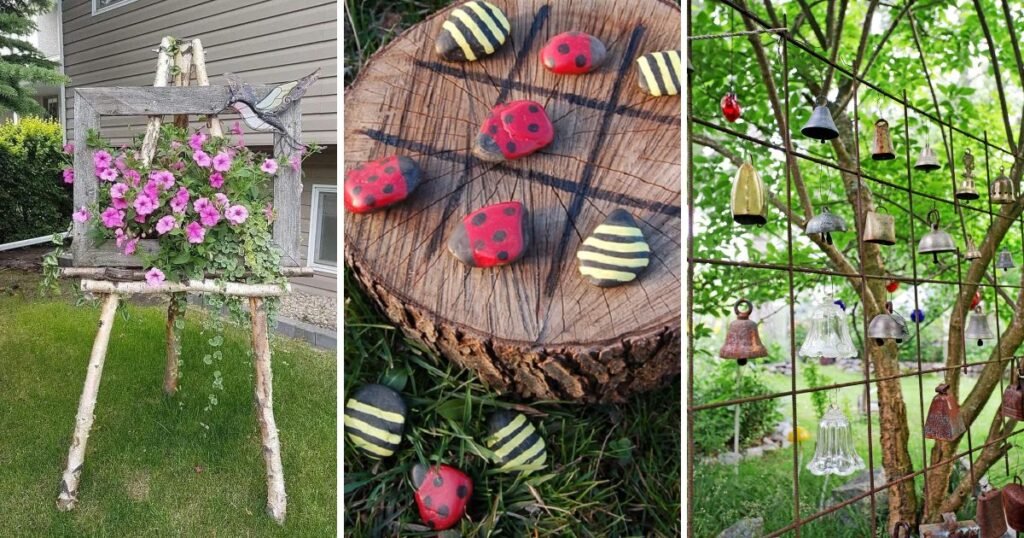
Small painted objects like wooden buttons or stones are perfect accents for tight gardens because they bring personality without bulk. Scatter a few brightly painted pieces along a border or nestle them among succulents for a touch of whimsy that draws the eye. You can craft these on a rainy afternoon and switch colors seasonally for an instant refresh. They work beautifully when grouped rather than spaced out, so think clusters over single pieces.
Minimal Rock Sculptures

A pair of small sculptural pieces can anchor a tiny lawn patch or a rock garden without taking up much room, and the contrast against greenery looks so curated. Think simple silhouettes and dark finishes to make plants pop and avoid visual clutter. I once used two ceramic forms as a focal point near stepping stones and everything around them felt more intentional. Place them near a bench or near a path so they read as art rather than random decor.
Serene Garden Fountain Spot

A compact fountain brings calming water sounds and instantly makes a small garden feel like a sanctuary rather than just a patch of plants. Choose a self-contained style so you don’t need plumbing and position it where you can hear it from your window or seating area. I love fountains because they also attract birds, and watching them bathe became my favorite morning ritual. Be mindful of maintenance and pick a model that’s easy to clean so it stays charming, not messy.
Rustic Faucet Water Art

A suspended faucet can act as a focal point and a whimsical nod to rustic charm without occupying horizontal space, and its vertical presence draws the eye upward. You could use it purely as art or connect it to a small basin for a tiny water feature that takes up almost no room. I installed a faux faucet on a fence and everyone asked if it worked – it became my favorite fake-utility prop. Pair with trailing vines to make it feel rooted and lived-in.
Colorful Cottage Flower Bed

A small, densely planted flower bed feels fuller than scattered pots and creates a cottage vibe that’s cozy and romantic. Choose compact varieties and layer heights so every plant has its moment without sprawling into walkways. I filled a tiny corner with mixed annuals and suddenly my tiny yard felt like a full garden, not an afterthought. Keep colors cohesive to avoid a chaotic look and let one hue dominate for harmony.
Simple Cement Wall Planters

Cement planters mounted against a wall give you greenery at eye level while preserving precious ground space and they read modern and sturdy. Opt for narrow varieties or shallow boxes that won’t overwhelm the wall and consider a matching trio for balance. I hung a few small cement pots on my patio wall and they instantly gave the vertical plane texture and life. Water retention is key, so add drainage or use succulents for lower maintenance.
Glass Bells On Branches

Hanging small glass bells or ornaments from a tree adds delicate movement and soft chimes that make tiny gardens feel enchanted without taking up floor space. Choose weatherproof glass or acrylic and hang them at varying heights for a layered, fairy-tale effect that delights at dusk. I remember stringing colored glass on my backyard tree and feeling like I lived in a storybook for the whole summer. They also cast lovely specks of reflected light when the sun passes through.
Bird-Friendly Flower Nook

Creating a small corner with nectar-rich flowers and a tiny feeder makes your outdoor area lively and rewarding, and it doesn’t require much room. Pick plants that bloom across seasons to keep visitors coming and place feeders where you can admire birds from a window. I added a petite feeder to my balcony and suddenly morning coffee felt like a private nature show. Keep feeders clean to protect birds and maintain the joyful vibe.
Fence-Mounted Bloom Display

Mounting planters on a fence is an instant way to add greenery while keeping your ground entirely free for furniture or play, and it reads like living art. Use cascading plants for softness and pick lightweight containers so the fence doesn’t sag over time. A friend of mine installed a row of pocket planters and now her narrow patio feels like a secret garden in the city. You can alternate colors and textures to create a pattern that suits your mood.
Tabletop House Plant Display

Grouping small pots on a table creates a mini garden that’s portable and perfect for small balconies or porches, and you can rearrange it nightly depending on your mood. Select varying heights and leaf textures so the display feels layered and intentionally designed. I switch my tabletop grouping from herbs to flowers through the year and it makes the whole space feel seasonal and cozy. This approach also makes watering simpler because everything is clustered together.
Tree Base Rock Bed

Creating a tidy rock bed with a few select plants around a tree trunk turns an awkward base into an intentional focal point that doesn’t demand wide borders. Choose groundcover or low shrubs so the tree remains dominant and the arrangement reads clean. When I cleared brush around a backyard tree and added a ring of stones and a fern, the whole yard felt polished and low maintenance. Mulch and stones also help with water retention and weed suppression.
Painted Rock Flower Border

Painting rocks to look like flowers or using painted stones as a border is a charming and super-budget-friendly way to define a tiny flower bed or path. Paint in durable outdoor paint and seal so the colors last through rain, and arrange rocks tightly so the border reads intentional. My sister and I painted dozens of pebbles on a rainy afternoon and they brightened a shady strip near the driveway for months. This is also a great project to involve kids and make the space feel personal.
How to Actually Make This Work For You
Start by measuring your space and choosing one vertical or wall-mounted element to create height so the eye travels upward and the area feels larger; then pick a unifying color or material to repeat across two or three pieces so everything reads cohesive rather than cluttered. Next, mix containers and textures but keep scale in mind – small plants in oversized pots will look awkward, so match pot size to plant size and rotate pieces seasonally to keep things fresh. Finally, plan for simple maintenance by choosing low-water plants for tiny zones and using self-watering or easy-drain containers to save time and keep your decor looking loved.
How do I choose plants for a tiny garden?
Pick compact varieties and look for words like “dwarf” or “compact” on plant tags, and prioritize perennials or low-water succulents if you want less upkeep. Consider light conditions first – full sun, partial shade, or full shade – and match plants to those conditions to ensure better success. Also, think vertically and use trailing plants to add volume without using more ground space.
Can I use recycled items safely as planters?
Yes, recycled items like chairs, buckets, or tins can be repurposed as long as you add drainage and, when necessary, line them with landscape fabric to prevent soil loss. Avoid containers that previously held toxic chemicals and consider sealing rough wood to prolong its life in wet soil environments. With a little prep you can turn almost anything into a charming planter that fits your style.
What’s the easiest way to add height without bulky furniture?
Think vertical planters, wall-mounted pots, hanging baskets, or a narrow shelving unit against a fence to lift greenery off the ground. Stacked planters or a ladder-style plant shelf also create layers without needing wide footprints, and they make watering and rearranging easier. Use taller plants or climbing vines to emphasize verticality and draw the eye upward.
How do I keep a small garden low maintenance?
Choose drought-tolerant or native plants, use mulch or decorative rocks to suppress weeds, and group plants with similar water needs together so irrigation is efficient. Self-watering containers or drip irrigation can reduce daily care, and a regular but light schedule of deadheading and pruning keeps things tidy without big time commitments. Start small and add elements gradually so upkeep remains manageable and fun.