Disclosure: As an Amazon Associate we earn from qualifying purchases. Some links on this page may be affiliate links — if you click through and make a purchase, we may receive a small commission at no extra cost to you.
Okay friend, tiny outdoor spaces are my absolute favorite challenge and I get a little giddy thinking about clever solutions for garden decor projects for small spaces. When you have a balcony, narrow patio, or even a sunny corner, the right small-scale pieces can make it feel like an actual escape.
I made this list because I was tired of scrolling and not finding simple, doable ideas that didn’t require a truckload of tools or a giant budget – I’ve tried a bunch of them myself and some became regulars on my balcony. I want to share options that feel creative, affordable, and cozy so you can pick what fits your vibe and space.
Read on and you’ll get ten specific projects with my real-life tips so you can pick one to try this weekend.
These 10 garden decor projects for small spaces
Suspended Barrel Planter

Turning an old metal barrel into a hanging planter is such a bold move that actually frees up floor space and adds height – I once hung one from a garage beam and it immediately made my tiny area feel sculptural and alive. If you don’t have a beam you can use a sturdy bracket or a corner hook and a heavy-duty chain, and I always recommend lining the inside with a plastic liner and drainage holes to keep soil and water in balance. For a small-space version pick trailing plants like ivy, sweet potato vine, or herbs that spill prettily over the sides so the planter reads large without eating up walkable room.
Sculptural Garden Focal

A single wooden sculpture can act like an anchor in a tight garden corner and create the illusion of intention and scale even when you have very little room. I put a slim carved piece against the wall of my balcony and the vertical line draws the eye up, making the space feel taller, and visitors always stop to ask where I got it. Consider weatherproofing with a clear sealant and placing it on a low pedestal or plant box so it reads like art instead of clutter.
Cozy Lantern Step Display

Using a trio of wooden lanterns on steps or stacked crates gives you instant mood lighting and a layered, welcoming vibe that doesn’t need much floor space. One summer I lined three lanterns down a narrow stair and swapped candles for LED tea lights when I wasn’t home, and the soft glow made the place feel like a mini retreat at night. If you want longevity pick lanterns with glass panes for wind protection and add small potted blooms around the base to boost texture without crowding the walking path.
Mini Wall Candle Garden

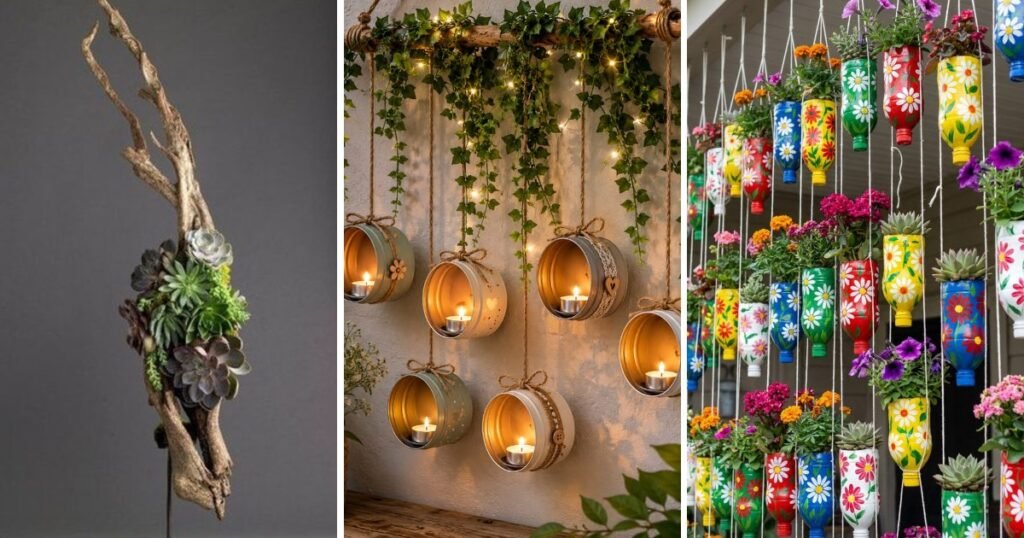
Hanging tea light holders on a vertical planter wall is a brilliant way to add atmosphere and greenery without touching the floor, and it works especially well on balcony railings or blank fences. I experimented with mason jar holders and wire hangers, and the trick I learned was to stagger heights and mix in trailing succulents so each jar gets its own spotlight and visual breathing room. If you use real candles only light them when you’re there, and otherwise pick battery-operated candles that flicker realistically for safety and low upkeep.
Recycled Bottle Circle

Repurposed plastic or glass bottles arranged in a circle make a playful low-cost planter or border that’s perfect for patios and little gardens – you can paint them, cut them into planters, or hang them at different heights. I gathered bottles after a neighborhood cleanup and turned them into a border for my herb patch, and people always compliment how creative it looks without being fussy. If you paint glass remember to rough the surface first so paint adheres, and for plastic consider using sharp scissors to create drainage and avoid pooling water.
Hanging Colorful Vases

Stringing lightweight vases from a beam or a railing adds pops of color and blooms at eye level so you don’t need table space to make an impact – this works especially well with seasonal flowers you swap out often. I once strung a row of tiny painted bottles across my balcony and it felt like a permanent festival for two, plus the rotating flowers kept my mood changing with the seasons. Just make sure your supports are anchored and use soft cord or macrame so the vases hang straight without rubbing paint off the surfaces they touch.
Bright Wind Chime Accent

A cheerful wind chime does more than make noise – it brings motion and a gentle soundtrack to your tiny space and can double as a light visual focal when the sun catches it. I hung a small colorful chime near my window and it made mornings feel calmer while also masking street noise just enough to be soothing rather than distracting. Choose durable materials like sealed wood, ceramic, or painted metal and position it so it moves without bumping into planters or railings.
Branch Succulent Stand

A natural branch mounted on a small stand becomes a living sculpture when you nestle succulents in its nooks, and it takes up almost no footprint while offering tons of character. I found a gnarly branch after a storm and wired tiny pots and succulents to it, which felt like crafting a tiny vertical succulent bookshelf and it lasted months with minimal watering. For success pick drought-tolerant plants, secure pots with garden wire, and keep the whole piece in bright light so the succulents stay compact rather than stretching for sun.
Mini Outdoor Sculptures

Even a pair of small sculptures can define an area and make a postage-stamp garden feel curated, especially when placed against a simple backdrop like a stone or a patch of green. I used a couple of compact cast-metal pieces to mark the edge of my container garden and suddenly the whole setup read like a thoughtful installation rather than a random collection of pots. When choosing sculptures for small spaces keep scale in mind and pick pieces with negative space so they don’t dominate the view.
Seashell Trinket Planter

Tiny shells or decorative dishes make perfect vessels for baby succulents or air plants, and they’re ideal when you want something sweet and small for a windowsill or café table. I made a miniature fairy garden in a shallow shell once and it was such a fun, low-commitment project that I gave several away as gifts; the key is to use plants that need almost no soil so the container stays tidy. If you choose a shell with holes add a pebble layer to help drainage, and keep the planter in bright indirect light so the plants stay compact and healthy.
How to Actually Make This Work For You
Start by taking stock of sunlight, footprints, and how you move through the space so you place vertical elements and hanging pieces where they won’t block flow, and measure twice before buying supports or hardware so nothing ends up awkwardly sized. Think in layers – ground level planters, mid-height sculptures or lanterns, and hanging pieces – and pick a consistent material or color palette so the collection feels cohesive even if the items are different. Finally, choose low-maintenance plants and weatherproof finishes where needed so your decor stays lovely with minimal fuss.
How do I secure hanging pieces safely?
Use hardware rated for outdoor weight and, if possible, screw into studs or masonry rather than just drywall or thin railings – anchors and heavy-duty hooks make a big difference. If you’re unsure, consult a hardware store employee or use a removable freestanding bracket to avoid damage or accidents.
What plants work best in small containers?
Succulents, herbs, dwarf varieties, and trailing plants like ivy or string-of-pearls are excellent because they stay small and adapt well to container life. Also pick plants that match the light levels you have and avoid thirsty tropicals unless you can commit to frequent watering.
Can I mix DIY items with store-bought decor?
Absolutely – mixing handmade pieces with sourced decor gives personality and keeps costs down while maintaining a polished look, and I love pairing a hand-painted bottle with a purchased lantern for balance. Keep a unifying color or texture so the mix reads intentional rather than random.
How often should I change or rotate decorations?
Rotate seasonally or whenever something feels tired – a quick swap of flowers, a new string of lights, or a refreshed coat of paint can make the space feel new without much work. I tend to change small accents every few months and only overhaul the big pieces when I move or want a complete refresh.