Disclosure: As an Amazon Associate we earn from qualifying purchases. Some links on this page may be affiliate links — if you click through and make a purchase, we may receive a small commission at no extra cost to you.
Okay bestie, I am so obsessed with tiny footprints and big personality – today we are talking about house outer design for small spaces so your curb appeal can feel like a hug every time you pull up. I know you want something that looks intentional without needing a ton of square footage or a mortgage-sized budget.
I made this list because I keep finding gorgeous compact exteriors that feel luxe but are totally practical, and I wanted to share ideas that actually work for real life. I’ve tried a few of these on my own little place and I’ll be honest about what surprised me versus what flopped.
Scroll through and pick a handful you love – I promise you’ll walk away with at least three ideas you can try this weekend, even if you only have a tiny porch or a narrow lot.
These 12 house outer design for small spaces ideas you’ll want to copy
Light-Filled Modern Entry

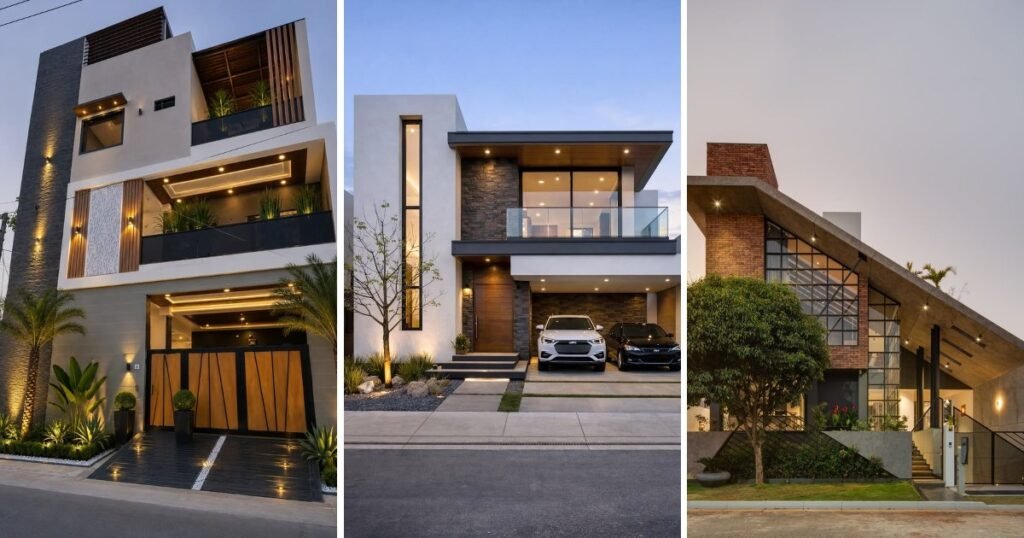
I love how glass and lighting make a compact facade feel open instead of cramped, and this example proves that windows can be your best friend when the lot is tiny. The layers of light create depth at night, and during the day you get a peek of life inside which makes the whole house feel bigger. If your neighborhood has smaller lots, swapping one solid panel for a tall window near the door will instantly elevate the look without reducing privacy too much.
Warm Nighttime Glow

This one reminds me of the evenings when I’d invite friends over and the first thing they’d comment on was the glow from the entry steps – it makes arrival feel intentional and cozy. Simple step lights and a spotlight on a planting bed add drama without cluttering the footprint, and you can install them on a timer so the effect happens automatically. You don’t need giant fixtures to feel luxe, you just have to place your lights thoughtfully to highlight pathways and textures.
Compact Nighttime Drama

This lit-up look proves that even a small house can feel theatrical in the evening if you layer different light sources – wall sconces, step lights, and soft landscape uplights. I tried something similar on my tiny patio and the shadows from a single uplight made the siding look textured and far more interesting than plain paint. If you want drama without more square footage, focus on contrast and shadows rather than scale.
Raised House With Steps

Raising the entry with a few steps is a genius way to give a narrow house presence without adding bulk, and it creates a small landing where you can stage plants or a bench. When I moved into a tiny home with a shallow yard I added three broad steps and suddenly it read like a proper entrance rather than a doorway stuck to the street. Try materials that contrast the facade – a warm wood tread against cool stucco makes even a compact staircase feel intentional.
Stone And Wood Accent

Mixing stone and wood on a small facade is like adding personality – the texture of stone grounds the design and the wood warms it up so the whole thing reads as curated instead of cramped. I painted the trim on my little house a darker hue and added a small wood cladding panel, and neighbors actually stopped me to ask how I did it. You can get this look without major renovation by using vertical wood slats as an accent and stone veneer around the entry.
Illuminated Windows And Steps

Light through windows makes a small home appear inhabited and inviting, and when paired with lit steps the whole approach feels safe and stylish. One winter I left interior curtains slightly open toward the street and the warm glow made the narrow facade feel like a storybook cottage for the entire block. If privacy is a worry, frosted glass or higher clerestory windows give you the same effect without exposing your living room.
Coastal Palm Apartment Vibe

If you live in an apartment or a duplex, you can borrow a coastal or resort vibe by emphasizing palms, clean lines, and soft dusk lighting to mask the smaller scale. I once staged a mini balcony with a potted palm and string lights before a friend’s visit and the whole stairwell looked upgraded even though nothing structural changed. The trick is to create a consistent palette – one or two plant types, one metal tone for fixtures, and cohesive lighting.
Architectural Roof Element

An interesting roofline gives a small house instant style points because it creates silhouette and shadow, which the eye reads as design rather than just a box. When I helped a friend design her tiny weekend cabin we focused on a small, dramatic overhang and suddenly the cabin felt bespoke without expanding the footprint. Small architectural moves like this are worth the investment if you want a signature look that doesn’t steal yard space.
Monochrome Minimal Exterior

A crisp black-and-white palette is such an easy win for small exteriors because it reads clean and controlled, and the high contrast tricks the eye into seeing sharper edges and proportion. I painted my trim black and the facade looked twice as composed even though nothing got bigger, and guests always compliment the clarity of the design. If you’re nervous about black, try it in small doses first – window frames or the door are perfect test spots.
Sleek Driveway With Two Cars

Smart driveway design can be surprisingly transformative for compact lots – tidy paving, a slim planted strip, and integrated lighting make the entrance feel considered rather than cramped. When my partner and I rearranged our parking to a tandem layout with a narrow garden edge it somehow made the whole property read wider from the street. Use materials with thin joints like large pavers to visually expand the space without sacrificing functionality.
Evening Steps And Warm Light

There is nothing cozier than illuminated steps leading to a modest entry – they feel cinematic without needing extra square footage, and they help orient guests at night. I tested warm LED strips under each stair on my porch and the gentle glow felt both safe and salon-level chic, which was a total win for a small budget. For tight yards, keep plantings low near the steps so your lighting remains the focus.
Plant-Forward Windowed House

This image makes me want to plant everything in sight because the greenery instantly softens modern lines and adds depth to a compact house facade. When I finally allowed a climbing vine on my small wall it changed the personality of the entire block-facing side, and neighbors asked for cuttings – which felt kind of funny but flattering. If you have room for planters, use them to add vertical interest so the eye moves up instead of just across a narrow front.
How to Actually Make This Work For You
Pick one focal move and three supporting details – for example choose either lighting, texture, or plants as your main investment, then add two smaller complementary elements like a painted door and compact planters so everything feels cohesive; this keeps projects manageable and prevents the small space from becoming visually noisy. Start with a sketch or a photo of your facade and mark the spots that need the most attention, then shop for fixtures and materials that match your chosen mood rather than mixing too many styles; the consistency will make the whole exterior read as intentional. Finally, phase your changes – do the thing that impacts daily life first such as better lighting or a new entry mat, and save larger finishes like cladding for when you can schedule time and budget, so you enjoy immediate improvement while planning the bigger moves.
How do I add interest without losing privacy?
You can keep privacy by using frosted or high windows, screens, or strategically placed planters that block sightlines while still allowing light in – this gives you both brightness and seclusion. Planting tall narrow species like bamboo or columnar evergreens also creates a natural screen without eating up too much horizontal space.
Is exterior lighting expensive to install?
Not necessarily – you can start with solar or plug-in options that avoid wiring costs, and then upgrade to hardwired fixtures later if you want a polished look. I did solar step lights for months before committing to wired uplights and the effect was surprisingly dramatic even on a small budget.
Will bold paint make a small house look smaller?
Bold paint can actually create personality and definition, but use it thoughtfully – darker colors recede and sometimes make edges appear sharper, while a bold accent rather than entire coverage can provide interest without overwhelming the scale. Try painting the door or trim first to test the vibe before committing to an entire facade.
Can I get a high-end look on a tight budget?
Absolutely – prioritize three things that read expensive such as consistent lighting, quality hardware for the door, and a strong accent material like a small wood panel or stone veneer; these targeted upgrades elevate the whole exterior. I once swapped inexpensive fixtures and added a single cladding panel and my tiny home’s curb appeal went from blah to show-stopping without a full renovation.