Disclosure: As an Amazon Associate we earn from qualifying purchases. Some links on this page may be affiliate links — if you click through and make a purchase, we may receive a small commission at no extra cost to you.
Hey friend, if you need simple kids closet organization ideas that actually stick, you’re in the right place.
Small tricks and clear zones make mornings easier and closets feel calm, and I love sharing the ones that saved my sanity.
You’ll get practical setups, relatable tips, and easy projects you can start this weekend.
These 13 kids closet organization ideas You’ll Love
Small Space, Big Impact

This little setup with baskets and hanging clothes feels like a miniature boutique for kids, and it proves you don’t need a huge closet to create order. I love that placing baskets at kid height encourages independence and makes it faster for everyone, since children can reach what they need without asking. It eliminated a ton of morning chaos for us because favorites were visible and everything had a dedicated place.
Playroom Closet Magic

My playroom closet idea shows how to mix clothes, toys, and craft supplies in one space without creating a sensory overload, and it works best when you commit to zones rather than a single catch-all bin. You can sort by activity and rotate bins so the room feels fresh and your child only plays with a manageable amount at a time. We found that simple labels and color-coded baskets were a game changer for both cleanup and sharing.
Measure Before You Build

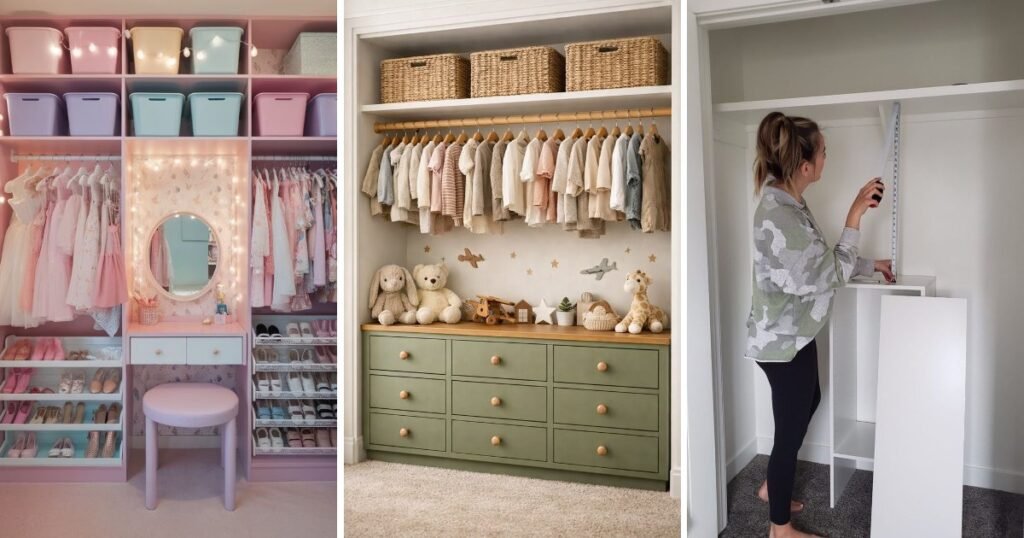
Measure before you build might sound obvious, but it’s saved me more than once from buying shelves that didn’t fit or installing rods that blocked drawers, and taking two extra measurements always pays off. I once measured wrong by a few inches and spent a week returning parts and redoing cuts, so now double-checking and photographing the space is part of my ritual. For you, a quick tape measure, a photo, and a note about door swing will make any installation painless.
Slim White Shelving Win

This clean white shelving gives a calm backdrop that makes colorful clothes pop and helps the closet feel spacious even when full, and the combination of open shelves with drawers hides mess while keeping daily items accessible. I like swapping fabric bins seasonally so the whole setup evolves without a full remodel. The drawers below are perfect for pajamas, socks, and cozy layers that don’t hang well.
Sweet Baby Basics Corner

Sweet baby basics corner is all about grabbing the right outfit at 3 a.m. without turning on the bright lights, so I recommend open bins and a dedicated drawer for swaddles and sleepers. Parents will appreciate a system that keeps sizes separated and essentials within arm’s reach, which truly changes night routines. When I had a newborn, that kind of set up meant less fumbling and faster returns to sleep.
Shoes First, Stress Less

Shoes first, stress less is a motto I adopted after stepping on tiny sneakers for the hundredth time, and it really changed our entryway habits because shoes got a home instead of scattering. You can use clear-front shoe boxes or low cubbies that make it obvious where each pair belongs, which is practical for both preschool drop-offs and family outings. Over time this small habit cut down on frantic searches by at least ten minutes on weekdays.
Stuffed Animal Wall Idea

Stuffed animal wall idea turns clutter into decor and honestly looks adorable while freeing up floor space for play, and it works well when you use mesh pockets or small shelves at various heights. I built a pocket wall for plush friends and it instantly made the room feel tidier while letting each toy have a visible home. Kids love grabbing their favorites and putting them back, which makes cleanup feel like a game.
Blank Canvas Closet Start

Blank canvas closet start is a reminder that empty space is an opportunity, not a problem, and beginning with a clean slate helps you intentionally decide what to keep. I recommend painting the back wall a fun accent color, adding adjustable shelving, and testing one storage configuration for a month before committing to built-ins. The flexibility means fewer remodels as your kids grow and their needs change, which saved us time and money down the road.
Pink and Practical Storage

Pink and practical storage proves you can have a pretty closet without sacrificing function, which matters if your child wants a space that feels personal and you want it tidy. You can mix patterned bins with hooks and slim hangers to keep dresses wrinkle-free and accessories in order. Our guests often assume the look is high-maintenance, but in reality it’s a few smart habits that keep the style looking effortless.
Color Test Closet Prep

Color test closet prep is the tiny habit that prevents you from falling in love with a shade that looks wrong under closet lighting, so try swatches in the morning and evening light before committing. I taped three samples and checked them over two days to see how clothes and wood tones changed the feel, which helped me choose a calming hue that hides scuffs. That small step made the final space feel intentional rather than rushed.
Drawer-Focused Baby System

Drawer-focused baby system is all about folding and dividing, which keeps tiny socks, mittens, and onesies from disappearing into a black hole and saves time during outfit changes. You might organize drawers by size and use labeled dividers so everything stays visible and you never have to root around for a matching pair. During hectic baby days this approach meant fewer outfit changes and less laundry stress for me.
Baskets For Little Hands

Baskets for little hands are a tried-and-true trick to encourage independence because they let kids pull a whole outfit or a set of toys without needing help. I remember my niece happily pulling a basket labeled “Pants” while I made coffee, and that tiny victory turned into a real morning routine. The habit stuck because everything she needed was reachable and consistently placed, which made outings smoother overall.
Mirror-Friendly Open Closet

Mirror-friendly open closet makes outfit decisions feel quicker and more playful, which can be a huge time-saver on school days when every minute counts. You can hang a slim mirror just outside the closet or on the inside of the door and reserve a rod for favorites to cut down on decision fatigue. Keeping a few go-to outfits visible reduces stress and helps kids learn preferences without too much guidance.
How to Actually Make This Work For You
Start with one small zone you can finish in an hour and treat that success as a model for the rest of the closet, which helps you build momentum faster than trying to reorganize the whole room at once. Measure and plan your layout so nothing blocks doors or drawers, and choose adjustable solutions that grow with your child instead of locking you into one configuration. Rotate seasonal items and purge every few months to keep the system manageable, and involve your kids so the rules feel fair and stick long term.
How do I keep kids actually using the system?
Consistency is key – keep routines simple, visual, and consistent, and reward small wins so kids feel proud of helping. Make labels and low hooks part of the ritual and celebrate when they put things away for a week straight. Over time the behavior will become second nature and you will spend less energy enforcing it.
What if my closet is tiny and awkwardly shaped?
Work with what you have – measure odd spaces and use vertical storage like hanging shelves, narrow shoe racks, and stacked baskets to maximize every inch. Consider hooks on the back of the door and slim-profile hangers to free up horizontal space. Custom adjustments are often inexpensive and make a big difference in usability.
Which items should be accessible to kids versus parents?
Make daily clothing and favorite toys accessible to kids, and keep off-season items, sentimental pieces, and small accessories higher or in closed drawers. This balance encourages independence while protecting important items from accidental damage. Adjust access as your child grows and becomes more responsible.
How do I maintain the system without constant effort?
Set a weekly five-minute tidy time and a seasonal purge session – small, consistent maintenance beats occasional massive overhauls and keeps the closet functional. Enlist kids in the tidy time so it becomes a shared habit rather than your sole responsibility. With regular tiny touches the space will stay useful and calm.