Small spaces can feel impossible when you want a stylish spot for kids to play, but modern playroom ideas small space are totally doable with a few clever swaps and honest storage solutions. I love a room that looks grown-up enough for the whole house while still being wildly fun for little imaginations.
I wrote this because I had to figure out how to carve out play zones in our tiny city apartment without turning every surface into chaos, and I want you to skip the trial and error. I’ve tried clear bins, hidden storage, and rugs that double as activity zones, and I’ll tell you what actually stuck.
Read on and you’ll get 12 practical, pretty ideas you can try this weekend – with little to no renovation required.
These 12 Modern Playroom Ideas Small Space That Actually Work
Minimized Lego Zone

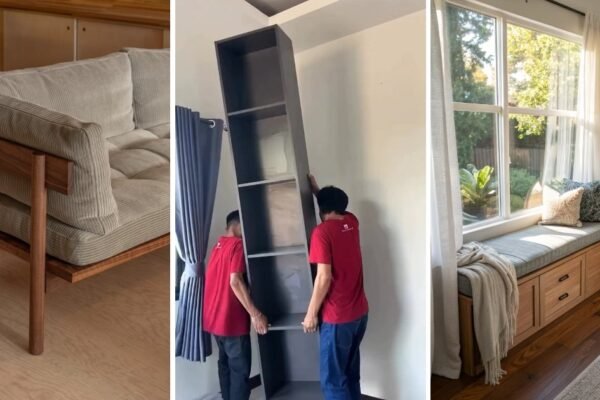
This picture makes me want to roll out a small rug and let tiny hands build for hours, and the secret is a low storage unit that doubles as a play surface so everything has a home. I once taught myself to assemble a compact shelving piece in an hour and it instantly made pickup five times faster, which felt like magic on a Monday night. If you give kids an obvious place to put their small toys, you’ll actually see them use it, and your floors will thank you.
Cozy Window Nook

A built-in bench by the window with layered baskets can turn an awkward corner into a reading and play nook that looks intentional rather than squeezed-in, and I adore the light this setup brings during afternoon crafts. You can stash bins under the seat for puzzles and stuffed animals, which is exactly what I did in my first studio apartment and it saved precious floor space. Try adding a few throw cushions that are easy to wash so the bench doubles as a chill spot and a functional storage hub.
Stripe Accent Charm

Stripes give a grown-up vibe to a kid space without feeling fussy, and painting a single wall with bold yet soft stripes instantly elevates even the smallest room. When I painted a narrow stripe wall in our den it lengthened the space visually and made toy bins look like a styled display rather than clutter. Keep the palette light and add a few matching textiles for a cohesive feeling that reads modern and playful at once.
Green Shelf Styling

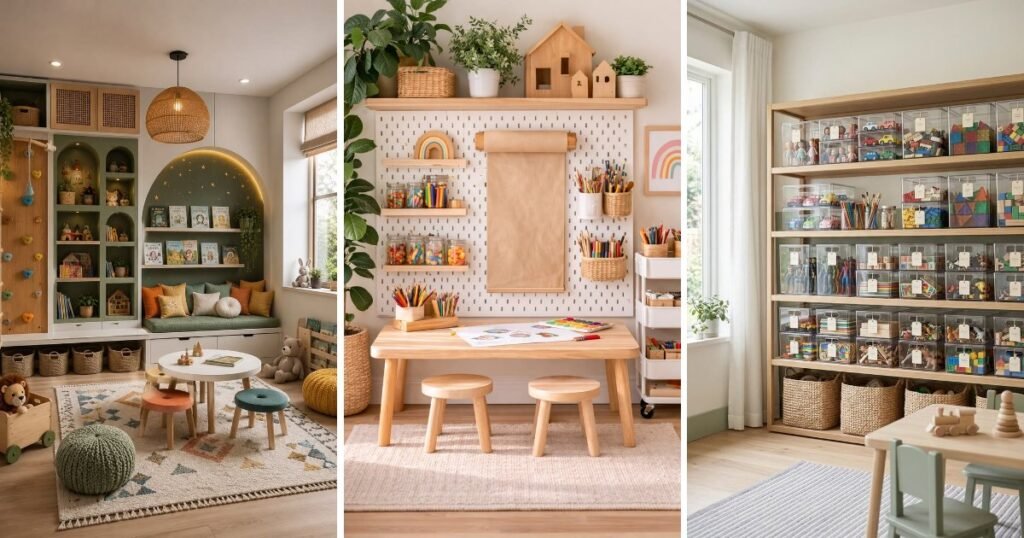
Open shelving with plants sprinkled between baskets and books gives a fresh, modern look and helps reduce visual toy chaos by creating pockets of calm. I love mixing faux greenery with a real plant on a top shelf because it signals style while keeping lower shelves kid-friendly for reach-and-return play. Make a rule that each shelf has a theme – books, dolls, puzzles – and the room starts to look curated rather than cluttered.
Controlled Toy Corner

When things get messy like this photo shows, a simple solution is to dedicate one visible corner as the “active play” area where toys are allowed, and everything else stays in closed storage when not used. I remember decluttering by putting a timer on before cleanup and turning it into a game – you’ll be amazed how fast tiny people participate when it feels playful. With that habit, your main living area stays tidy and kids still get a zone to spread out and imagine.
Lofted Play Over Bed

Using vertical space by creating lofted sleeping or storage with play space underneath can double the usable square footage in a tiny room and feels exciting for kids who love little hideouts. We considered a bunk-style loft for friends visiting and found that the under-bed area made the best reading and art station, which kept toys consolidated. If your ceiling is high enough, think up instead of out to keep floor clutter down and imagination up.
Open-Book Gallery

Face-out bookshelves act like art in a small room and invite kids to grab a story without messing with tall stacks, which kept our toddler happily flipping through picture books in a way that felt tidy. You can alternate small toys and framed prints to make shelves look intentional, and it actually reduces the temptation to scatter everything on the floor. A low shelf height keeps access kid-friendly while making cleanup a one-step process for little hands.
Wall-Mounted Play Station

A wall-mounted fold-down table or magnetic board can give you a full craft surface without losing valuable floor space, and it’s easy to fold away when adults want the room back. I installed a slim wall desk for coloring that became our go-to spot because it felt both private and practical, and it kept markers off the couch. This approach is perfect if you want a modern look and functional play without bulky furniture.
Bright But Calm Palette

Choose one pop color for accents and then keep everything else neutral to make the space feel airy instead of overwhelming, which is a trick I use everywhere from my closet to the kid corner. I painted toy boxes in one accent shade and suddenly the whole room felt coordinated, which made me smile every morning. Less visual noise helps kids play more calmly and helps you relax when you’re sharing the same space.
Creative Writing Wall

Making one wall writable with chalk paint or a whiteboard sheet invites creativity while containing the mess to a single surface, and it gives kids their own gallery without covering the whole room. My niece declared our chalkboard wall “her museum” and suddenly labeling toys and practicing letters became an activity, which was a delightful surprise. This small commitment yields big returns when you want an interactive feature that doubles as decor.
Round Play Table Trick

Using a round coffee table or a low, circular table as a play surface keeps edges safe and sightlines open, which helps when you want a small footprint that still feels sociable. I swapped a rectangular table for a round one in our living space and noticed the room flowed better and toys were less likely to spill into traffic paths. This shape is a tiny change that feels designer-level and kid-smart at the same time.
Organized Bins Wall

Cubby systems with labeled bins on a wall create a rhythm that visually calms a room and makes cleanup predictable for kids, which I teach by color-coding and making a game of matching toys to bins. When you commit to a limited number of bins you force thoughtful curation, and that one habit kept our family from drowning in mismatched containers. Make sure the labels are picture-based for little readers so they can participate independently.
How to Actually Make This Work For You
Start by measuring the floor and choosing two focal solutions – one for storage and one for a play surface – so you’re not randomly adding pieces that compete, and keep one accent color to tie the room together so the space reads modern rather than chaotic. Next, prioritize habits like a five-minute nightly tidy together and use accessible storage at child height to encourage independent cleanup, and rotate toys monthly to keep the room fresh without adding new clutter. Finally, be honest about what you’ll maintain and choose quality for the items that matter most, because a couple of durable pieces will outlive a dozen cheap bins and keep the room feeling intentional.
How do I choose the right storage size?
Pick storage that fits both the toys you have and your available wall or floor space – measure first and visualize the footprint, then choose shallow, wide units for small spaces to maximize surface without blocking light. Bins that stack or slide under furniture are great when floor space is limited.
Can I mix styles without it looking messy?
Yes – anchor the room with one cohesive color or texture and let individual pieces bring personality so the overall look feels curated rather than chaotic. Balance playful elements with neutral furniture to keep things grounded.
What’s the best way to keep kids involved in cleanup?
Turn cleanup into a quick, fun routine with timers, songs, or a simple chart that rewards consistency, and make sure storage is reachable so kids can do it themselves. Praise effort and keep expectations realistic for age.
How often should I rotate toys?
Rotating every 3-6 weeks usually keeps novelty high and clutter low, and it’s easy to store a subset of toys in a labeled bin out of sight until swap day. This approach saves money and makes each toy feel special again.