Disclosure: As an Amazon Associate we earn from qualifying purchases. Some links on this page may be affiliate links — if you click through and make a purchase, we may receive a small commission at no extra cost to you.
Okay bestie, small bedrooms can feel like a decorating puzzle, but room divider ideas bedroom for small spaces can totally change the vibe without swallowing the room. I get excited about clever little solutions that make a tiny space feel purposeful and a little fancy.
I wrote this because I used to wake up in a studio where the bed sat in the middle of everything and I desperately wanted that grown-up separation between sleep and life. After trying a handful of quick fixes and a couple of awkward DIYs, I found a set of practical, pretty options that actually worked for me and my chronically messy habits.
Stick with me and you’ll get a mix of realistic styling ideas, shopping-friendly tips, and a few of my own messy-but-true stories so you can pick the right divider for your tiny bedroom.
These 15 room divider ideas bedroom for small spaces
Sliding Door Chic

I adore sliding doors because they feel polished and save you so much floor space, which is a miracle in any small bedroom. You can keep them transparent or frosted depending on how much you want light to spill through, and they make getting dressed feel like a private ritual again. When I swapped curtains for a slim sliding panel, the room immediately looked cleaner and my mornings felt calmer.
Vertical Slat Warmth

Wooden slats are a favorite because they add texture without feeling heavy, and they’re versatile enough to be a full wall or a slim divider panel. You can leave gaps for light and airflow, or line the back with fabric for more privacy while keeping that warm, Scandinavian look. I once built a simple slat screen for a friend’s bedroom and we both loved how unexpectedly elegant it looked for such little effort.
Sheer Curtain Softness

Light, sheer curtains give you a bedroom divider that feels dreamy and breathable, perfect if you want separation without losing brightness. You can hang them on a ceiling track to create a canopy-like room within a room, which works wonders if you have an open-plan studio. A friend of mine swore by this trick during her graduate school year and it made her tiny place feel like a cozy boutique hotel.
Bookcase Boundary

A tall bookshelf is dual-purpose magic because it acts as a divider and gives you instant storage for books, plants, and jewelry boxes. If you anchor it so both sides are styled, the divider looks intentional and feels like a real part of the room instead of an afterthought. I used a half-open bookcase in my last apartment and it saved me from buying extra dressers while giving the bed a proper headboard view.
Symmetrical Twin Beds

Using low-profile twin beds or daybeds arranged back-to-back gives you a natural room split without bulky walls, and it’s a surprisingly chic option for shared spaces. You can style each side differently so the sleeping zone feels private while the other side becomes a lounge or workspace. When I tried this layout at a rental swap with my sister, it made hosting guests feel intentional rather than crowded.
Reading Nook Divider

Create a slim bookcase or bench with built-in shelving to form a low divider that still allows light to flow, and use it to carve out a tiny reading nook. The lower height keeps sightlines open while the shelves become a functional little wall for your favorite things. I can testify that having a carved-out cozy corner changed my habit from scrolling in bed to actually reading before sleep.
Doorway Frame Accent

Sometimes just framing the entry to your sleeping area with a decorative trim or a lightweight screen is all you need to suggest a separate room without building anything permanent. It gives structure and makes the bedroom feel intentional while still being flexible if you move. When I added a simple painted frame around my alcove bed, guests actually asked if I had reconfigured the layout – it felt like a small design power move.
Vertical Slat Workspace

If you need a mini home office inside your bedroom, a vertical slat panel behind the desk creates separation and visual interest while keeping the feel open and airy. You can hang plants or small shelves on the slats to make the divider practical and pretty at the same time. I set up a slatted partition in a spare corner and suddenly my work-from-home days felt less chaotic and more intentional.
Minimalist White Walls

A simple painted partial wall in a crisp white can divide areas without stealing light, and it’s a great base if you like changing decor often. You can top it with a slim ledge for photos or plants to make the divider feel integrated rather than stuck-on. I painted a half-wall in a previous studio and loved how it allowed me to switch bedding colors without worrying about clashing with permanent materials.
Dresser as Divider

Placing a low dresser perpendicular to the wall creates an instant, functional divider that also gives you drawer space for clothes or linens. The top surface becomes an extra styling shelf for lamps and decor, and the whole thing anchors the bed visually. I once used a thrifted dresser as a boundary between my sleeping and living zones and it saved me from buying a bulky partition.
Open Window Flow

When light is your best friend, arranging furniture to emphasize windows rather than closing off space can feel like a natural divider in itself. You can angle a couch or place a console table to suggest a living area without building walls, which keeps the room airy. I learned to work with window light when I lived in a tiny north-facing studio, and arranging pieces around windows made everything feel larger instantly.
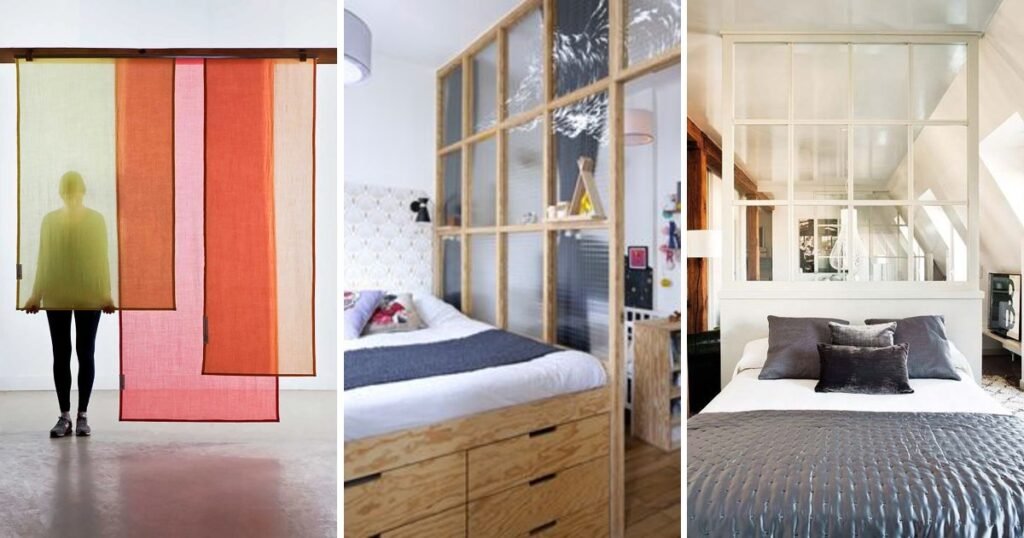
Colorful Curtain Panels

Bright, layered curtain panels are fun if you want a pop of personality while still having something light that you can open and close easily. Mixing textures and colors lets you create a focal point that doubles as a flexible wall. I once threw together mismatched panels for a pop-up guest room and the result looked intentional and whimsical, which surprised me in the best way.
Glass Table Openness

A glass or acrylic table placed between zones gives you a tangible boundary that doesn’t interrupt sightlines, so the bedroom still feels open and bright. The transparency prevents the divider from feeling heavy while offering a practical surface for keys, a lamp, or coffee. When I needed a tiny work surface in an all-in-one room, a clear table felt like a minimalist miracle.
Window-Focused Bed

Placing your bed to face or sit beside windows can create a natural division between sleep and the rest of your room, and it instantly makes the sleeping area feel intentional. You can emphasize that separation with a rug or small bedside console to make the zone read like its own area. I arranged my bed to face a sunny window during a cold month and the light made mornings feel more like a retreat than a cramped corner.
Light Curtain Simplicity

White curtains are such a classic choice because they brighten the space while providing a soft, breathable barrier that’s easy to install and change. If you like a minimalist look, layering a sheer white curtain with a heavier drape gives you flexible privacy and light control. I swapped in white curtains when I moved into a dim rental and it made the whole room feel fresher and more peaceful right away.
How to Actually Make This Work For You
Start by measuring carefully and thinking about how you live – if you need daylight you’ll want perforated or transparent dividers, and if privacy matters choose solid panels or thick curtains; also consider multiuse pieces so you’re not crowding the room with extra furniture. Try mocking up your idea with painter’s tape on the floor or temporary curtains before committing to installation, and remember that styling both sides of a divider makes it feel intentional rather than temporary. Finally, commit to one or two materials that match your existing palette so the divider reads as part of the design rather than an afterthought.
How much space do I need for a divider?
Answer – You don’t need much depth for a divider; even a 12-18 inch piece like a slim bookcase or low dresser can create a clear boundary in most small rooms. Make sure there is still a comfortable walking path and consider vertical solutions if floor space is very limited.
Can I install a divider in a rental?
Answer – Yes, many renter-friendly options exist like tension rods for curtains, freestanding bookcases, or floor-to-ceiling slat panels that require minimal drilling. Always check your lease and use removable adhesive or temporary fixtures when possible to avoid security deposits being affected.
Are DIY dividers worth it?
Answer – DIY can be fantastic if you enjoy a weekend project and want something custom, but be honest about your skill level so you don’t end up with a project that takes months. Simple builds like a slat screen, painted frame, or curtain track are highly doable and usually cost less than store-bought partitions.
Which divider keeps the most light?
Answer – Materials like glass, acrylic, open slats, or sheer curtains preserve the most light while still defining space, and these options help a small room feel larger and airier. If you need privacy but still want brightness, frosted glass or layered sheers with a blackout panel are great combinations.