Disclosure: As an Amazon Associate we earn from qualifying purchases. Some links on this page may be affiliate links — if you click through and make a purchase, we may receive a small commission at no extra cost to you.
Okay, real talk – room divider ideas have saved my tiny apartment so many times, and I get way too excited about rearranging furniture at midnight. I love how a simple panel or shelf can totally change the vibe of a room and make you feel like you finally have a grown-up space. Honestly, if you’re anything like me, you’ll want to try at least three of these this weekend.
I put this list together because I was overwhelmed scrolling through pins and needed a friendly, practical roundup that actually works in real life – not just dreamy photos. I tested a few of these myself (yes, the bookshelf-as-divider trick – twice), and I’ll share the little hacks that made them feel less like a staged shoot and more like home. Expect honest notes, a few cuss-free oops moments, and real-life fixes.
By the end you’ll have 25 fresh, doable room divider ideas with photos, quick tips, and tiny anecdotes so you don’t feel lost. Grab a snack, and let’s make your space feel intentional – but relaxed.
These 25 Room Divider Ideas You’ll Love
Floral Painted Panel
This painted wall divider with wood trim feels like a secret garden in a small living room. I tried something similar on a cheap plywood panel once and ended up with paint on my jeans – true story. If you want drama without a renovation, a hand-painted motif on a freestanding panel is surprisingly doable and joyful.
Glass Block Accent
Glass blocks are classic for dividing a room while letting light flow through, which makes the whole space feel larger and brighter. I remember visiting a loft that used these and thinking it felt both vintage and modern at the same time. If privacy is lightly needed, this is your friend – plus it’s low maintenance.
Bookshelf With Sliding Doors
A bookshelf that doubles as a divider and has sliding glass doors? Sign me up. I used a tall shelf to separate my office corner from the living room, and closing the doors made Zoom background drama-free. Stores stuff, hides clutter, looks curated – what more could you ask for?
Cozy Chair & Shelf Nook
This little scene of a wooden chair in front of a bookshelf is peak reading nook divider energy. Once, I set up a similar corner and pretended I lived alone on a cottage retreat for an entire Sunday. Cozy, functional, and easy to rearrange when guests show up.
Open Door Transition
Sometimes a simple open door or a curtain hung in the doorway acts as the best divider when you want flow but a hint of separation. I draped a lightweight linen curtain in my studio and it immediately felt like two rooms – no hammer required. Little changes like this make mornings less chaotic, promise.
Minimal Clean Living Divider
A really clean, minimal living room can still benefit from a subtle divider like a low console or backless shelf. I adopted this in a long narrow space and loved how it defined zones without blocking sightlines. Plus, you can hide charging cords like a pro – not that I’m speaking from experience or anything…
Built-In Shelving Wall
Floor-to-ceiling shelves are the ultimate statement divider and storage win. My cousin once converted a blank wall into these shelves and suddenly every room looked intentional – and she actually used all her storage. If you’re ready to commit, this adds resale value and personality.
Freestanding Center Panel
A simple freestanding panel can split a room in half and act as a focal point. I love how this gives you options – rotate it, paint it, or hang a mirror on the other side. It’s temporary but feels designed, which is ideal if you like changing things often.
Bright Sliding Doors
Sliding glass doors are dreamy for a bedroom or sunroom divider because they bring in light while closing off space. I once had a friend install these between her living room and office and she said suddenly her productivity jumped – likely the separation of mental space. They look luxe and are quietly practical.
Wall Mirror Divider
A tall mirror on a wall can act as a divider by reflecting light and visually expanding the other side. I love mirrors for making small corners feel purposeful – plus you get last-minute outfit checks. Just be careful with placement so it doesn’t create awkward reflections of clutter.
Classic Wooden Doorway
Using an actual wooden door or reclaimed door hung as a partition brings character and texture. I salvaged a door once from a thrift shop and painted it; installing it was messy but worth it for the story it adds. It’s a little project-y, but so satisfying when done.
Window-Focused Living Divider
Arrange furniture to orient around a big window and you’ll naturally create zones without extra pieces. I did this in my first apartment and suddenly the space felt like a boutique hotel room. Try angling a sofa or using a rug to emphasize the living area – tiny changes, big impact.
Corner Book Nook
Corner shelving is a cozy way to separate an office or reading nook while using dead space. I installed corner shelves once and they swallowed a lot of my mismatched decor – hooray. If you want privacy plus personality, this is low-key genius.
Restaurant-Inspired Shelves
Open shelving with plants and ceramics gives a café vibe and divides without feeling like a wall. I love entertaining with this setup because guests can peek through the plants and feel connected. It’s perfect if you want warmth but also a little separation.
Wood & Fabric Screen
A foldable screen with wood and fabric panels is portable and stylish, which is why I keep one in my closet for surprise guests. I once used it to hide a chaotic craft corner during a dinner party – zero judgment. It’s cheap, easy, and moves when you do.
Warm Wood Paneling
Wood paneling gives major cabin-cozy division while keeping things warm and textured. My aunt used vertical wood slats to define a dining area and guests always complimented it. If you want texture without heaviness, slatted wood panels are a top pick.
Simple Hat Rack Shelf
An entry shelf or hat rack can function as a subtle visual barrier that’s also terribly useful. I have one by my front door and it quietly separates the foyer from the living room while holding the chaos of keys. Little styling touches here make everyday life nicer.
Slatted Wood Divider
Slatted wood dividers are modern and let light through while creating privacy. I used slatted panels to subtly divide a kitchen nook and it instantly felt grown-up. They’re great for rhythm in a space – visually satisfying, honestly.
Bookshelves as Focal Walls
When your divider is filled with books, it doubles as decor and a personality statement. I have a shelf that divides my bedroom from my closet and every visitor asks about my book choices – awkward but fun. If you love to curate, this is your playground.
Dining Space Slatted Wall
Using wooden slats behind a dining set frames the area and creates an intimate vibe without closing it off. I tried this in a rental with removable slat panels and the dinner parties instantly felt more intentional. Side note – hang art on the slats, thank me later.
Neutral Wood & White Mix
Mixing wood tones with white walls keeps a divider soft and airy, perfect if you don’t want a heavy line across the room. I like this for Scandinavian-style spaces where calm is the goal. It looks effortless, though you might fuss with styling a bit – totally normal.
Ceiling Curtains & Drapes
Hanging curtains from the ceiling is one of my favorite cheap tricks to carve out a bedroom area or office nook. Once, I added ceiling tracks and suddenly my studio felt like a boutique hotel room. They’re cozy, movable, and guilt-free if you like changing things.
Layered Furniture Zones
Sometimes you don’t need a physical divider – just layer rugs, lighting, and furniture to suggest separate areas. I did this in a rental living room and it felt intentional without any permanent changes. It’s elegant and forgiving when mistakes happen.
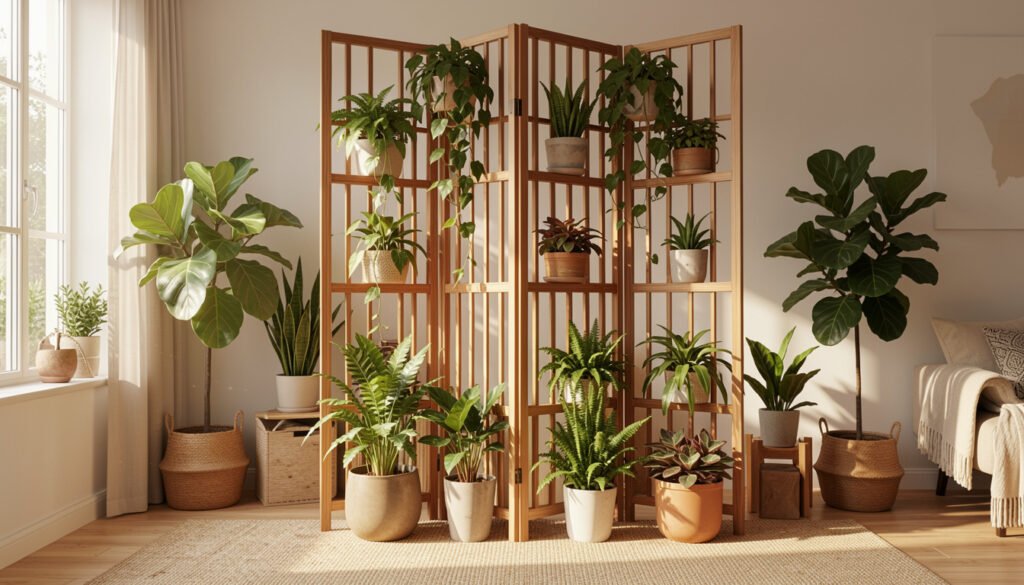
Plant-Filled Shelves
Plants on shelves create a living divider that breathes life into both sides of a room. I killed one plant, then learned my lesson, and now my plant shelf is thriving – growth, literally. If you want a soft barrier that also improves air and mood, this is gold.
Colorful Glass Partition
Colored glass panels make a bold statement and add vintage-modern charm while still letting light through. I once stayed in an apartment with turquoise glass dividers and it felt like living inside a polaroid. If you’re playful and love color, this will make you smile every morning.
How to Actually Make This Work For You
Start by thinking about what you actually need from a divider – privacy, storage, light control, or just visual interest – and choose one or two options that match that need rather than trying to copy a perfect photo. Measure carefully, especially if you’re buying a large piece or installing hardware; trust me, I’ve bought a panel too big and it was a whole drama. Finally, embrace imperfection – mix practical pieces like shelves with softer touches like curtains or plants so the divider feels lived-in and not like a showroom.
What if I rent and can’t make permanent changes?
You can still create lovely divisions with non-permanent solutions like freestanding shelves, screens, curtains on tension rods, or potted plants. These options are renter-friendly and easy to remove when you move – plus they’re cheaper and usually quicker to set up.
How do I choose the right size divider?
Measure the height and width of the area you want to separate and consider sightlines and natural light; a low console keeps openness while a taller piece offers more privacy. If in doubt, mock it up with cardboard or painter’s tape on the floor to visualize scale before buying.
Can I use a divider in a small studio without making it feel cramped?
Yes – pick materials that allow light through like slatted wood, glass, or open shelving, and keep colors light to avoid visual heaviness. Also use rugs and lighting to define zones rather than a full opaque wall; this keeps the space airy and functional.
What’s the easiest budget-friendly divider to try first?
A folding screen, curtain on a tension rod, or an affordable IKEA shelf are the quickest low-cost options to test how you like having distinct zones. They’re flexible and let you experiment without commitment – and honestly, that’s the best way to find your style.