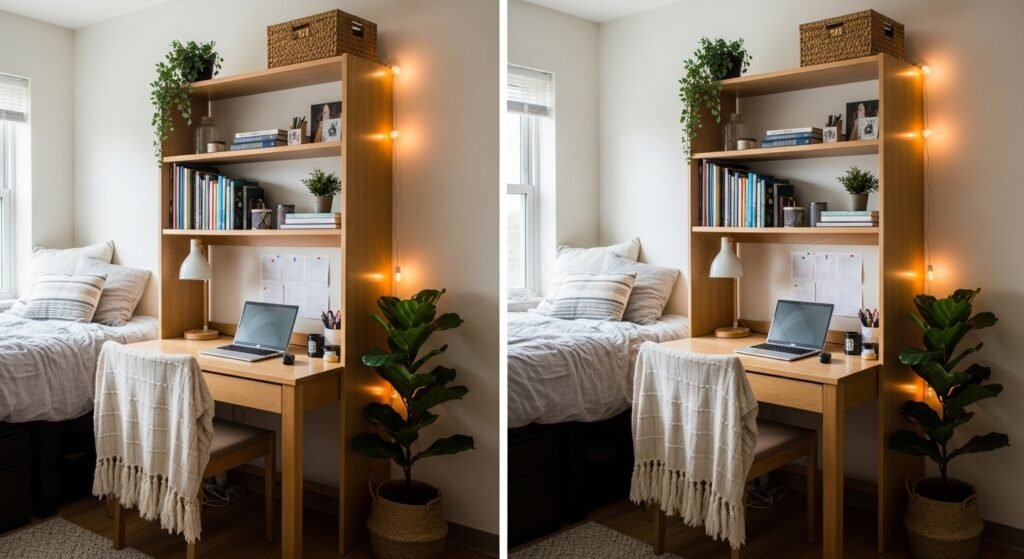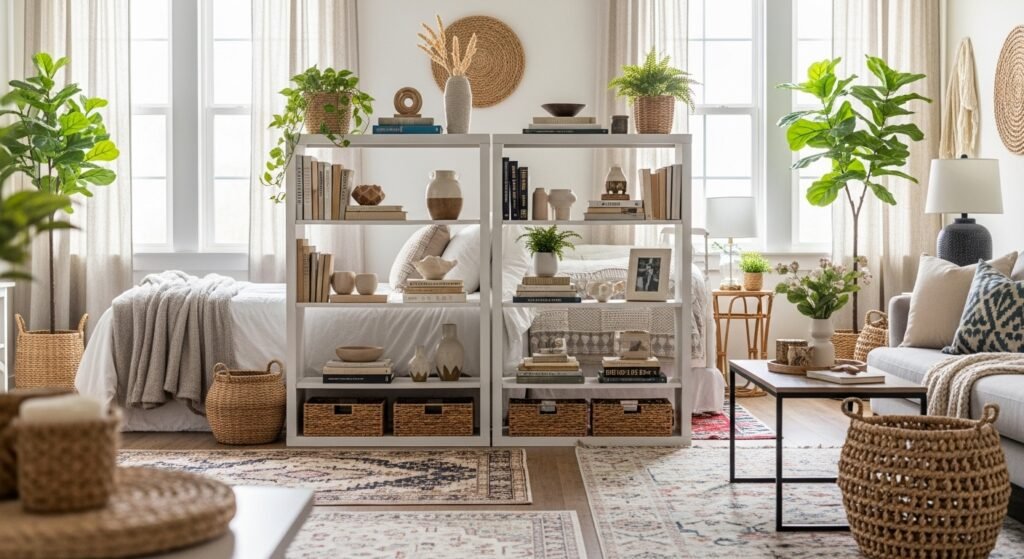
My studio felt like one big, messy room. I bought a two sided bookshelf room divider and learned to treat each face as its own vignette. I spent about $320 on the divider, baskets, lights, and textiles. The result reads intentional. People assume I hired someone.
This guide is for modern boho and casual modern looks. Budget is $200–500 if you already have a sofa or bed. It works best in studios, small living rooms, or open-plan spaces. Right now designers favor multifunction furniture and open shelving for flow and storage.
What You'll Need for This Look
Foundation pieces:
- Two sided bookshelf room divider, open back, 59 x 14 x 70 inches (~$180-320)
- 8×10 jute area rug in natural (~$120-180)
Textiles & layers:
- Linen curtains in white, 96-inch length (set of 2) (~$35-50 per panel)
- Chunky cable knit throw in oatmeal, 50×60-inch (~$40-60)
- Euro pillow inserts, 26×26, set of 2 (~$35-50)
Lighting & hardware:
- Table lamp with linen shade, 22-inch (~$45-70)
- Adjustable curtain rod, 28-84 inch, matte black (~$20-35)
Storage & greenery:
- Woven storage baskets, set of 3, medium/large (~$35-55)
- Artificial fiddle leaf fig, 5 ft in woven pot (~$90-140)
- White oak floating shelves, 24-inch set of 2 (~$40-80)
Budget-friendly swap:
- Linen-blend curtains, off-white, 96-inch — cheaper than pure linen
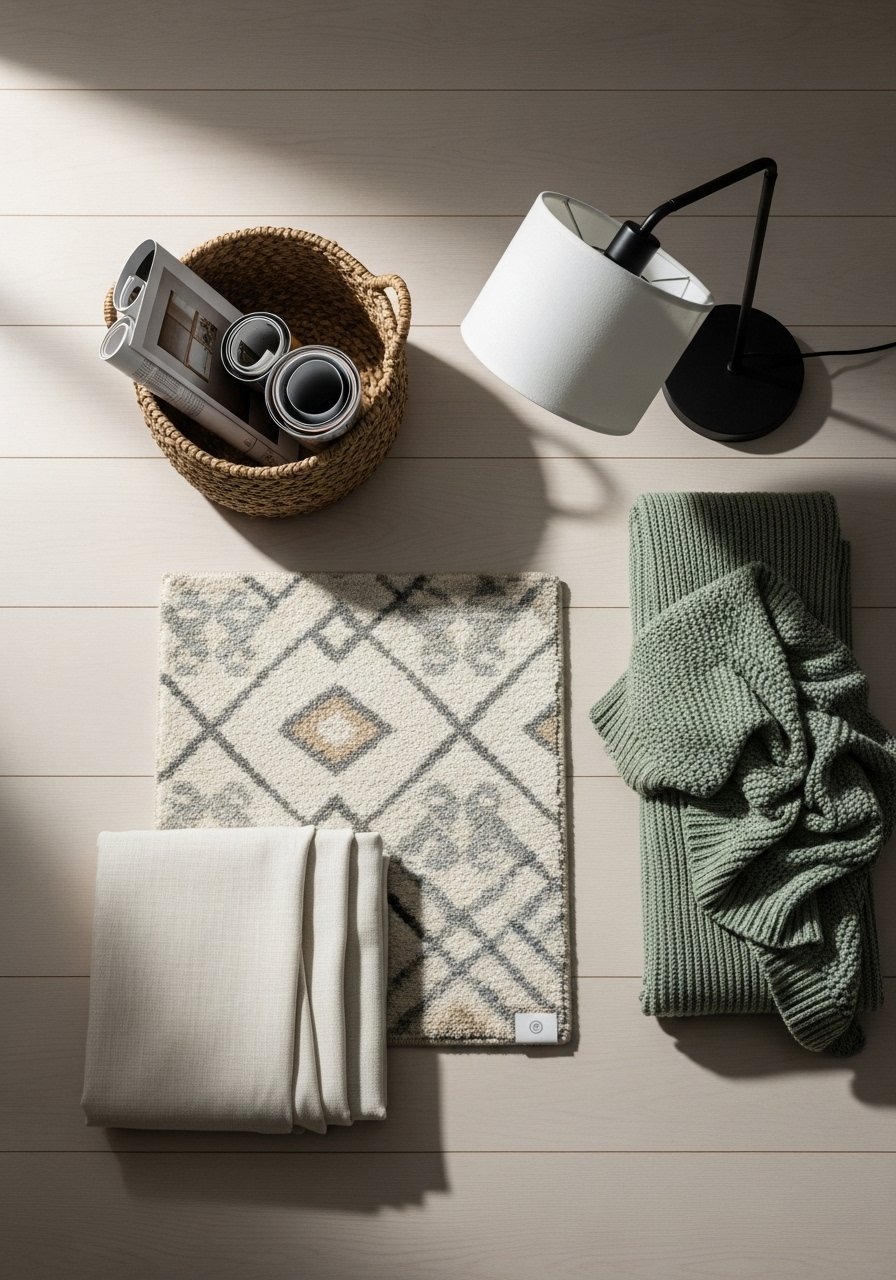
Set the structure: install the divider for flow and sightlines
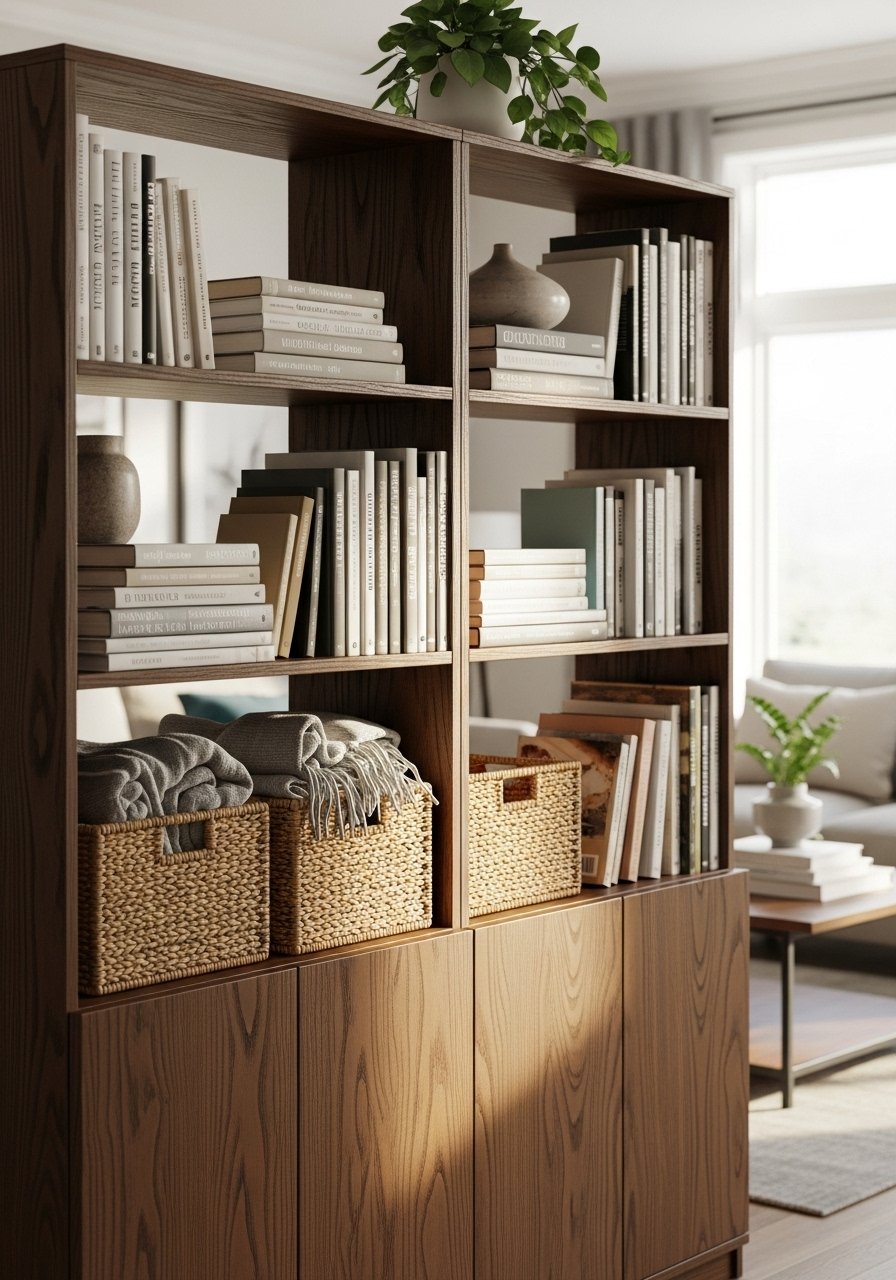
Place the bookcase room divider where it creates a path, not a wall. I set mine so one side faces the sofa and the other faces the bed. The two sided bookshelf room divider I chose is 59 x 14 x 70 inches — tall enough to suggest privacy, but short enough to keep light flowing.
Anchor the whole composition with a rug. I used an 8×10 jute rug to ground both zones. The rule I follow: front legs of furniture should rest on the rug to unify each side.
Mistake I made: I pushed the divider flush against the bed. It read like a headboard and blocked circulation. Moving it 6–12 inches created a sense of air and defined two clear zones.
Style the living side: low, layered, and visually open
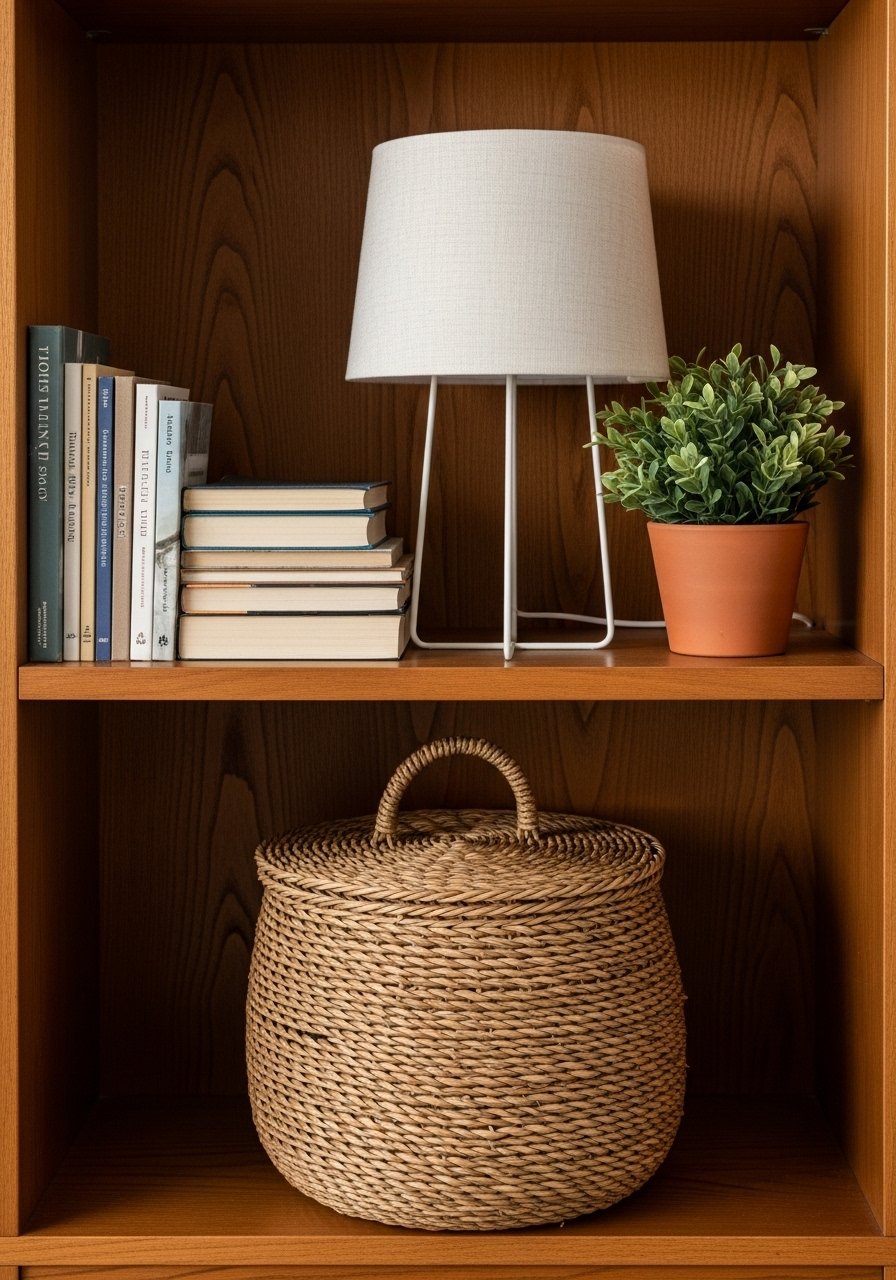
Treat the living-facing side like a display. Keep the visual weight lower. Place taller items at the ends and leave negative space in the center. I styled one shelf with a small stack of coffee table books, a table lamp with linen shade on the second shelf, and a woven basket set on the bottom for blankets.
Use odd numbers. A trio of objects looks more deliberate than two matching vases. Vary materials — wood, ceramic, and woven — for contrast. Keep the top shelf lighter to avoid a heavy silhouette when viewed from the sofa.
Common mistake: filling every shelf. Leave fifths of the shelving open so the divider reads airy instead of cluttered.
Style the bedroom side: calm storage and soft privacy
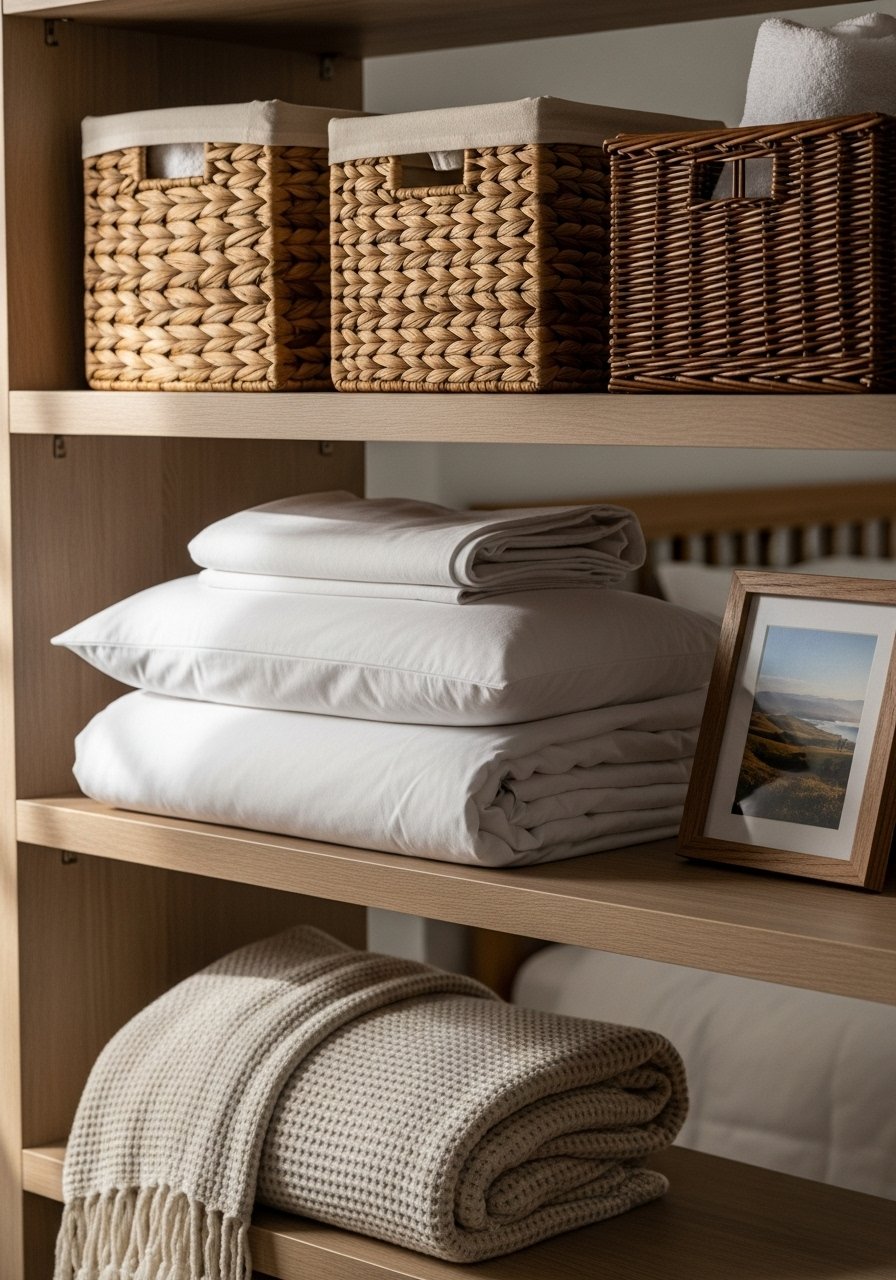
The bedroom side should feel private and soft. I used baskets and closed boxes on the lower shelves. The woven storage baskets hide pajamas and chargers. On eye-level shelves I kept sentimental items and framed photos in small clusters.
Swap a few open shelves for white oak floating shelves mounted on the bedroom wall behind the divider for extra hidden storage. Add a chunky cable knit throw folded on a shelf to read like bedding, not laundry.
I tried styling both faces symmetrically at first. It felt museum-like. Making the bedroom side softer and more practical fixed that.
Common Styling Mistakes to Avoid
Mistake: all decor at the same height
Why it doesn't work: The eye has nowhere to rest.
Do this instead: stack a book, add a vase, then a candle. Use odd numbers. Graduated candlesticks help vary height.
Mistake: heavy items on the top shelves
Why it doesn't work: It makes the divider top-heavy and cramped.
Do this instead: place heavier baskets low. Woven storage baskets keep weight down and look tidy.
Mistake: ignoring sightlines from the sofa or bed
Why it doesn't work: You lose balance and the room feels chopped.
Do this instead: step back and view from key angles. If the divider blocks light, choose a shorter bookcase room divider or move it.
Shopping Guide: Where to Find These Items
- Affordable dividers on Amazon: Search for two sided bookshelf room divider to compare sizes and finishes.
- Splurge on the rug, save on curtains: A durable rug anchors the room. Compare the 8×10 jute rug options first. For curtains, consider linen-blend panels.
- Hidden storage wins: Use woven storage baskets, set of 3 to keep the bedroom side tidy.
- Realistic faux plants for low light: If you lack window light, artificial fiddle leaf fig 5 ft adds height and texture.
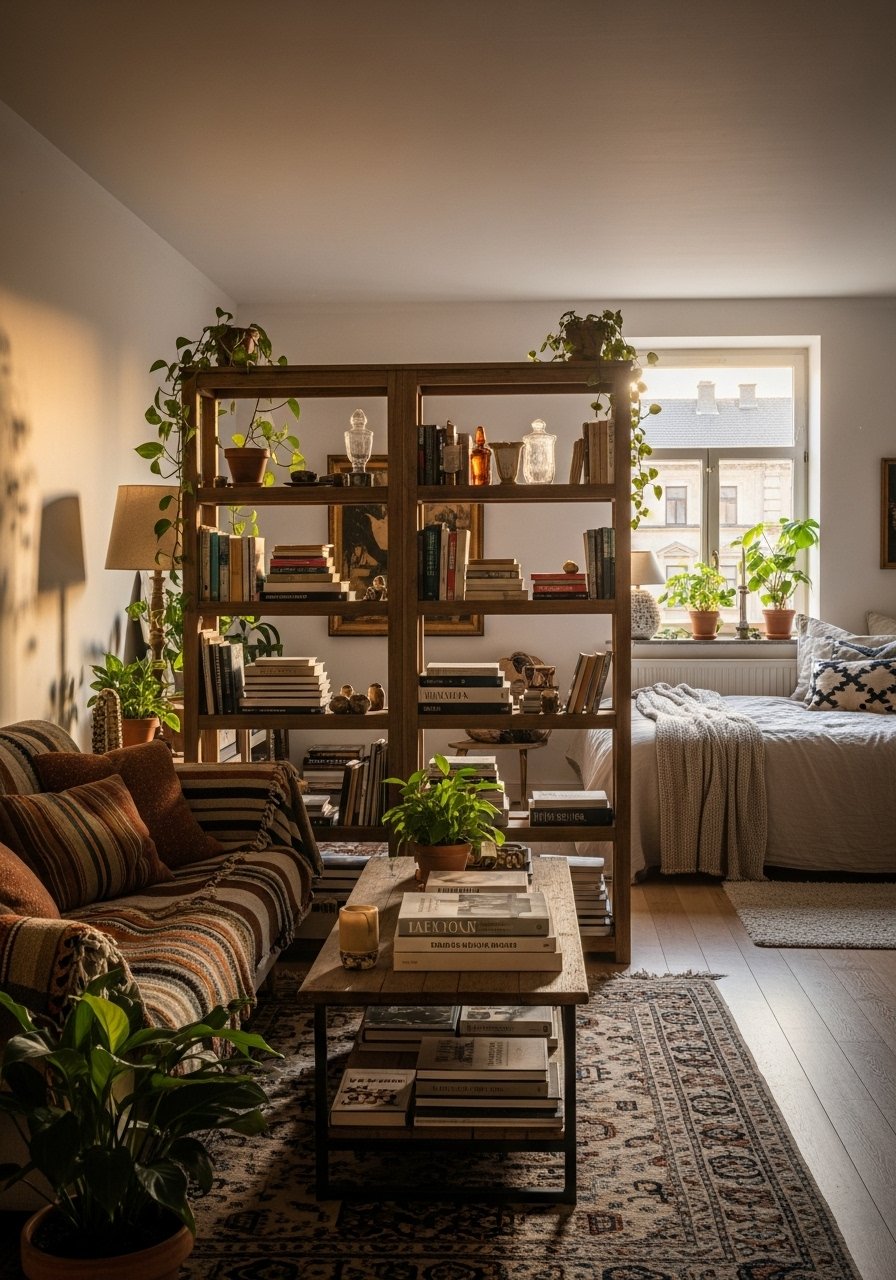
Start with structure: get the right size divider and a grounding rug. Then style one side to be open and social, and the other to be private and practical. I swapped a shelf of decor for baskets and felt like I gained a whole new room. Which side will you style first?