I’ve been living in small spaces for years, so a temporary room divider has basically become my best friend when I need privacy or a fresh layout. I swear, the right divider can make a tiny studio feel like two distinct rooms – and yes, it feels a little like magic.
This post exists because I keep getting asked how I make my place feel less like a shoe box and more like a curated home. I tried so many options over the last few apartments and learned what actually works – and what just looks cute until the cat knocks it over.
Below are 25 temporary room divider ideas you’ll actually want to try, with honest notes from my messy trial-and-error history and a few clever hacks you can use right now.
These 25 Temporary Room Divider Ideas You’ll Love
Cozy Corner Bed Split
I love how folding a divider into the corner suddenly makes a bed feel tucked-in and intentional. Once I used a tall screen and strung fairy lights across the top – yes, it got a little tangled – but it created the sweetest late-night vibe. If you want calm and a bit of separation without construction, this is such an easy move.
Cabinet-Backed Partition
Using a row of cabinets or wardrobes as a temporary divider makes the most sense when you need storage and separation. You can roll them into place, and honestly, the extra surface feels like free decorating space. I did this in my last place and it saved me from buying a desk for months.
Colorful Curtain Drapes
There’s something so dramatic and cozy about hanging curtains to split a living area – and you can change the mood instantly by swapping fabric. I used velvet once for a rich feel and then switched to linen in summer, because heat – ugh. Curtains are inexpensive and portable, so you can test looks without commitment.
Bookshelf Divider Idea
Open bookshelves are my favorite because you get storage plus sightlines that still feel open. I stacked books both ways and added baskets for an undone chic look that hides the cluttery bits – like my pile of chargers. Bonus: you can anchor a lamp to the shelf to create two atmospheres in one room.
Folding Screen Reveal
Folding screens are classic for a reason – portable, stylish, and they fold away when you don’t need them. I once used a printed screen to hide a living area during a Zoom call and felt very proud of my makeshift backdrop. They’re also great if you rent and can’t touch the walls.
Closet Front Divider
Positioning a divider in front of closet doors gives you a little dressing nook without building anything permanent. I did this when I wanted a mini walk-in effect and pretended my cramped closet was boutique-level – it worked, for at least two weeks. Little theatrical touches like a mirror help elevate the whole thing.
Nursery Corner Divider
Creating a baby-safe nook with a soft divider kept our living room calm while guests visited. I remember worrying constantly, then realizing the soft screen actually reduced noise and made naps easier. If you have tiny humans, think padded and stable – trust me on that one.
Light-Reflecting Curtain Wall
Mirrors or reflective curtains behind a divider can brighten the whole space and make it feel bigger. I slapped a leaning mirror near a sheer curtain once and the room felt twice as open – accidental miracle. Just be careful with placement so it doesn’t glare during golden hour.
Temporary Ceiling Track Install
Installing a removable curtain track on the ceiling is low-commitment if your landlord allows it. I climbed a ladder with my brother one weekend and we almost gave up, until we realized the trick is to mark everything first – lesson learned. Once it’s up, curtains slide like a dream and you can create instant rooms.
White Doorway Divider
Using a tall screen near a doorway subtly guides traffic and defines zones without blocking flow. I like this when I want a bit more privacy for my workspace but still need to hear the kettle. You can get creative with textures to match your decor.
Art-Backed Work Nook
Creating a divider that doubles as an art wall makes the whole setup feel purposeful. I once propped a large canvas on a movable stand and it made my tiny desk feel like a proper studio – yes, I posed for photos. This is a chic trick if you want separation that doesn’t scream “temporary.”
Doorway Privacy Option
A simple panel right inside the doorway helps keep living areas private from guests without being permanent. I used a thin screen for months and surprisingly enjoyed the little buffer zone. It also collects scarves and bags – accidental storage win.
Plant-Filled Passageway
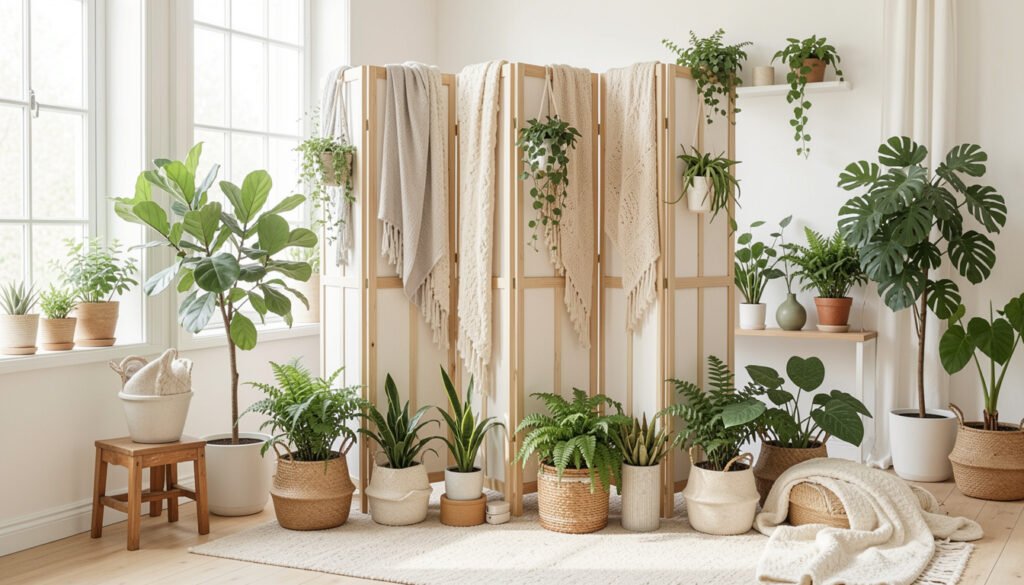
Stacking plants on a low shelf or ladder between zones is dreamy and breathable. I went full jungle on one divider and then had to explain my watering schedule to visitors – oops. Still, it created privacy without losing light, which I loved.
Fireplace Zone Divider
If your room has a focal point like a fireplace, place a partial divider to create a cozy sitting area. I remember curling up on the couch the first night after I made that corner and feeling like I’d finally decorated for myself. It’s an easy way to make two distinct vibes in one room.
Simple Doorway Screen
A slim, retractable screen in the doorway is great for rental apartments where you can’t add hardware. I used one during a messy creative phase and it hid the chaos perfectly while I finished projects. It’s low fuss and surprisingly chic in the right fabric.
Sliding Door Accent
Repurposing sliding doors or tracks can give you a semi-permanent feel without construction. I once used barn-style panels on a temporary rail and it turned heads – mostly because I painted them an obnoxious color and then had to repaint. Still, it’s a bold option if you want drama.
Window-Adjacent Divider
Place a thinner divider near a window to create a reading nook that still gets light. I set up a little armchair and a blanket there and would lose hours with a book. The trick is to keep the divider low so the window remains the star.
Bedside Curtain Zone
Hanging curtains around a bed corner makes instant privacy and feels very boudoir-in-a-studio. I did this in college when I shared a room and it made nightly routines feel indulgent. Plus, it’s affordable and comes down fast when guests arrive.
Casual Chair & Curtain
Pairing a comfy chair with a lightweight curtain creates a mini lounge that’s flexible and low-commitment. I dragged a chair and a cheap curtain rod into place during a snowstorm once, and it ended up being my coziest corner. It’s perfect if you like rearranging on the fly.
Single Panel Bed Divider
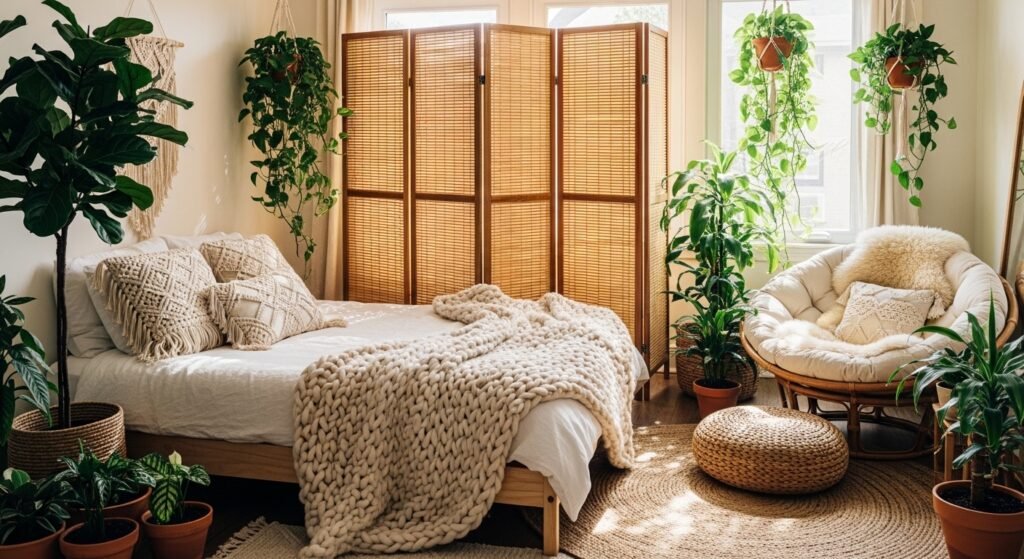
One tall panel behind a bed can suggest separation without making the room feel chopped up. I once leaned a textured panel there and felt like I had a boutique hotel bed – small victories matter. Try natural materials to keep things soft and warm.
Minimal Bookshelf Nook
Low shelving works when you want flow but still need a boundary between spaces. I used cube shelves stacked two high and it felt structured but relaxed. Also, they’re easy to move when you decide to rearrange – which I do, often.
Three-Panel Zen Screen
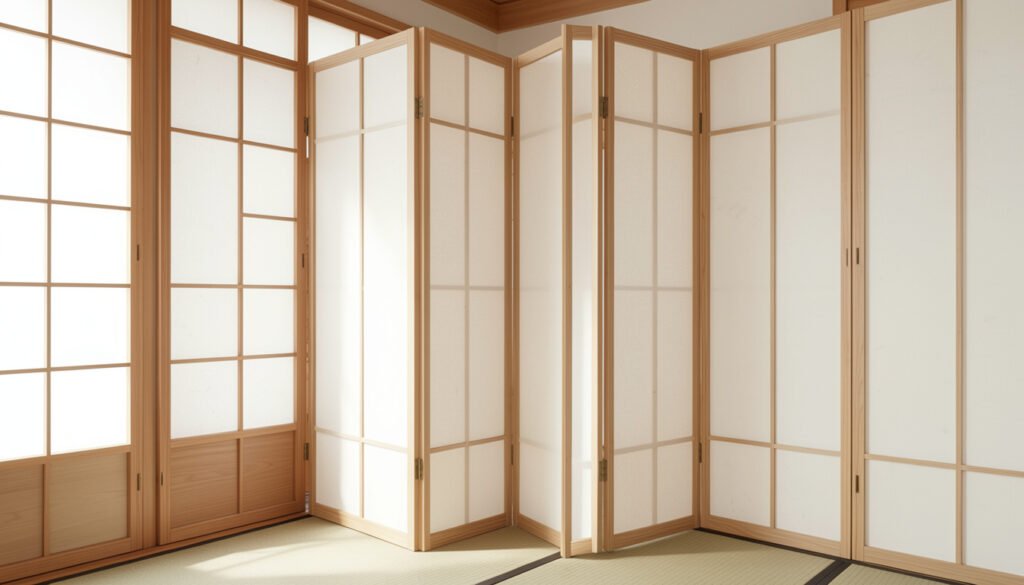
Three-panel screens with simple white panels and a plant in the corner give a spa-like, calm feel. I had one that made my morning stretches feel more intentional – honestly, that helped me stick to a routine. If minimalist is your jam, this one won’t disappoint.
Pair of Privacy Screens
Two matching screens set up in tandem create a double-barrier that looks clean and considered. I used this trick to hide a messy craft corner during a dinner party – it saved the evening and my dignity. They fold, store, and come back out whenever chaos resumes.
Slatted Wood Accent Wall
Wooden slats on a movable frame give texture and warmth while keeping things airy. I put slats behind a bed once and it felt like a mini-renovation without the landlord panicking. They make a space feel intentional and are surprisingly modern.
Open Door Bedroom Peek
Keeping a door open and adding a slim divider can create separation while maintaining a welcoming flow – perfect for small apartment living. I liked this when I wanted my space to feel connected but not totally exposed. Sometimes small moves are the most effective.
How to Actually Make This Work For You
Think about what you need more than what you want – privacy, sound reduction, storage, or just a visual boundary – and choose a divider that solves that first, then style it so it feels like you. Measure first, because I once bought a beautiful screen that was too tall for my ceiling and had to return it – ugh. Aim for pieces that can be moved by one person and avoid anything that requires heavy drilling unless you’re keeping the spot long-term.
Can I use curtains as a long-term solution?
Yes, curtains can be both temporary and durable if you choose good hardware and heavier fabric. They block sightlines well and are easy to wash or replace, making them ideal if you want flexibility without sacrificing style.
Will a divider help with sound?
Dividers will reduce sound slightly but won’t soundproof a room; thicker, upholstered screens help more than thin panels. If noise is a big issue, pair the divider with rugs, curtains, and soft furnishings to absorb echoes.
Are DIY dividers worth it?
Absolutely, if you enjoy a project and want to save money or create something custom. Just be realistic about tools and time – I once underestimated a build and spent a weekend sanding instead of going out, so plan accordingly.
How portable are these options?
Most options here are very portable – folding screens, curtains on temporary tracks, and shelves on casters can all move easily. If you think you’ll rearrange often, prioritize light materials and quick-install hardware so you can change your layout without hassle.