Okay friend, tiny nurseries are my love language these days and if you’re hunting for nursery decor for small spaces you’re in the exact right place. I remember feeling overwhelmed in my own tiny apartment and learning how clever styling can make a little room feel like a whole vibe.
This article exists because so many of us have small bedrooms, spare closets, or awkward nooks to work with and we still want something cozy and thoughtful for our babies. I tried a handful of tricks myself – some worked brilliantly and others taught me what to avoid, so I’m sharing the bits that actually helped me sleep easier.
Read on and you’ll get simple, realistic ideas that fit tight footprints and feel warm, like a nursery that grew from hugs, not a renovation budget.
These 12 nursery decor for small spaces ideas
Cozy Chair Corner

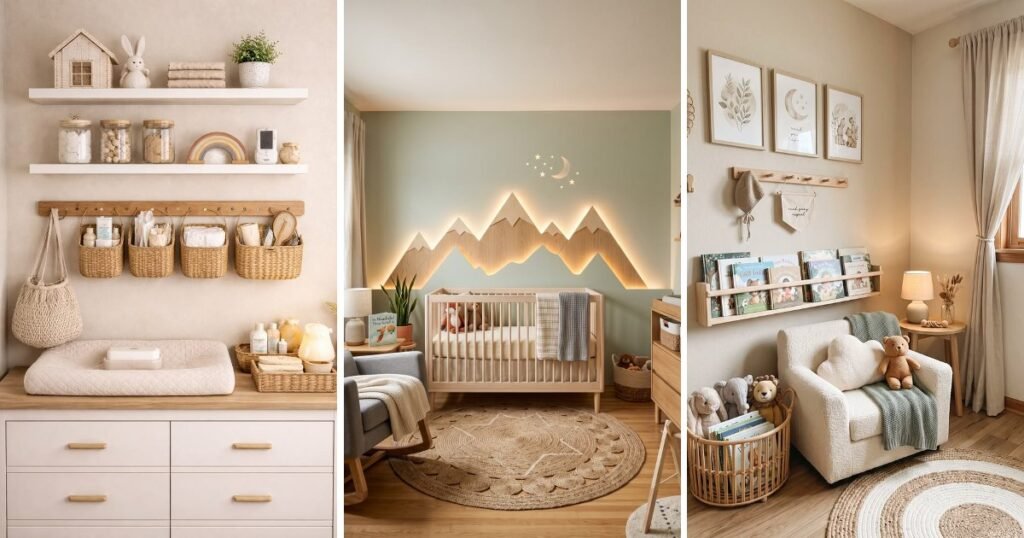
I love using a small, comfy chair to create a real breathing space in tiny nurseries because it instantly signals a spot for bedtime stories. If you tuck a slim bookshelf behind or beside it you get storage and style without stealing floor space. When I set up my first chair, adding a soft teddy and a tiny lamp made late-night feeds feel less frantic and more like ritual.
Sunny Accent Wall

A single painted accent wall with sunflowers or a simple motif brings so much joy without needing to clutter every surface. You can keep the rest of the room neutral so the mural becomes a statement that doesn’t overwhelm a small footprint. I once painted a mini mural at midnight and it instantly lifted the whole tiny space – paint is cheap and dramatic.
Sweet Rocking Nook

Create a cozy rocking nook by placing a slim white rocker near the window so it feels airy and not crowded. A couple of wall hooks with small soft toys keeps the floor free and adds personality overhead. When I nursed in a chair like this, the natural light made late afternoons feel calm even in a compact room.
Painted Heart Accent

A hand-painted heart or simple shape gives a handmade feel that reads big in a small space without taking up any floor area. You could keep it monochrome for minimalism, or soft paint it to match blankets and curtains. I once painted a tiny heart above a crib and every visitor asked about it, proving small gestures feel intentional.
Mini Mountain Mural

Layering a simple mountain mural across one wall adds depth and plays tricks on the eye that a small room is larger than it is. You can use muted tones so the design stays soft and calming for nap times. My partner helped stencil a tiny range with painter’s tape and it was faster than we expected, plus we saved money on wallpaper.
Playful Curtain Toy

Add a small stuffed toy clipped to a curtain or rail to create a whimsical detail that saves shelves for other things. This is an easy way to inject character without committing to larger decor pieces. I once hung a tiny monkey on a curtain and it became my baby’s favorite visual during diaper changes.
Neutral Layering

Working with neutral tones helps small rooms feel more open and cohesive, and you can then layer textures for interest. Try woven baskets, a soft rug, and a few wood accents to warm the space without clutter. I mixed creams and pale woods in my nursery and guests always said it felt restful and intentional.
Whimsical Wall Shelf

A shaped shelf like a hot air balloon is functional art that holds books and small toys while staying mounted on the wall. It saves precious floor square footage and doubles as a focal point for photos. I found that styling one shelf with alternating books and soft toys made the room feel curated instead of crowded.
Classic Toy Accent

A small vintage or classic toy like a rocking horse placed in a corner reads nostalgic and intentional rather than cluttered. Choosing one standout piece reduces the urge to fill the room with matching sets. I kept a tiny wooden horse in my space and it became a sweet photo prop that didn’t take over the room.
Mini Gallery Wall

Arrange four small framed prints in a square to create a gallery effect that feels tidy and curated in a small nursery. You can swap prints as your child grows, so the investment lasts. I rotated sweet animal prints through the first year and it kept the wall feeling fresh without repainting.
Open Shelves Above Dresser

Install shallow shelves above a dresser to store baskets for diapers, creams, and cute extras without needing a bulky cabinet. Labeling baskets keeps things accessible and makes your changing routine faster. I used woven baskets and it immediately made the area look elevated while hiding the small chaos of baby gear.
Stripe Feature Trick

Painting one wall with subtle stripes visually widens the room and pairs nicely with compact furniture that follows the pattern’s tones. Choose thin stripes in soft hues so the effect is elongating rather than busy. I once used this trick in a narrow nursery and guests remarked it looked much larger than it actually was.
How to Actually Make This Work For You
Start by measuring and mapping out your primary traffic paths so you don’t accidentally block the door or hamper stroller access, then prioritize dual-purpose pieces like storage ottomans and wall shelves to keep floors open. Next, limit your color palette to two to three coordinating shades so small spaces feel curated, and finally, embrace vertical storage and wall-mounted lighting to free up every inch of surface area – these simple steps helped me transform a cramped room into a calm, functional nursery without a big budget.
How do I make a tiny nursery feel larger?
Use a cohesive, light color palette, keep furniture low-profile, and add vertical storage to draw the eye up and create the illusion of more space – mirrors and strategic lighting also help. Avoid too many patterns at once so the room feels open rather than chaotic.
What are the best multifunctional pieces for small nurseries?
Choose a changing dresser that doubles as a storage unit, a glider with storage baskets nearby, or a crib with built-in drawers so you get more use out of fewer items. Picking pieces that serve multiple needs reduces clutter and makes organization practical.
Can I use bold colors in a small nursery?
Yes – but use bold colors sparingly as accents like a single painted wall, artwork, or textiles to avoid overwhelming the room. Balancing bold hues with neutrals maintains calm while letting personality shine through.
How do I keep the nursery functional as my child grows?
Opt for adaptable furniture and decor like convertible cribs, modular shelving, and replaceable artwork so the room can evolve without a complete redesign. Small swaps and smart storage updates will keep the space feeling fresh and useful through each stage.