Disclosure: As an Amazon Associate we earn from qualifying purchases. Some links on this page may be affiliate links — if you click through and make a purchase, we may receive a small commission at no extra cost to you.
Okay, friend – if your office closet is a hot mess of cords, paper piles and mystery drawers, you are not alone. I’m obsessed with small fixes that make working from home feel calm, and these office closet organization ideas are some of my favorite quick wins.
I pulled together real, practical setups I actually look at when I’m reorganizing my space and when I’m helping my sister purge her overflowing craft closet. I get playful about labels and baskets because little wins make me want to keep going.
Read on and you’ll get realistic ideas you can copy this weekend, plus tips to customize them for your own office vibe.
These 20 Office Closet Organization Ideas Will Transform Your Space
Compact File Station

This setup shows a tidy desk with labeled file folders, which is perfect when your closet needs a dedicated file zone. I made a similar corner in my old apartment and it stopped paper from spreading across my whole desk. Try using color-coded folders for projects so you never scramble for a bill or contract again.
Wall Basket Storage

Mounted storage bins are such a gem when floor space is tight, and they look chic against white walls. When I moved into a studio, hanging baskets saved me from buying another bookshelf and kept craft supplies off my desk. You can label the fronts or use clear bins so everything is visible at a glance.
Printer Shelf Nook

A dedicated shelf for your printer keeps it off the desk and prevents cable chaos from creeping into the rest of your closet. I built a shallow shelf above my filing cabinet and it immediately freed up workspace where I used to place the printer. It’s also a great spot to store paper and spare ink within arm’s reach.
Jewelry Drawer Idea

If you stash accessories or small office tools in your closet, a shallow jewelry-style drawer insert keeps tiny items from disappearing. I once used a jewelry tray to organize binder clips, pins and USBs and it changed how I feel about opening drawers. Consider velvet-lined trays for delicate items and labeled compartments for tech bits.
Mix Shelves and Drawers

This classic mix of open shelving and closed drawers is flexible for seasonal office gear and messy cords. I used drawers for less attractive things like chargers and spare cables while leaving pretty baskets on show for notebooks. Swap drawer dividers as your needs change so the closet grows with you.
Bookcase with Baskets

A bookcase with matching baskets instantly looks organized and approachable instead of industrial. When my freelance work increased, I moved reference books to the top shelves and kept current project folders in the baskets below. It’s an easy, pretty way to hide clutter without losing accessibility.
Simple Shelf and Baskets

This no-fuss approach uses identical baskets to create calm repetition on each shelf. I did a weekend refresh like this and the transformation felt immediate and free – no build projects required. Keep one basket per category so you know exactly where to grab your supplies.
Craft Supply Station

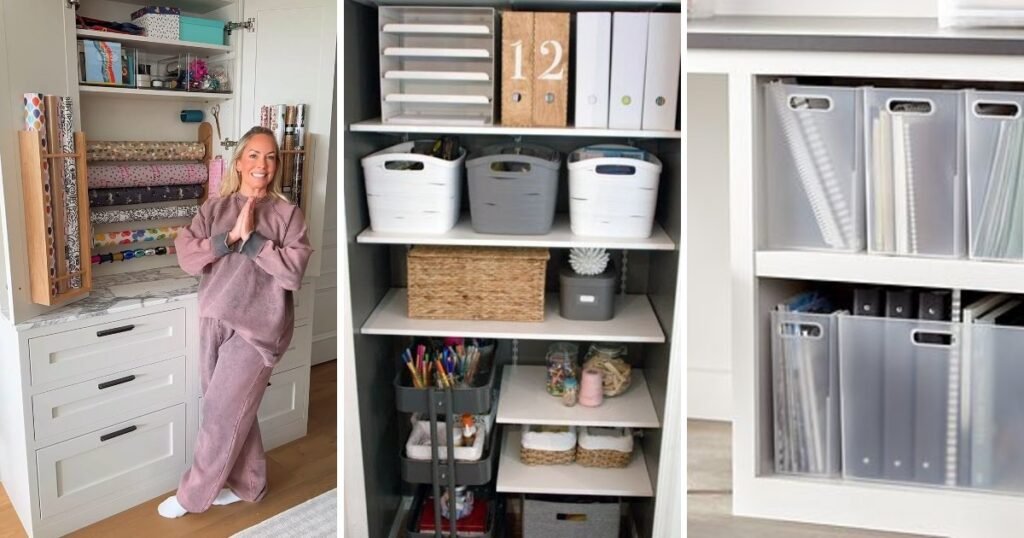
If your office doubles as a craft zone, give every medium its own bin to avoid the “everything poured into one box” chaos. I confess that spool tangles once made me vow to separate ribbons, fabric, and adhesives forever. Once sorted, projects start faster and cleanup is so much less annoying.
Sewing Cabinet Nook

A little sewing cabinet in the closet is genius if you fix clothing or want textile storage without taking over the main room. I used a narrow cabinet to store hemming tools and it fit behind the closet door neatly. Think vertically so you can tuck specialized storage where it won’t be in the way.
Dual Chair Workspace

Two chairs at a desk are perfect when you occasionally host collaborators or need a client seat in your home office closet. My roommate and I shared a project desk for months and having that extra chair made brainstorming sessions feel official. A foldable second chair is great if you need occasional seating without permanent clutter.
Hidden Printer Drawer

Slide-out drawers for printers make them invisible when not in use and keep heat and dust away. I installed a pull-out shelf so the printer is accessible but not always on display, which made the whole room feel cleaner. It’s an elegant trick if your closet door is often open during Zoom calls.
Fresh Empty Closet Base

Starting with a blank closet is the best creative reset since you can plan storage from scratch without compromise. I once gutted a linen closet to make a clean office supply nook and that blank slate made decision-making fun instead of stressful. Think about adding adjustable shelves so the layout can evolve with your needs.
Before and After Bins

Using identical bins for a before-and-after setup gives a satisfying visual and helps you sort what you actually need. I remember labeling “keep”, “donate”, and “maybe” when I reorganized and the boxes helped me make decisions faster. Once the maybe box sits for a month, it’s usually easy to decide what really matters.
Living Room Closet Swap

If your office closet adjoins living space, try matching furniture styles to blend the closet into the room. I painted my closet door to match a bookshelf and suddenly the whole corner felt intentional, not an afterthought. Subtle continuity makes a small space feel designer-made without spending a lot.
Open Shelves with Hands-On Help

Open shelving encourages you to keep things tidy because everything is visible, which became clear when my friend came over to help me sort. We organized reference books by color and project materials by frequency of use, which made daily work smoother. If you struggle to maintain order, keep only what you need on open shelves and tuck extras away.
Fabric and Towel Storage

Folded fabrics and towels look clean when stacked consistently and sorted by color or material. I keep a spare shelf for soft things like wraps and photography backdrops so they stay crease-free and accessible. Use shelf dividers if stacks tend to tumble over when you pull items down.
Book and Box Combo

Combine visible books with decorative boxes for a balance of function and style that keeps supplies hidden but accessible. When I swapped mismatched storage for coordinated boxes, the closet instantly looked calmer. Choose boxes that stack well and label the spines so retrieval is effortless.
Reference Bookcase Setup

A tidy bookcase for reference materials keeps resources at your fingertips and your desk uncluttered. I place current guides and manuals at eye level and use bins on lower shelves for miscellaneous supplies. Keep a small step stool nearby if your closet shelves are high so you don’t create excuses to leave things piled on the floor.
File-Focused Shelving

If you deal with a lot of paperwork, dedicate one section of shelving solely to labeled folders and boxes. I keep active client folders at arm’s length and archive older records higher up so they’re out of the way. Consider color tabs by year to make retrieval fast when tax time arrives.
All-White Storage System

An all-white storage system feels bright and cohesive, especially in small closets where visual clutter is a risk. When I painted a shelf unit white, the whole nook looked larger and the drawers became invisible background organization. Try mixing in textures like woven baskets so the look stays warm and not clinical.
How to Actually Make This Work For You
Start by deciding what role your closet should play in your office life – is it for active project storage, seasonal overflow, or tech and equipment? Next, measure and plan so you choose baskets, drawers, and shelves that truly fit your space and habits; I always sketch a simple layout before buying anything. Finally, label clearly and set a monthly five-minute tidy so the system actually sticks instead of turning into another clutter trap.
How do I choose between open shelves and closed drawers?
Open shelves are great for things you use all the time because visibility encourages maintenance, while drawers are ideal for ugly or dust-prone items. Balance both to keep frequently used items accessible and less attractive supplies hidden. Think about how tidy you are daily – if you prefer neat looks, lean into drawers and baskets.
What should I store on the top shelves?
Use top shelves for seasonal items, reference books you rarely touch, or backups like extra ink and paper. Store things in clear bins or labeled boxes so retrieval doesn’t become a hassle. Keep a lightweight stepping stool nearby if reach is a problem.
How do I prevent cords and tech clutter?
Corral cables into labeled pouches or small baskets and use cable ties inside the drawers so tangles don’t happen in the first place. I separate chargers by device type and keep spares in a clearly labeled box. A small power strip mounted inside the closet can also keep devices charged without trailing cords across your desk.
Can I make this budget-friendly?
Yes – thrift stores, dollar bins and DIY shelf paint can make a big impact without spending a fortune. I mix inexpensive baskets with a few key investment pieces like a sturdy shelf or drawer unit for longevity. Prioritize a few functional upgrades and repurpose what you already own to stay on budget.