Disclosure: As an Amazon Associate we earn from qualifying purchases. Some links on this page may be affiliate links — if you click through and make a purchase, we may receive a small commission at no extra cost to you.
I have been obsessed with room partition designs lately – they feel like tiny miracles for small spaces and open-plan homes, and I can’t help but tinker with ideas. When I moved into my studio, I learned the hard way that one smart divider can make your whole life feel more organized and calm.
This post exists because I keep pinning things and then telling my friends, “You need this in your life,” so I finally put together the best looks I love and why they work. I’ve tried a few of these myself, messed up a couple times (oops), and learned which details actually make a divider feel intentional rather than slapped-on.
Read on and you’ll get 15 real room partition designs with tiny how-tos, honest confessions, and friendly tips so you can pick one that actually fits your space and personality.
These 15 Room Partition Designs You’ll Love
Bold Black Divider
This striking black partition paired with white chairs is so chic, I actually copied the contrast in my dining corner last month and people asked if I hired a stylist. It splits the room without feeling heavy because the lines are clean and modern, and you can let the chairs soften the look with lighter textiles. If you like drama in small doses, this is for you; I still knock my knee on that low side table sometimes, but hey, character.
Sunny Plant Divider
This living room divider covered in plants and bathed in light is my version of a daily reset – plants instantly make divisions feel alive instead of boxed-in. I once tried to care for that many plants and learned that a watering schedule and a good saucer system will save you from soggy floor disasters. You can use different pot heights to create depth so the partition reads like a green wall, not just a cluttered shelf.
Wood Slat Stair Screen
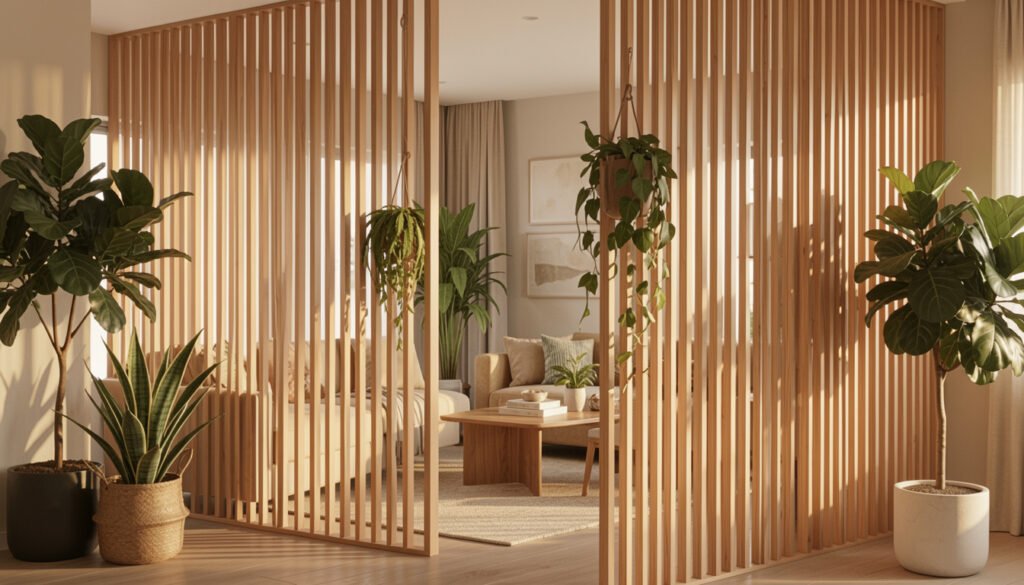
Wooden slats beside a staircase add warmth and rhythm, and I swear they make the stairway feel like it lives in a boutique hotel. I installed similar slats on a weekend with my roommate and we argued about pencil marks for an hour – worth it though, the light still flows and the space feels curated. This approach is great when you want partial privacy and a mid-century nod without blocking sightlines.
Bookshelf Room Split
A tall bookshelf as a divider is basically a romance novel for book lovers – cozy, practical, and a tiny bit dramatic in the best way. I used this trick in a previous apartment to carve out a reading nook and ended up rediscovering books I’d forgotten I owned, which felt like free treasure. Pro tip – alternate closed baskets with open shelving to hide tech clutter so the divider feels relaxed and tidy.
Layered Library Wall
This dense, book-filled partition screams personality and makes shared spaces feel lived-in, which I adore because perfection is boring. When guests come over, I love watching them pick a spine and start a conversation – it’s the best, low-effort icebreaker. If you’re nervous about dust, choose a mix of display and storage and you’ll be happier about weekly cleanups, promise.
Clean White Couch Split
A white sofa next to a simple black table makes a soft divider that still invites people in, and I once used this exact setup to create a tiny lounge in a larger open-plan loft. It reads modern but approachable, and if you’re like me and spill coffee occasionally, consider a washable slipcover – saved my favorite cushion more than once. This layout is perfect when you need a gentle boundary without full separation.
Quiet Reading Alcove
An empty room turned into a built-in bookshelf wall is somehow both minimal and maximal at once, which feels oddly satisfying. I remember painting mine until midnight because the angle of afternoon light made everything look soft and magical; also, I procrastinated on decor decisions for weeks, so this took time. Use this when you want a divider that doubles as a focal wall for art or books.
Herb Shelf Divider
A kitchen shelf with plants is practical and pretty – there’s nothing like snipping fresh herbs from a divider that also hides your chaotic counter. I tried this with basil and oregano and then realized my cat loved knocking down the pots, so heads up if you have pets. This option is fantastic for renters because it requires zero structural work and smells amazing while you cook.
Sill-to-Shelf Green Wall
Using windowsills and shelves to create a green partition gives the whole room a sunlit, easy vibe that I crave on grey days. When I lived in a studio with one large window, this trick made the space feel intentional and also helped hide my workspace mess – not that it entirely disappeared, but close enough. Arrange plants by size and light needs so everything survives the weekend when you inevitably forget to water.
Slatted Wood Accent
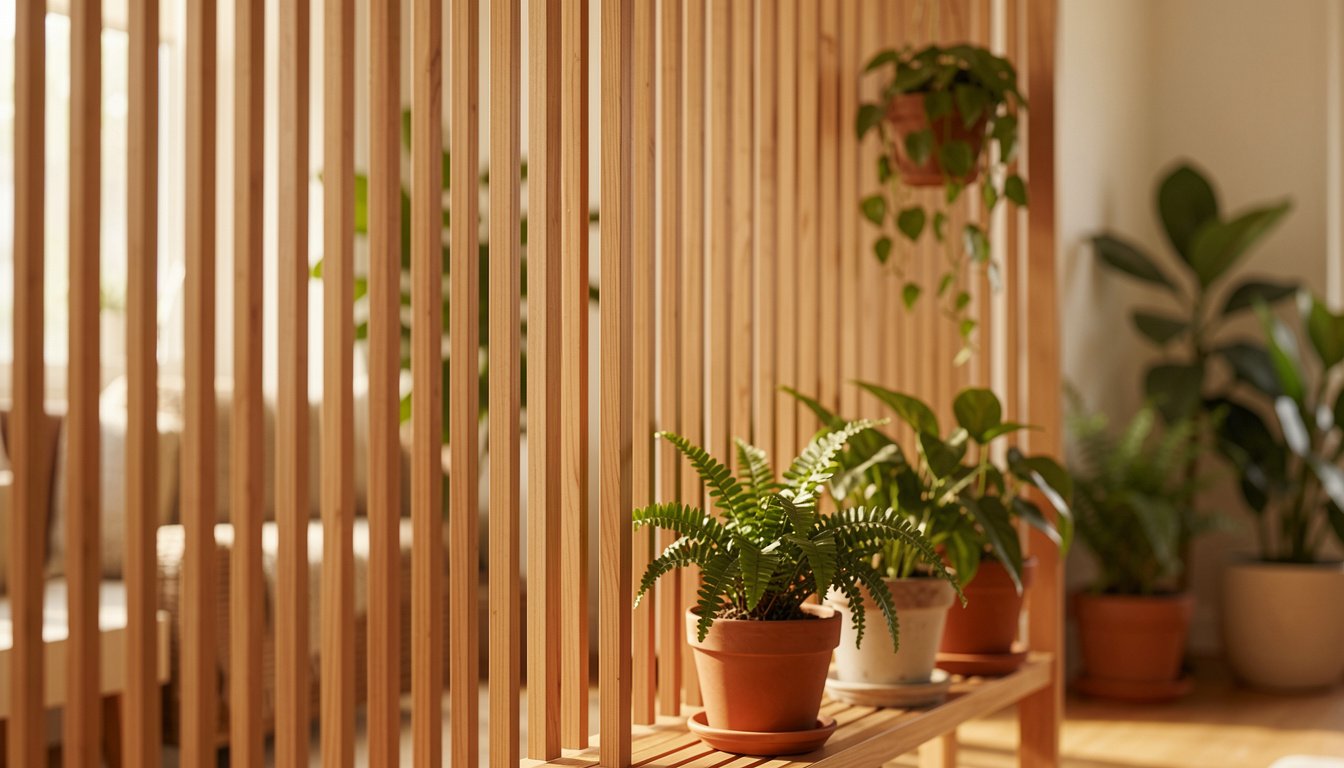
Wooden slats paired with white vases is a quiet, Scandinavian take on partitioning that I keep returning to for its calm energy. I once recreated this with thrifted vases and it felt like therapy arranging ceramics for an hour – yes, small joys. This look works especially well when you want texture without heavy color, and it keeps visual flow while defining zones.
Glass Block Divider
Glass blocks behind a plant give just enough separation and diffuse light beautifully, so you get privacy and a soft glow – dreamy, honestly. I remember the first time I saw this in a friend’s place and thought, “Okay, that’s clever and pretty,” and then promptly borrowed the idea for my own hallway. It’s a bit pricier, but the light payoff is worth it if you’re after a mid-century vibe.
Shelves in Front
Plants on shelves in front of seating areas create pockets of privacy and lush texture without building walls, which always feels refreshing to me. I once used this in a shared studio and it helped everyone feel like they had their own little nook, even with one big room. Keep heavier items lower for safety and a relaxed aesthetic – you don’t want top-heavy drama, trust me.
Fireplace Focal Split
A divider that incorporates a fireplace instantly makes a room feel intentional and anchored, and it was the design that made me finally commit to cozy linens and candle rituals. I caught myself reading by that warm glow for hours and nearly missed a Zoom meeting once – oops, but worth it. If you can integrate a hearth, the divider becomes part of your home’s story, not just function.
Corner Plant Shelf
A small shelf with a potted plant can define a corner so simply and sweetly; sometimes less is more, and this proves it. I used a similar corner shelf to hide an ugly router and suddenly guests complimented my “styled corner” which felt hilarious and validating. This is one of the easiest upgrades you can do in an afternoon with minimal tools.
Slatted Storage Divider
Wooden slats with baskets on each side are the hardworking divider you didn’t know you needed – pretty and practical in equal measure. I built something like this for seasonal storage and it saved my sanity during holiday chaos, plus guests actually used the baskets which felt like a small victory. It keeps visual clutter tamed while offering a natural, warm texture that ages beautifully.
How to Actually Make This Work For You
Think about how you live first – do you need full privacy, partial division, extra storage, or more light; pick a design that solves the biggest problem and complement it with materials that match your vibe, not just Pinterest trends. Measure carefully and mock things up with painter’s tape on the floor or a sheet hung where the divider will go so you can test sightlines and traffic flow before committing, and if you’re a renter focus on freestanding or reversible options so you won’t stress later. Lastly, accept that it won’t be perfect right away – move things around, add baskets, and let the divider evolve with your routine until it truly fits.
What’s the cheapest way to divide a room?
Use freestanding bookshelves, curtains, or a row of plants on a shelf – these options are budget-friendly and renter-safe. They give instant separation without construction, and you can upgrade later as needed.
Do room partitions reduce noise?
They can help a bit, especially if you use thick materials, textiles, or books to absorb sound, but partitions won’t be as effective as full walls. Layering with rugs, curtains, and soft furniture makes a bigger acoustic difference.
Which materials are best for small spaces?
Light wood, open slats, glass blocks, and open shelving are all excellent because they define zones without blocking light or sightlines. Choose lighter finishes to keep a small room feeling airy and avoid bulky, dark pieces that make spaces feel cramped.
Can I DIY most of these partitions?
Yes, many of these ideas are DIY-friendly – slatted screens, shelves, and planter dividers can be built with basic tools and a weekend. If you’re unsure, start small or consult a handyman for heavier installations; safety first, always.